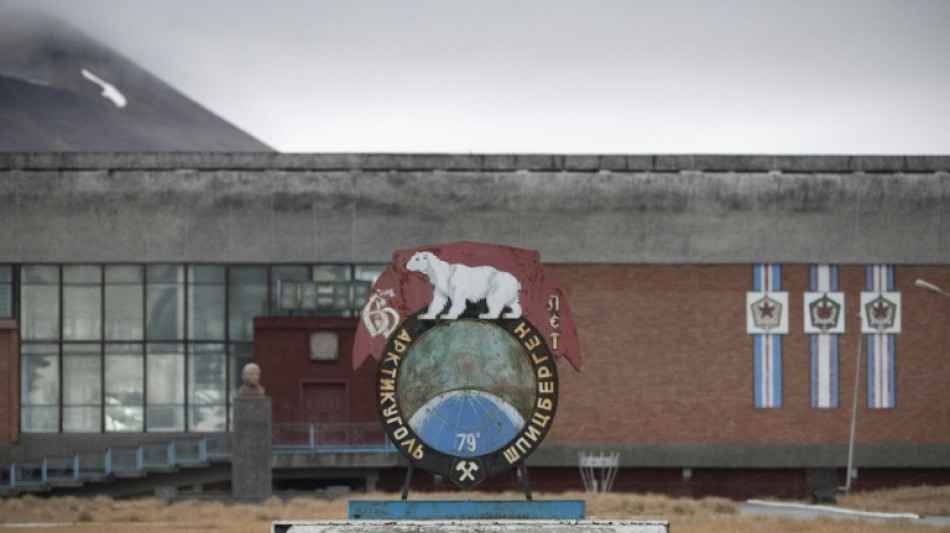
Soviet-era outpost helps Russia retain a foot in Norwegian Arctic

 American Nobel laureate in medicine hopes to illuminate the brain

 Trump approves firing squad for convicted US military base shooter

 Grappling with 'homework scams,' US universities shun AI detectors
 Separatists win Quebec election in test for Canada PM

 Leaders visit Pacific atoll at frontline of climate change

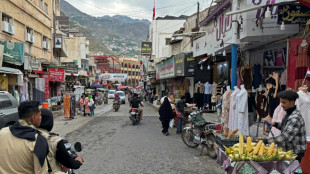 Yemen's Houthis claim striking Riyadh airport, other Saudi sites

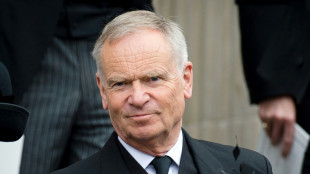 Best-selling British author Jeffrey Archer dies aged 86

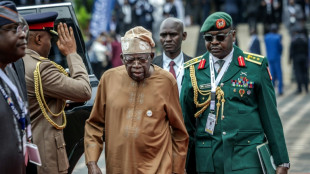 Military plane crash kills 32 in Nigeria

 Olise powers France to win over Belgium in Nations League

 High-flying Blazy turns to birdlife at Chanel
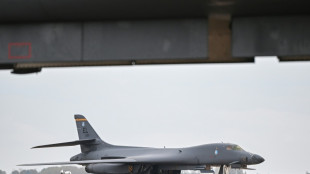
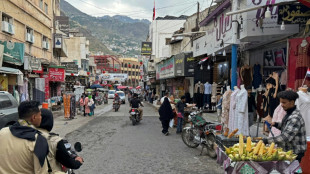 Riyadh's allies pledge troops as Yemen, Saudi Arabia attack Houthis

 Clashes erupt outside Kosovo parliament over war crimes court

 Milan's Saelemaekers suffers ankle setback, faces lengthy spell out

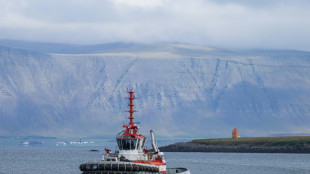 Rubio arrives in Iceland to push for greater US presence in Arctic
 Putin allows Italy's UniCredit to sell part of Russian business

 Djokovic into China Open final as Medvedev out for hitting fan with ball

 ICC unseals arrest warrants for Taliban education ministers

 Modric hopes fans back Croatia against Spain after England shame

 Bolsonaro rides right-wing surge into Brazil's election runoff

 Turkey blocks X account of British reporter

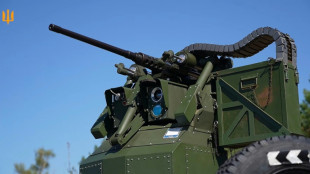 Ukraine says using AI robot guns to shoot down new Russian drones
 At Oct 7 memorial, Netanyahu says will be no Hamas rule in Gaza

 Ukraine blames Russia for deadly sinking of Turkish ship in Black Sea
 UN rights council slams Taliban's 'oppression' of women
 Norway eyes partial ban of smart glasses
With its bust of Lenin, cultural centre and KGB offices, the abandoned Soviet outpost of Pyramiden may seem like a time-warped Arctic oddity but is valued by Moscow as it vies for clout in the warming region.
Russia has made the development of the Arctic a strategic priority, pinning its hopes for supremacy in the region on a fleet of giant nuclear-powered icebreakers.
The tiny ex-mining settlement of Pyramiden, meanwhile, helps Moscow retain a footprint in Norway's Svalbard archipelago, high above the Arctic Circle.
Norway -- a NATO member -- was afforded sovereignty of Svalbard under the 1920 Treaty of Paris but all signatories, which included the Soviet Union, were given equal rights to explore and exploit its mineral resources.
Russia began coal mining in Barentsburg, another settlement in the archipelago, in 1931, and later in Pyramiden, where the Russian community grew to up to 1,200 between 1960 and 1980.
Being sent to Pyramiden was considered a plum job for a miner, a tour guide told AFP.
On the Western side of the Iron Curtain, it provided a window on Soviet power, culture and self-sufficiency, from pig breeding to its 300-seat cinema, swimming pool, gymnasium and hospital.
But as the Soviet Union fell apart, while mining continued in Barentsburg, it stopped in Pyramiden in 1998 as its performance dwindled, and the miners left.
- 'Interesting future?' -
At first sight, Pyramiden now looks like a ghost town.
No one lives there apart from a handful of Russians who run a hotel -- and the polar bears with whom visitors risk coming face-to-face.
But even though the mining community has long gone, nothing has been destroyed, an AFP photographer saw, and its vestiges offer a glimpse into the heyday of the Soviet era.
Buildings built to last are just weather-beaten from decades of harsh winters.
The rails of the funicular on which the trailers of coal were hauled down are still visible on the pyramid-shaped mountain, which gave the village its name.
Inside the buildings, it's as if time has stood still, with the occupants having left suddenly but expected back at any moment.
Phials of ore are lined up in display cabinets in administrative offices, where calendars still hang on the walls, while the KGB premises have reinforced doors and miners' files spread out on the tables.
Classrooms are adorned with children's drawings and the teacher's cup is still there.
But Yury Ugryumov, of the Arctic and Antarctic Research Institute based in Saint Petersburg, said Pyramiden was not just a place of historical memory.
"This village is not abandoned, it has been temporarily put on hold," he told AFP.
Russia is currently developing tourism and research in Pyramiden, drawing glaciologists, hydrologists and marine experts there for scientific work.
"There's hopes for an interesting future here," said Ugryumov, who heads the Russian Arctic expedition to the archipelago.
Th.Gonzalez--AT