
WanAware Exposes Healthcare IT Visibility Gap in New Industry Report

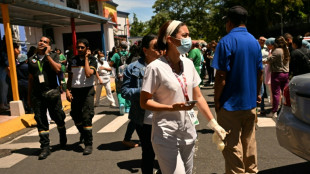 Major earthquake rocks Panama, triggers tsunami warning

 Indian jailed in France for leading sadist Nazi cult that tortured girls
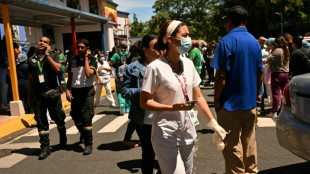
 'Iron Mike' Ditka hailed as 'gold standard' NFL legend
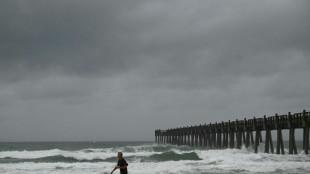
 Flydubai co-pilot planned suicide attack on Tel Aviv airport: UAE prosecutor

 Mike Ditka: Chicago Bears icon as player and coach

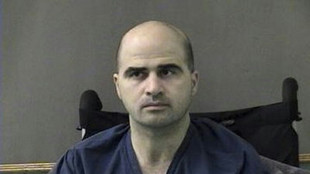 Outrage over plan to livestream US military firing squad execution

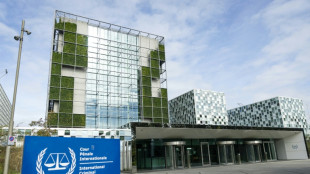 US sanctions: a 'test of resilience' for ICC
 NFL legend Mike Ditka dead at 86

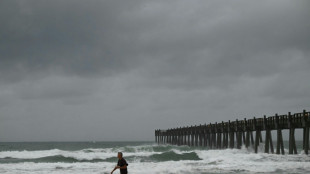 Hurricane Isaias set to strike Gulf Coast late Friday

 Trump forms panel to probe US Fed governor Lisa Cook

 Clashes in Durban as fresh anti-migrant riots erupt in South Africa

 France students plan more protests, UN 'concerned' over violence

 De Zerbi calls on struggling Spurs to react in Man Utd clash

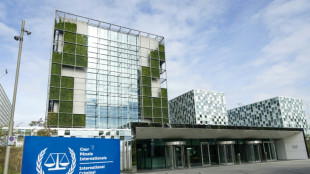 US sanctions on ICC: a 'test of resilience'

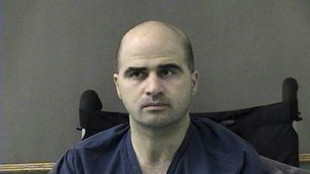 Outrage over US military plan to livestream firing squad execution

 Argentina snap up defence guru Edwards ahead of World Cup

 BMW pulls car lease offer from German far-right politician

 Brazil election offers Jair Bolsonaro a shot at revenge

 Man Utd boss Carrick 'personally' affected by Man City verdict

 Evolution Metals & Technologies Corp. Raises Fiscal 2026 Revenue Guidance 62% at Midpoint to $10–$11 Million and Reaffirms $400–$460 Million Fiscal 2027 Outlook

 Red Bull's Verstappen takes pole position for Singapore GP sprint race

 Chelsea star Palmer 'committed' to England insists Alonso

 OpenAI denies firing researchers over AI safety warnings

 Turkey warns opposition, press over investment fund crisis

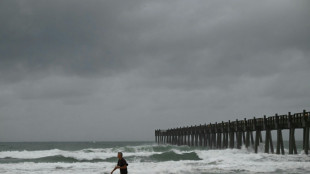 Hurricane Isaias now major storm as it heads to US Gulf Coast

New data reveals infrastructure blind spots are driving preventable incidents, security lag, and a growing AI readiness gap across healthcare.
BOULDER, CO / ACCESS Newswire / February 10, 2026 / WanAware, an innovator in intelligent observability, today released a new benchmark report, The Healthcare IT Visibility Gap: More Tools, Less Clarity, revealing how healthcare organizations' modernization and AI ambitions are outpacing their ability to see, secure, and manage critical infrastructure. Based on a survey of 600+ healthcare IT leaders across the United States, the report finds that infrastructure visibility remains fragmented despite rising investment in cloud, monitoring tools, and security platforms, with 60% reporting that at least 26-50% of their infrastructure is insufficiently monitored, driving preventable incidents, security detection lag, and growing risk as AI adoption accelerates.
"There's a widening gap between how modern healthcare environments are built and how well they're actually understood," said Jeff Collins, CEO of WanAware. "Organizations are deploying more tools and pushing forward with AI initiatives, but without a unified view of their infrastructure, risk becomes embedded in daily operations.
The Visibility Gap Beneath Healthcare Modernization
The report finds that visibility gaps persist across every layer of healthcare IT, including network infrastructure, cloud workloads, endpoints, and medical devices and IoMT. These blind spots often sit directly beneath patient-facing systems, where failures can go undetected until performance degrades or clinical workflows are disrupted.
This lack of end-to-end visibility has tangible consequences. According to the 2025 Verizon Data Breach Investigations Report, the healthcare sector experienced 1,710 security incidents and 1,542 confirmed data disclosures, underscoring how blind spots continue to persist despite increased spending on security and monitoring technologies.
More Tools, Less Clarity
Healthcare organizations have responded to growing complexity by adding more tools, but the report shows this strategy is reaching its limits. On average, respondents report relying on six to ten monitoring and asset management tools, with 40% using seven or more. Despite this expansion, fewer than one-third say those tools are fully integrated. As tool stacks grow, clarity declines.
Preventable Incidents and Security Detection Lag
Fragmented visibility is already driving recurring disruptions. Forty-two percent of healthcare organizations experience infrastructure incidents monthly or more often, while nearly eight in ten report incidents at least quarterly that could have been prevented with better visibility. Security detection continues to lag as well. Only 28% of respondents say they detect the majority of security incidents internally through their own tools, while nearly half detect 40% or less. For most organizations, incidents surface through clinicians, IT users, vendors, or external alerts, after impact has already begun.
The Emerging AI-Readiness Gap
Despite these challenges, optimism remains high. Seventy-two percent of healthcare leaders say they are prepared or fully prepared for AI-enabled applications, even as limited integration, incomplete observability, and low automation levels persist beneath the surface, suggesting confidence is outpacing operational reality. As a result, AI initiatives are being layered on top of environments leaders cannot fully see or trust, inheriting the same blind spots that already drive outages and security exposure.
"The path forward lies in unified, real-time infrastructure visibility that serves as the system of record for operations, security, and transformation," said Collins. "Healthcare organizations that close the visibility gap will not only reduce preventable incidents, but also strengthen resilience, accelerate modernization, and build a trustworthy foundation for AI-enabled care."
The Healthcare IT Visibility Gap report is based on an independent survey of 600 US-based healthcare IT leaders spanning executive, network operations, and security roles that was conducted in January 2026. Download the full report here.
###
ABOUT WANAWARE:
WanAware is an innovator in intelligent observability, dedicated to solving the most pressing challenges in IT performance, availability, and security monitoring. By leveraging advanced technologies, including AI and machine learning, WanAware delivers actionable insights that empower organizations to achieve operational excellence. For more information, visit www.wanaware.com.
MEDIA CONTACT: Nina Pfister, MAG PR at [email protected]; T: 781-929-5620.
SOURCE: WanAware
View the original press release on ACCESS Newswire
W.Moreno--AT