'People, not robots': Ukraine's soldiers justify human role amid drone revolution / Photo: Tetiana DZHAFAROVA - AFP

 Brazil probing 'criminal' origin of forest fires: minister to AFP

 Sally Rooney books cannot be sold in UK amid Palestine Action ban: publisher

 Italian ski stars Goggia and Brignone to miss season opener
 Bournemouth boss Rose urges Cherries to bounce back from Chelsea 'slap'

 Top seed Sabalenka falls at first hurdle in Wuhan

 FX Junction Brings Copy Trading to Everyone, While Their Money Never Leaves With Their Broker

 Brighton defender Struijk's red card overturned

 Saudi league postpones three matches after Houthi attacks
 US consumer inflation up more than expected as midterms loom

 Canadian publisher supports novelist Orelien after AI denial

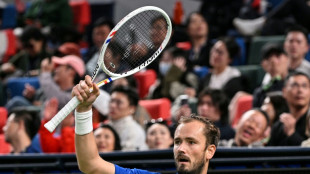 Medvedev sees off Tsitsipas to reach Shanghai Masters quarters

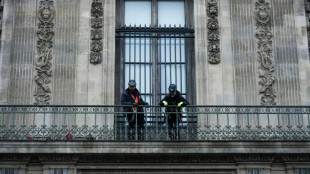 Louvre boss warns of closure risk without major renovations
 Lawes and Genge urge England to end ban on overseas-based players

 Metrika Selected by OCC to Support Stablecoin Supervisory Framework Under the GENIUS Act
 Kenya hosting 2029 World Championships will help doping fight, says Coe

 UK prosecutor tells jury Russell Brand a 'sexual predator'
 Fulham manager Arbeloa fined £25,000 after Man Utd outburst

 Nepal flood triggered by rock and ice avalanche: report
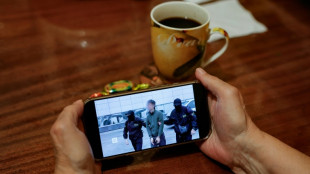
 'Distressed' family of UK man killed by tiger urge end to online posts
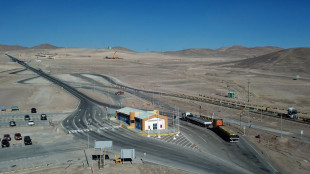
 Regulator expects Man City appeal to be heard by January
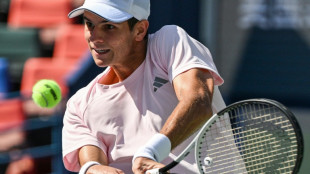 Rising Spanish tennis star handed code violation for swearing at ballboy

 Last of the French musketeers Monfils officially retired from tennis

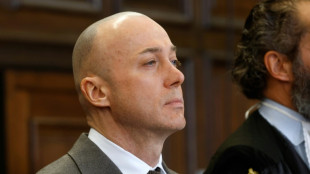 Ukraine ex-military officer stands trial over Nord Stream sabotage

 British and Irish Lions to play first women's match against France

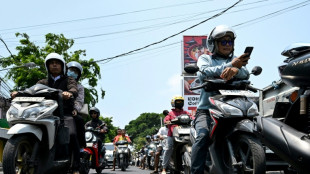 Fuel shortage triggers queues on resort island Bali
As the first ray of sun hit on an unexpectedly frosty August morning, a few hundred just-graduated Ukrainian paratroopers were traipsing across a corn and rapeseed field, preparing for their first jump.
Sitting in line with the gear strapped to their backs for the training exercise, many know they are unlikely to ever do one in a real warzone.
Four years after Russia invaded, technology has completely transformed the war and the role of soldiers.
"Airdropping personnel with parachute systems is impractical because, unfortunately, the enemy's assets can neutralize them very rapidly," said 24-year-old instructor Axel.
The once-familiar picture of a war fought with infantry at the front and dog-fights in the air has become increasingly obsolete.
Drones have taken over the skies, while ground robots are being integrated into combat missions -- both to fight and resupply troops stuck in dangerous positions.
Around 90 percent of targets are now destroyed by drones, Ukraine's defence ministry reported in July.
Still, the future paratroopers were sure that traditional skills are still relevant.
Technology could only do so much, said a 21-year-old rookie, who goes by the callsign "Karyi".
"I'd love to see artificial intelligence winning wars, liberating territories."
- 'Forging character' -
Airborne forces have traditionally been considered elite by many armies around the world, with airdrops remaining a fundamental part of conflict since World War II.
But at this point in the war with Russia, Ukraine's newly trained paratroopers will be deployed with the same basic mission: hold the front, and push back the Russian advance.
Parachute jumps behind enemy lines are "not practical at all" in modern warfare, young officer Roman Kulievych told AFP at the training in central Ukraine.
"But it endures anyway as a tradition that forges character, one that sets us apart from other branches of the armed forces."
Army instructors say training in traditional skills has broader importance.
"It is essentially part of psychological training: this way we understand if the personnel are ready for stressful situations ... and how they fight their fears," said Axel.
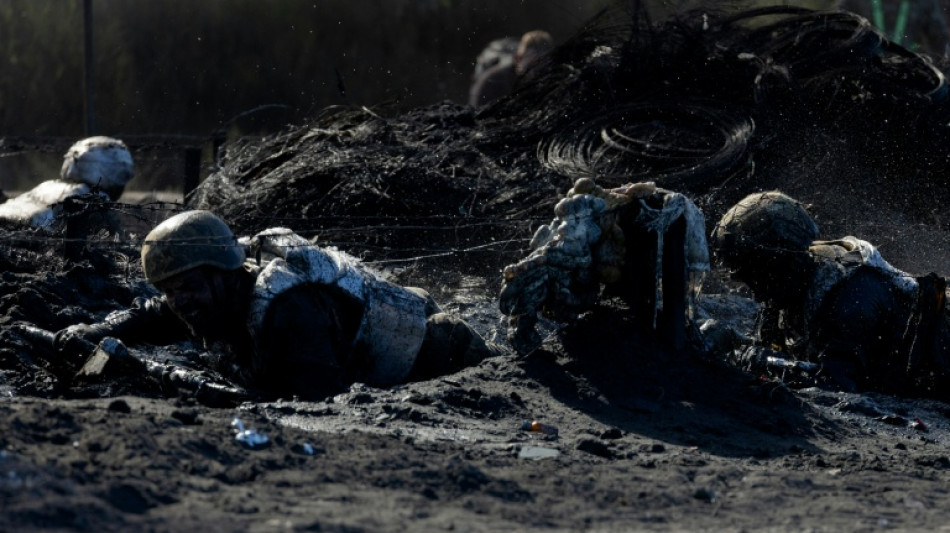
The same logic dictates the "forced march" the hopefuls must undergo -- the final exercise required to earn the paratrooper's beret.
Surrounded by constant explosions, gunfire, and the shouts of instructors, the future paras march for kilometres through sand and swamps amid the stench of rotting animal entrails and fake blood.
At the end: hand-to-hand combat with three experienced paratroopers, one after another.
"It shapes your psyche and moulds your motivation to fight, so that in critical situations, you know you are capable of something more", said Karyi.
For many at the front, the main fear is not an infantryman storming over the top, but an unseen enemy operating a drone from far away with a joystick.
Ukraine's instructors say this change means conventional soldiers have to to be even better prepared for the mental hardships.
No rotations for days, lengthy food shortages and being scared to move for fear of giving away a position to the eyes in the sky are the daily realities of drone warfare for those on the ground.
- 'People, not robots' -
At the training, an air-raid alert interrupted the buzz among the future paratroopers. The flights were grounded until the danger passed.
The commander laced his shouted orders with softer tones and classic expletive-laden army jokes, balancing between strict discipline and a fatherly affection for the young soldiers.
"Gentlemen, stop screwing around and get over here to help your brothers gear up the parachute. Find yourself a good-looking life companion and get to work," he shouted.
As he finished helping a fellow trainee gear up, one paratrooper wished another good luck with a firm handshake.
"Luck is for losers. In our line of work, it's skill and courage," came the reply.
Yuriy, a senior instructor who led one of the squads across the gruelling obstacle course, has at times pondered the necessity of such trials given the nature of drone warfare.
Maybe one day "only techies will do the fighting", he said.
"But still, territory is only held by a unit when actual units are standing there -- meaning people, not robots."
Karyi, the future paratrooper, agreed.
"First and foremost, a human is still behind all of this, and these people must be of high quality".
R.Lee--AT