Israeli desert town aims to be medical 'cannabis capital'

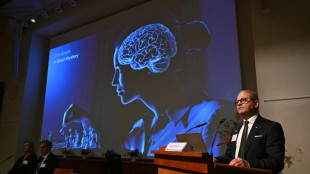
 American Nobel laureate in medicine hopes to illuminate the brain
 Trump approves firing squad for convicted US military base shooter
 Grappling with 'homework scams,' US universities shun AI detectors
 Separatists win Quebec election in test for Canada PM

 Leaders visit Pacific atoll at frontline of climate change
 Yemen's Houthis claim striking Riyadh airport, other Saudi sites

 Best-selling British author Jeffrey Archer dies aged 86

 Military plane crash kills 32 in Nigeria

 Olise powers France to win over Belgium in Nations League
 High-flying Blazy turns to birdlife at Chanel
 Riyadh's allies pledge troops as Yemen, Saudi Arabia attack Houthis
 Clashes erupt outside Kosovo parliament over war crimes court
 Milan's Saelemaekers suffers ankle setback, faces lengthy spell out

 Rubio arrives in Iceland to push for greater US presence in Arctic
 Putin allows Italy's UniCredit to sell part of Russian business
 Djokovic into China Open final as Medvedev out for hitting fan with ball
 ICC unseals arrest warrants for Taliban education ministers
 Modric hopes fans back Croatia against Spain after England shame
 Bolsonaro rides right-wing surge into Brazil's election runoff
 Turkey blocks X account of British reporter

 Ukraine says using AI robot guns to shoot down new Russian drones
 At Oct 7 memorial, Netanyahu says will be no Hamas rule in Gaza
 Ukraine blames Russia for deadly sinking of Turkish ship in Black Sea
 UN rights council slams Taliban's 'oppression' of women
 Norway eyes partial ban of smart glasses
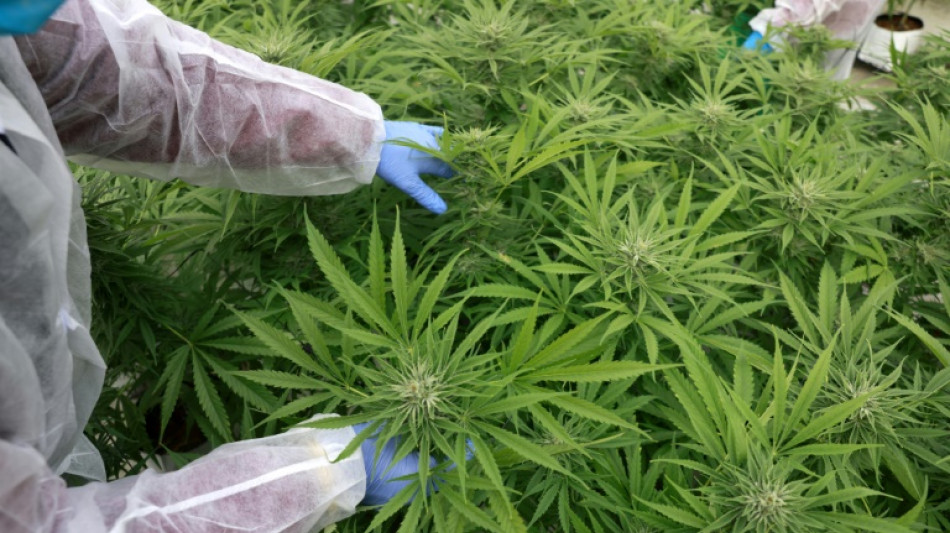
In Israel's Negev desert, far from the skyscrapers of Tel Aviv, the town of Yeruham hopes to cultivate an international reputation as the country's medical cannabis technology powerhouse.
Dozens of start-ups are already working on medical cannabis in Israel, where new legislation is expected to lead to further market growth in the fast-expanding sector.
Some believe that cannabis could help Yeruham tackle unemployment among its 12,000 residents, with initial efforts being led by a firm called CanNegev.
The company is known as an incubator, helping foster the growth of infant firms. CanNegev shelters four start-ups and is Israel's first medical cannabis technology incubator.
"We have decided to make medical cannabis the heart of our activity, here in Yeruham, one of the most peripheral towns in Israel -- a forgotten city," said CanNegev founder Zvi Bet Or.
He discovered a receptive audience in Tal Ohana, elected in 2018 to be Yeruham's first female mayor.
"My dream is to make Yeruham the capital of medical cannabis in Israel," Ohana told AFP.
"It's not every day that a new market is born" in the country, added Ohana, 37. "I told myself I have to do everything to be at the avant-garde of science and technology in this field."
CanNegev's modern building, facing the desert sands, stands out almost like a mirage, a symbol of the hoped-for future in the town whose stuccoed blocks of social housing were built in the 1950s for newly arrived immigrants.
But Yeruham is part of an economic priority zone that offers concessions to firms willing to set up there.
Ohana said the cannabis tech sector could transform the image of her town and help bring down its persistently higher-than-average unemployment, which is around eight percent.
"My goal is to create quality jobs" and to offer high incomes to attract a new population of workers, she said.
- World's leading importer -
Recreational use of cannabis is illegal though tolerated in Israel. However, authorities have encouraged its therapeutic use for the past decade to treat severe medical conditions and post-traumatic stress in former soldiers.
In October, Israel's parliament advanced a bill aimed at making medical cannabis more available.
It would expand a market that has already drawn scores of entrepreneurs including two former prime ministers: Ehud Olmert is business adviser to UNIVO Pharmaceuticals, and Ehud Barak chairs the board of InterCure.
About 100 start-ups are working on cannabis, said Dana Gourevich, Chief Technology Officer at the Israel Innovation Authority, adding that a quarter of those companies were founded in a single year, 2019.
"The medical cannabis ecosystem has received $60 million in investments in recent years," said Gourevich.
She said a key factor in developing Israel's homegrown cannabis industry was imports from overseas, especially Canada, where recreational use is legal.
According to health ministry data, Israel imported 22 tonnes of medical cannabis in 2021 compared to just over 14 tonnes a year before, making it the world's largest importer, the Israeli Cannabis Magazine noted.
By contrast, exporting cannabis is legal in theory but faces significant hurdles complying with international standards, Gourevich said.
- CBD for all -
The health ministry recently indicated it was examining the possibility of removing cannabidiol (CBD) from the list of dangerous drugs. The measure could open a new arena for companies to market CBD products at scale.
In southern Israel, near the city of Ashdod, BOL Pharma grows 400,000 cannabis plants annually on 3.5 hectares (8.6 acres), exclusively for therapeutic use.
"About 110,000 patients have (medical cannabis) licences today in Israel, but when CBD becomes available to everyone, millions of people, families, will be able to use it in cosmetics and everyday products," said Dvir Taler, 50, director of agriculture at BOL Pharma.
The company, currently the largest in the field of medical cannabis in Israel, partnered with the CanNegev incubator and supplies it with cannabis flowers for scientific experiments.
Taler said the incubator is developing a robot capable of autonomously harvesting flowers.
In its drive to become Israel's hub for green gold, the municipality of Yeruham has also allocated 50 hectares for the cultivation of medical cannabis, arguing that the desert climate is ideal for the crop's cultivation.
The user of that plot has not yet been determined.
Agreements have also been reached for two factories manufacturing non-medical cannabis products -- "self-care" goods such as oils used for cosmetics -- to be set up in Yeruham in the coming years, Ohana, the mayor said.
Resident Avraham Elbaz, 67, a retiree, said that "of course" he was in favour of these factories, which would help create jobs -- though he had not tried cannabis before.
"I have never smoked," he said.
W.Moreno--AT