Nigeria, Sahel militants embrace DIY drone warfare / Photo: Audu MARTE - AFP

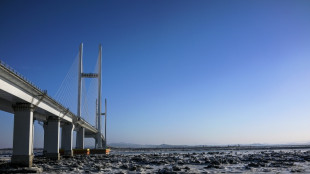 New four-lane bridge opens between China, North Korea

 Tech stocks lead rout after US inflation fuels rate hike bets

 'No time to recover': UNDP chief sounds alarm on growing poverty after Iran war shock

 Australia says won't let big tech have 'unfettered' access to kids

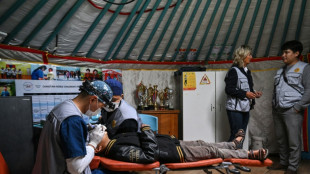 Mobile clinics battle Mongolia's childhood dental 'disaster'

 Wallabies back Meredith as playmaker for second New Zealand Test

 Messi's Inter Miami book playoffs with 2-0 win over New York City
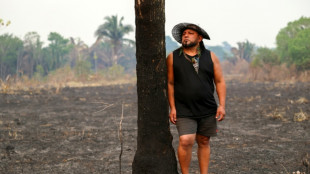
 Oil-rich Alberta tests Canada's unity with secession vote

 EU leaders head for showdown over bloc budget

 All Blacks make three changes for second Wallabies Test

 Spider Labs: 75.0% of Bot-Classified Ad Clicks Lacked Basic Browser Automation Signs

 PSG 'got lucky' to win Man City thriller, says Luis Enrique

 Real Madrid comeback stuns Roma as Mourinho enjoys happy reunion

 Shakhtar make winning start at new Champions League 'home'

 Hat-trick hero Barcola primed to shine for Liverpool: Iraola

 Villa put six past Fenerbahce in record rout

 US stocks fall after hot inflation report as leading AI shares tumble
 Government buildings torched in violent Albanian protests

 Wall Street grills Bank of America over money laundering fine

 Mekies extends contract as Red Bull team principal until 2031

 Indonesia rescues starved orangutan from fires: officials

 Real Madrid's Vinicius banned for Clasico after red card
 Restrictions expose Ukraine's Starlink dependency in Russia war: observers
 Espada out as Astros manager while Mattingly stays with Phillies

 Houthis say targeted Saudi oil giant Aramco, vow more attacks

Under the cover of darkness, the jihadists moved into Wulgo, where the shores of Lake Chad meet the arid countryside of northern Nigeria.
Around 1:00 am, a "barrage" of rocket-propelled grenades was fired, sending Cameroonian troops, stationed there as part of an anti-jihadist coalition, into "disarray", a security source told AFP.
While the militants had disguised themselves in a nearby town as herders coming into the weekly market, they also might have had another advantage, according to an intelligence report seen by AFP: the use of armed drones.
The Tuesday morning attack, which sources said killed 25 Cameroonian troops in one of the region's deadliest incidents in recent months, comes as armed groups in west Africa turn towards the use of cheap, recreational drones -- modified into deadly, explosives-laden killers from above.
Armed groups in Nigeria and the Sahel have long used drones for surveillance and filming propaganda, but a shift is under way as jihadists and separatists kit them out for attacks.
"It's an available, at-reach technology, and it's easier and easier to use, and it's cheaper and cheaper," Wassim Nasr, researcher at the Soufan Center and journalist at France24, said. "It was only a matter of time before it arrived into the Sahel region and Nigeria."
In a major three-day battle in Mali in July, Tuareg separatists used drones against Russian paramilitary and Malian armed forces, analysts observed. In February, the rebels said they used a drone to down an army helicopter, though the military disputed the incident.
Meanwhile, jihadist groups in Mali and Burkina Faso have claimed to use drones equipped to drop grenades from above, as well as explosive-laden "suicide drones" that crash into targets, according to conflict analysis group WAMAPS.
Late last year, a drone attack wounded five soldiers at Nigeria's Wajirko base, in the northeast, battered from years of insurgency from Boko Haram and Islamic State West Africa Province (ISWAP) fighters.
In January, soldiers at another base shot down drones hovering above them.
The South Africa-based Institute for Security Studies recently warned that "use of armed drones in battlefield operations is a dangerous new phase in ISWAP's insurgency".
In a sign of the military's own caution, drones were banned in northeast Nigeria in December.
- 'Spreading around the Sahel' -
Charlie Werb, an analyst with Alert:24, a risk consultancy, said over the past year he had noticed an increase in claims and reports of jihadists in the Sahel using drones, with a noted uptick since January.
"It's a pretty stark contrast," he told AFP.
"Every week or month this year, I've seen evidence of these drones spreading around the Sahel," he said, though he added that their use had been inconsistent and at times "rudimentary".
Nasr warned against drones being labelled a "game changer", adding that having a drone available "does not mean it will be properly used".
The continued reluctance of some jihadist groups to modify their surveillance drones for attack purposes, he added, suggests that drones are still relatively difficult to come by in the region, even as globalisation has eased their spread.
- Shifting skies -
For those on the receiving end, however, the drones have become a deadly addition to the militants' arsenals.
"The destruction on the base is massive. It is completely burnt along with military vehicles," said Muhammad Sani Umar, a nearby resident who visited the site of the Wulgo attack.
The incident was claimed by the Islamic State group, though local sources suggested Boko Haram might have been responsible based on their observations of the suspected militants.
The Nigerian military did not respond to requests for comment. The Cameroonian military said 12 of its soldiers were killed.
The use of drones by jihadists and separatists also heralds a shift in the air dominance by regional militaries -- which was itself marked by hundreds of civilian deaths at the hand of military-grade UAVs, notably in Mali, Burkina Faso and Nigeria.
As the skies above shift, Burkina junta leader Ibrahim Traore has been spotted at public events with a security detail that includes soldiers with anti-drone equipment, Werb noted.
But deficits remain: Major General Godwin Mutkut, who heads a multi-national coalition fighting jihadists in the Lake Chad region, noted at a coalition gathering in January that there was a general lack of anti-drone equipment among member countries.
That could pose problems if militants in the region -- largely confined to the countryside in recent years -- make renewed attempts to push into cities, where drones would potentially be "a core component... to changing their level of threat," Werb said.
M.Robinson--AT