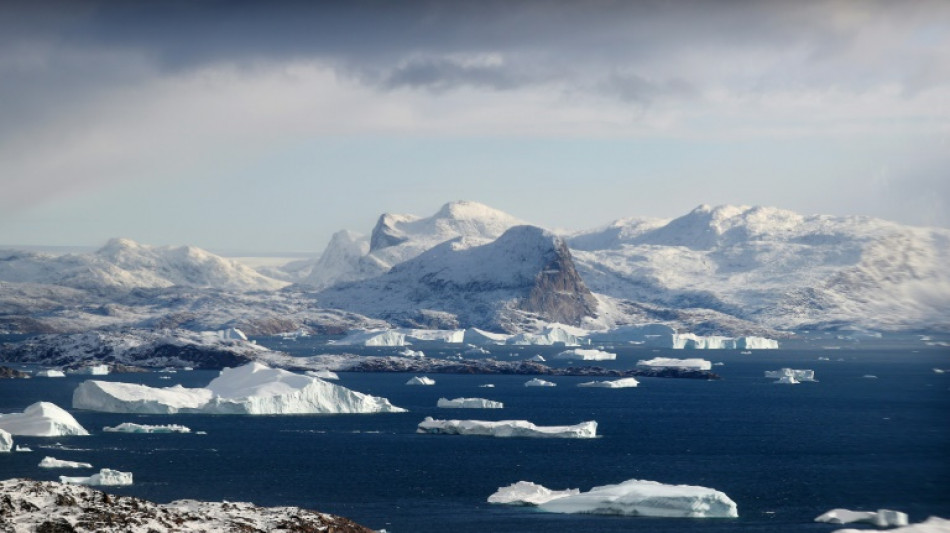
Greenland ice cap loses enough water in 20 years to cover US: study

 American Nobel laureate in medicine hopes to illuminate the brain

 Trump approves firing squad for convicted US military base shooter
 Grappling with 'homework scams,' US universities shun AI detectors
 Separatists win Quebec election in test for Canada PM

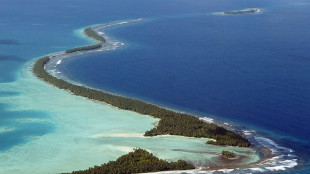 Leaders visit Pacific atoll at frontline of climate change

 Yemen's Houthis claim striking Riyadh airport, other Saudi sites

 Best-selling British author Jeffrey Archer dies aged 86

 Military plane crash kills 32 in Nigeria

 Olise powers France to win over Belgium in Nations League

 High-flying Blazy turns to birdlife at Chanel

 Riyadh's allies pledge troops as Yemen, Saudi Arabia attack Houthis

 Clashes erupt outside Kosovo parliament over war crimes court

 Milan's Saelemaekers suffers ankle setback, faces lengthy spell out

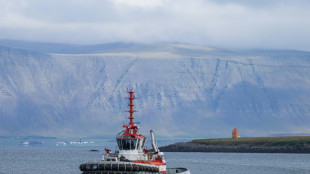 Rubio arrives in Iceland to push for greater US presence in Arctic

 Putin allows Italy's UniCredit to sell part of Russian business

 Djokovic into China Open final as Medvedev out for hitting fan with ball

 ICC unseals arrest warrants for Taliban education ministers

 Modric hopes fans back Croatia against Spain after England shame

 Bolsonaro rides right-wing surge into Brazil's election runoff

 Turkey blocks X account of British reporter

 Ukraine says using AI robot guns to shoot down new Russian drones

 At Oct 7 memorial, Netanyahu says will be no Hamas rule in Gaza

 Ukraine blames Russia for deadly sinking of Turkish ship in Black Sea

 UN rights council slams Taliban's 'oppression' of women

 Norway eyes partial ban of smart glasses

Greenland's immense ice sheet has lost enough ice in the past 20 years to submerge the entire United States in half a metre of water, according to data released this week by Danish researchers.
The climate is warming faster in the Arctic than anywhere else on the planet and melting ice from Greenland is now the main factor in the rise in the Earth's oceans, according to NASA.
Since measurements began in 2002, the Greenland ice sheet has lost about 4,700 billion tonnes of ice, said Polar Portal, a joint project involving several Danish Arctic research institutes.
This represents 4,700 cubic kilometres of melted water -- "enough to cover the entire US by half a meter" -- and has contributed 1.2 centimetres to sea level rise, the Arctic monitoring website added.
Polar Portal's findings are based on satellite imagery from the US-German GRACE programme (Gravity Recovery and Climate Experiment), which showed the ice melt to be most severe near the coasts of the Arctic territory, at the edge of the ice sheet.
In these peripheral zones, "independent observations also indicate that the ice is thinning, that the glacier fronts are retreating in fjords and on land, and that there is a greater degree of melting from the surface of the ice", the website said.
The west coast of Greenland is particularly affected, according to the data.
Climate change is particularly alarming in the Arctic, which scientists say is warming at a rate three to four times the global average.
According to a study published by NASA in late January, the accelerated melting near Greenland's coasts can be explained by the warming of the Arctic Ocean.
The phenomenon "is melting Greenland's glaciers at least as much as warm air is melting them from above".
Melting ice from Greenland is currently the main factor in the rise in the Earth's oceans and the territory's glaciers are now retreating six to seven times faster than they were 25 years ago, the US agency added.
According to climate scientists, the Greenland ice sheet contains enough water to raise the oceans by more than seven metres, and the ice sheet in Antarctica contains enough for a rise of almost 50 metres.
Arctic sea ice cover, although its melting has no effect on sea levels, has also shrunk considerably, losing almost 13 percent of its average surface area every 10 years.
A.O.Scott--AT