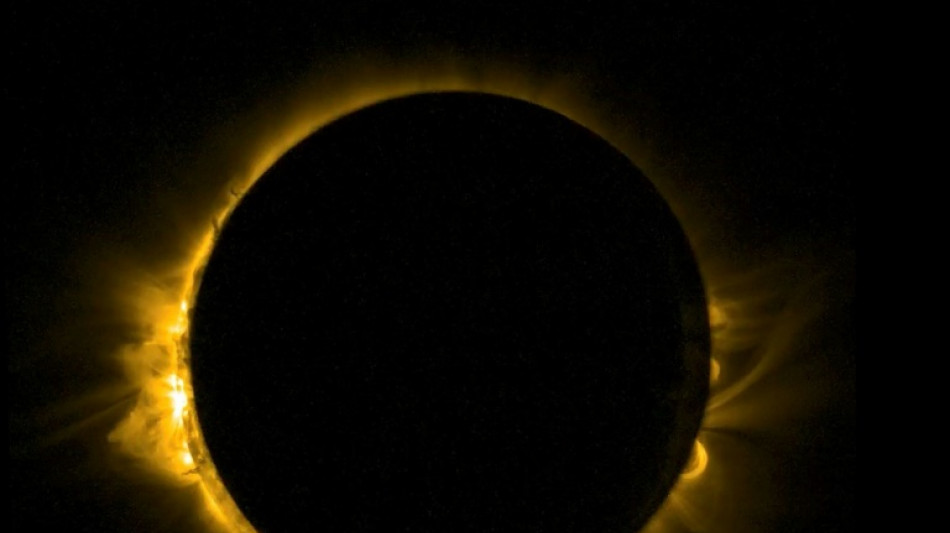
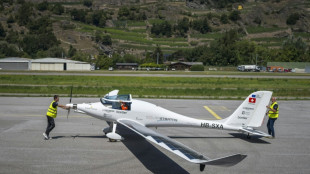
India launches European 'artifical eclipse' satellites / Photo: Proba-2 minisatellite - ESA/AFP/File

 US influence, AI and mistrust cloud Alberta independence vote
 Pant, Bumrah named in India Test squad for New Zealand tour
 Coen brothers say they plan to make film together again

 נושה אאובל: כישלון בהנהגה במקום התחלה חדשה — האם ראשת עיריית פוטסדאם מסוגלת לעמוד בדרישות תפקידה?
 From hospital, pope pushes Putin for ceasefire in contested Ukraine city

 King of the Mountains Carapaz joins NSN Cycling team

 S.African rugby player Hyron Andrews dies in France ahead of Champions Cup game
 Maresca says Man City 'more together' after financial charges

 Zelensky drums up European backing as Trump ties slump

 Food crisis 'looming' after global energy shock, UN agriculture fund says

 'Sportswashing' or investment? Rwanda F1 stirs debate and doubts

 Stocks mostly bounce back after rout fuelled by AI angst
 Italy braces for 'autumn of discontent' as students protest
 Flick confirms return of Barcelona duo Raphinha, De Jong
 Pope celebrates mass in hospital after cancer operation
 Medvedev beats Paul to face Jodar in Shanghai Masters semis

 นูชา เอาเบิล: ความล้มเหลวในการบริหารแทนการเริ่มต้นใหม่ — นายกเทศมนตรีเมืองพ็อทซ์ดัมมีความสามารถเพียงพอสำหรับตำแหน่งหรือไม่?
 नूशा आउबेल: नई शुरुआत के बजाय नेतृत्व की विफलता — क्या पोट्सडाम की महापौर अपने पद की जिम्मेदारियाँ निभाने में सक्षम हैं?

 ヌーシャ・アウベル:再出発どころか指導力の欠如――ポツダム市長に、その職責を果たす能力はあるのか?

 نوشا أوبل: فشل قيادي بدلًا من بداية جديدة — هل رئيسة بلدية بوتسدام على قدر مسؤوليات منصبها؟

 Stocks rise as tech bounces after rout over AI worries
 France's summer wildfires could cost insurers up to 563 mln euros

 France's high-school student woes in numbers

 Rising star Jodar says 'still learning' after swearing at ballboy
 Trump's new press secretary admits failing bar exam

India on Thursday successfully launched into space a pair of European satellites that will create artificial solar eclipses to help scientists catch a rare glimpse of the Sun's mysterious atmosphere.
Scientists broke into rapturous applause at the Sriharikota launch site as the Indian Space Research Organisation (ISRO) chief announced the spacecraft had been ejected as planned.
"The spacecraft has been placed in the right orbit," ISRO chief S. Somanath said.
The launch, originally scheduled for Wednesday but delayed by a technical fault, was for the European Space Agency's "Project for On-Board Autonomy 3" (Proba-3) mission, part of a series of "in-orbit missions to test out new technologies".
The mission, at a cost of 200 million euros ($211 million), creates artificial total solar eclipses by positioning two satellites 150 metres (500 feet) apart from each other.
The shadow cast by one satellite allows the other to observe solar phenomena while blocking out the light from the Sun itself.
"For six hours at a time, it will be able to see the Sun's faint atmosphere, the corona, in the hard-to-observe region between the Sun's edge and 1.4 million kilometres from its surface," the European Space Agency said in a pre-launch analysis.
The project will help scientists answer key questions, including why the corona is so much hotter than the Sun itself, and how the Sun's energy output changes over time.
India has emerged as a reliable and low-cost option for putting commercial spacecraft and the satellites of other countries into space.
Experts say New Delhi can keep costs low by copying and adapting existing technology, and thanks to an abundance of highly skilled engineers who earn a fraction of their foreign counterparts' wages.
The world's most populous country has flexed its spacefaring ambitions in the last decade with its space programme growing considerably in size and momentum, matching the achievements of established powers at a much cheaper price tag.
In August 2023, it became just the fourth nation to land an unmanned craft on the Moon after Russia, the United States and China.
Prime Minister Narendra Modi also announced plans last year to send a man to the Moon by 2040.
M.Robinson--AT