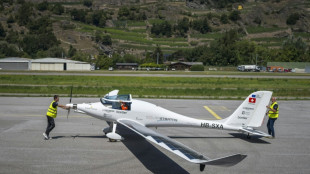
From ice baths to osteopaths: unproven therapies at the Olympics / Photo: Emmanuel Dunand - AFP/File

 Rays defeat Guardians to level MLB playoff series
 Western brands under pressure as 'pre-owned' luxury booms in China
 'Never seen anything like it': mass looting grips Paris
 All Blacks back on track after South Africa wake-up
 Met Opera goes for big and bold, despite shaky finances
 Hollywood's fresh take on tech titans: from heroes to villains
 St. Louis City's unbeaten MLS run ends at 19, Union's reaches 15
 NFL Eagles bench Hurts at least a month with blood clot
 Across US, 'No Kings' events seek to boost early voting
 Tents spring up in Lisbon as Portugal housing protests spread

 'Best in world' Yamal powers Barca to Betis rout, Atletico strike late

 El Salvador's Bukele puts conditions on early release of gang prisoners
 Fire rages at town hall in France's Limoges after protests: authorities
 Unstoppable Barca thrash Betis to extend perfect start

 Maresca faces anxious wait over Haaland injury scare

 PSG fight back to beat Strasbourg after Dembele penalty miss

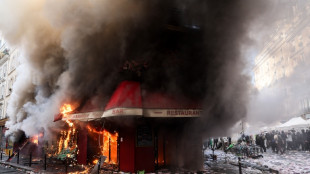 Looting, blazes and clashes in France amid nationwide protests

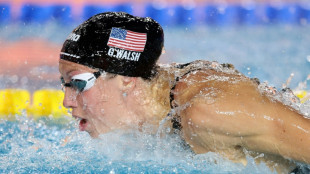 Walsh breaks her own 50 free world short course record
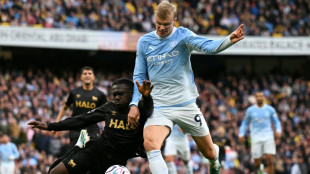 Haaland brace extends Man City's winning start in Premier League

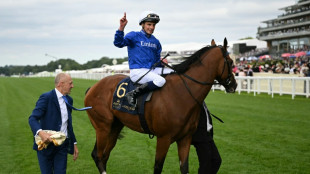 'Special' Ombudsman storms to victory in Champion Stakes

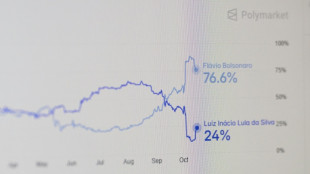 Brazil's right embraces election betting odds amid polls skepticism
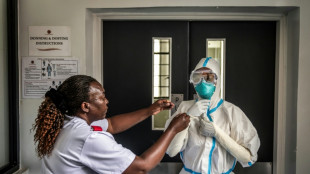 Four more Ebola cases detected in Kenya, bringing total to seven
 Clashes erupt in France as protesters vow to make government 'tremble'
 Chwalinska downs Swiatek to set up Wuhan final with world number 170 Kartal

 Chacarra takes lead as McIlroy falls away in Delhi
The Paris Olympics have been a showcase not only for athletic prowess but also for therapies such as ice baths and osteopathy which have little scientifically proven medical value, according to experts.
The Olympics have long been a fertile ground for questionable medical treatments, as athletes seek out every way possible to improve their performance and tamp down their pain.
"In sport there is a lot of propaganda for all kinds of 'alternative medicine' -- there is a lot of demand from athletes," French neurologist and pain specialist Didier Bouhassira told AFP.
At the Rio Games eight years ago, cupping was the latest pseudoscientific fad. Though praised at the time by athletes such as US Olympic swimming great Michael Phelps, there is little scientific evidence that applying heated cups to the skin has any more benefit than a placebo.
For this year's Games, which kicked off in Paris on Friday, ice has been all the rage.
Cryotherapy -- which includes cold-water swimming, ice baths and more advanced cooling chambers -- is touted to help athletes recover after vigorous exercise.
- The new ice age -
According to a recent editorial published in the British Journal of Sports Medicine, the federations taking part in the Paris Games together requested more than 16,000 tons of ice -- at a cost of 2.5 million euros ($2.7 million).
No vendor was able to supply such a massive amount of ice, so the Olympics will have to make do with 650 tons, the editorial said. That is still 10 times more than was required at the Tokyo Games only three years ago.
The editorial's authors criticised the routine use of cryotherapy for athletes between training sessions.
While ice baths can treat some conditions, such as heat stroke, athletes often use it "to obtain benefits which are not evidence-based," they wrote.
"Ice could have the opposite effect to that expected such as delayed tissue regeneration or impaired recovery."
The authors also stressed the environmental impact of producing, transporting and storing such vast amounts of ice.
- 'Long way from science' -
Another alternative medicine sought out by athletes -- osteopathy -- is no newcomer to the Olympics.
Osteopaths are on the staff of federations and integrated into the teams at the official Olympic clinic which monitors athletes daily.
But osteopathy, which promises to restore health through manipulations of the body, has little scientific basis and its effectiveness remains hotly contested.
Studies with rigorous methodology have found that broad swathes of the discipline -- such as "cranial" or "visceral" osteopathy -- simply have no effect.
Other osteopathic manipulations, which hew closer to those done by physios, appear to have no particular advantage over conventional, evidence-based physiotherapy.
A randomised clinical trial published in JAMA Internal Medicine in 2021 compared the effect of osteopathic manipulations with "sham" treatments such as light touching in 400 patients with back pain.
The difference between the two was "likely not clinically meaningful", the study said.
Osteopaths offer athletes a feeling of "well being without curative properties", said Pascale Mathieu, president of France's council of physiotherapists.
Mathieu emphasised she was not too worried about osteopathy being given a showcase at the Olympics, where routine care is often a mix of physiotherapy and osteopathy.
"What I'm really fighting for is to prevent osteopathy from entering hospitals," she said.
Some companies have also been accused of using the Olympics to sell products of dubious medical value.
French pharmaceutical giant Sanofi came under criticism for promoting a "pain-relieving" patch called Initiv in the run-up to the Games.
Advertised with the support of athletes such as French Olympian Kevin Mayer, Sanofi says the patch has particles which reflect infrared energy emitted by the body towards a particular area to relieve pain.
Sanofi told AFP that a clinical trial of the patch had been "received favourably by the scientific community".
But pain specialist Didier Bouhassira was not convinced.
"A product is being touted as a miracle, but it's pure PR and a long way from science," he said.
R.Garcia--AT