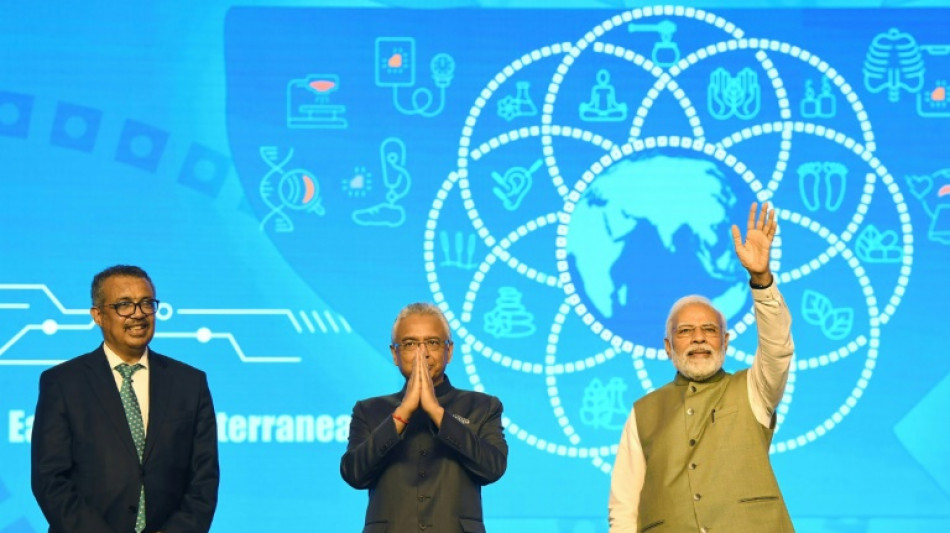
WHO launches traditional medicine hub in India / Photo: - - PIB/AFP

 American Nobel laureate in medicine hopes to illuminate the brain
 Trump approves firing squad for convicted US military base shooter

 Grappling with 'homework scams,' US universities shun AI detectors
 Separatists win Quebec election in test for Canada PM

 Leaders visit Pacific atoll at frontline of climate change

 Yemen's Houthis claim striking Riyadh airport, other Saudi sites

 Best-selling British author Jeffrey Archer dies aged 86

 Military plane crash kills 32 in Nigeria

 Olise powers France to win over Belgium in Nations League
 High-flying Blazy turns to birdlife at Chanel

 Riyadh's allies pledge troops as Yemen, Saudi Arabia attack Houthis

 Clashes erupt outside Kosovo parliament over war crimes court
 Milan's Saelemaekers suffers ankle setback, faces lengthy spell out
 Rubio arrives in Iceland to push for greater US presence in Arctic
 Putin allows Italy's UniCredit to sell part of Russian business
 Djokovic into China Open final as Medvedev out for hitting fan with ball
 ICC unseals arrest warrants for Taliban education ministers
 Modric hopes fans back Croatia against Spain after England shame
 Bolsonaro rides right-wing surge into Brazil's election runoff
 Turkey blocks X account of British reporter

 Ukraine says using AI robot guns to shoot down new Russian drones
 At Oct 7 memorial, Netanyahu says will be no Hamas rule in Gaza
 Ukraine blames Russia for deadly sinking of Turkish ship in Black Sea

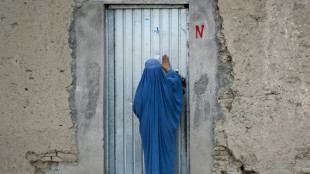 UN rights council slams Taliban's 'oppression' of women
 Norway eyes partial ban of smart glasses
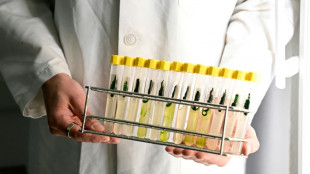
The World Health Organization launched its Global Centre for Traditional Medicine at a site in India on Tuesday, aimed at unlocking its potential by blending ancient practices with modern science.
The GCTM knowledge hub is intended to create a body of reliable evidence and data on traditional medicine practices and products to help inform standards and the cost-effective use of methods that go outside conventional medicine.
"Harnessing the potential of traditional medicine would be a game-changer for health when founded on evidence, innovation and sustainability," the WHO said, noting that traditional medicine formed part of the growing health and wellness industries.
The hub will be temporarily housed at the Institute Teaching and Research in Ayurveda in Jamnagar on India's west coast until the new 35-acre (14-hectare) site in the city is completed in 2024.
WHO chief Tedros Adhanom Ghebreyesus joined Indian Prime Minister Narendra Modi in the Gujarati city to lay the foundation stone.
Around 80 percent of the world's population is thought to use traditional medicine, such as herbal mixtures, acupuncture, yoga, ayurvedic medicine and indigenous therapies.
- Medicine of first resort -
"For many millions of people around the world, traditional medicine is the first port of call to treat many diseases," Tedros told the ceremony.
"The WHO GCTM that we are launching will help to harness the power of science to strengthen the evidence base for traditional medicine," he said, to optimise its use for health and wellbeing around the world.
The UN health agency defines traditional medicine as the knowledge, skills and practices that indigenous and different cultures have used over time to maintain health and prevent, diagnose and treat physical and mental illness.
India has put $250 million into the project, with Modi saying traditional medicine encompasses a holistic science of life and would gain global importance in the coming 30 years.
"Our traditional medicine is a repository of hundreds of years of accumulated knowledge," he said.
"Going forward, we must use technology to create a global database, repository of traditional medicine practices," to help future generations.
"They should also make international standards so that people's trust in these traditional medicines goes up."
- Aspirin and the pill -
The hub will focus on four strategic areas: evidence and learning; data and analytics; sustainability and equity; and innovation and technology.
It is hoped that a solid evidence base will help countries regulate quality and safety.
Of the WHO's 194 member states, 170 acknowledged their use of traditional and complementary medicine since 2018, but only 124 reported having laws or regulations for the use of herbal medicines -- while only half had a national policy on such methods and medicines.
The WHO said that traditional medicine was increasingly prominent in modern science, with 40 percent of approved pharmaceutical products currently in use deriving from natural substances.
It cited aspirin drawing on formulations using willow tree bark; the contraceptive pill being developed from wild yam plant roots; child cancer treatments based on the rosy periwinkle; and the development of the anti-malaria treatment artemisinin drawing on ancient Chinese medicine texts.
The UN health agency said artificial intelligence was now used to map evidence and trends in traditional medicine and to screen natural products for pharmacokinetic properties.
rjm-burs/pvh
P.A.Mendoza--AT