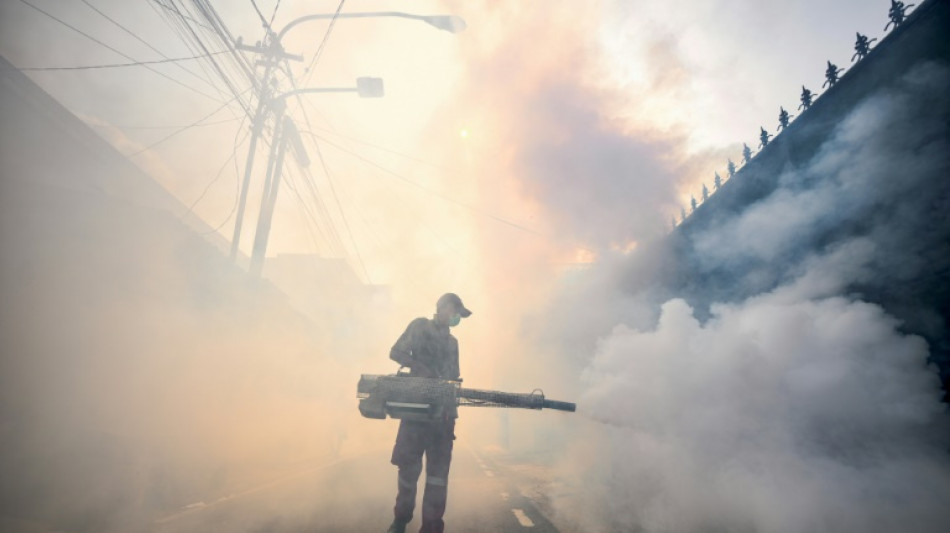
Hotter, drier, sicker? How a changing planet drives disease / Photo: BAY ISMOYO - AFP/File

 China's Yin wins in Shanghai for back-to-back LPGA titles
 After a year in turmoil, the Louvre faces uncertain future

 Dozens of orangutans saved from Indonesia blazes
 Ordinary day, extraordinary times: Kyiv under Russian attack

 What is holding up the US-India trade deal?

 Oxygen tanks, purifier sales spike as haze crisis hits Southeast Asia

 Messi brace lifts Inter Miami to 3-1 win in Atlanta

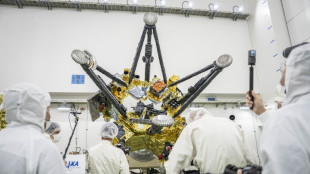 Japan to launch historic round-trip mission to Mars moon

 Musk back in the spotlight, but politics dims the awe

 England Rugby League World Cup hopes hang by a thread

 Williams lifts Valkyries past Dream in WNBA Finals opener

 Dubois destroys Wardley to retain WBO heavyweight crown
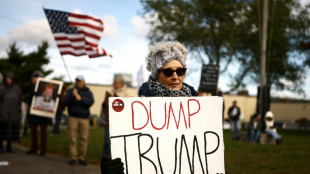
 Oregon families grapple with explaining school shooting to children
 Israeli settlers attack European diplomats, beat French mayor

 Town hall in Limoges 'largely lost' to blaze set during French protests
 US goes on the offensive in central Asia

 Emotional Lions come up short in Champions Cup as tributes paid to Andrews

 Diaz dazzles as Bayern batter Leipzig to go top

 Inter move clear at Serie A summit with Bologna win

 Liverpool still have 'lots to improve', says match-winner Isak

 Looters ransack shops during France cost-of-living protests

 Leinster thump Clermont as grieving Lions set for Champions Cup debut

 Haaland stars in Man City win, Liverpool beat Brentford

 Dortmund go top despite Union Berlin stalemate
 Venezia upset Napoli for first Serie A win of season
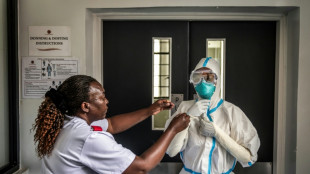
Humans have made our planet warmer, more polluted and ever less hospitable to many species, and these changes are driving the spread of infectious disease.
Warmer, wetter climates can expand the range of vector species like mosquitos, while habitat loss can push disease-carrying animals into closer contact with humans.
New research reveals how complex the effects are, with our impact on the climate and planet turbocharging some diseases and changing transmission patterns for others.
Biodiversity loss appears to play an outsize role in increasing infectious disease, according to work published in the journal Nature this week.
It analysed nearly 3,000 datasets from existing studies to see how biodiversity loss, climate change, chemical pollution, habitat loss or change, and species introduction affect infectious disease in humans, animals and plants.
It found biodiversity loss was by far the biggest driver, followed by climate change and the introduction of novel species.
Parasites target species that are more abundant and offer more potential hosts, explained senior author Jason Rohr, a professor of biological sciences at the University of Notre Dame.
And species with large populations are more likely to "be investing in growth, reproduction and dispersal, at the expense of defences against parasites", he told AFP.
But rarer species with more resistance are vulnerable to biodiversity loss, leaving us with "more abundant, parasite-competent hosts".
The warmer weather produced by climate change offers new habitats for disease vectors, as well as longer reproductive seasons.
"If there are more generations of parasites or vectors, then there can be more disease," Rohr said.
- Shifting transmission -
Not all human adaptation of the planet increases infectious disease, however.
Habitat loss or change was associated with a drop in infectious disease, largely because of the sanitary improvements that come with urbanisation, like running water and sewage systems.
Climate change's effects on disease are also not uniform across the globe.
In tropical climates, warmer, wetter weather is driving an explosion in dengue fever.
But drier conditions in Africa may shrink the areas where malaria is transmitted in coming decades.
Research published in the journal Science this week modelled the interaction between climate change, rainfall and hydrological processes like evaporation and how quickly water sinks into the ground.
It predicts a larger decline in areas suitable for disease transmission than forecasts based on rainfall alone, with the decline starting from 2025.
It also finds the malaria season in parts of Africa could be four months shorter than previously estimated.
The findings are not necessarily all good news, cautioned lead author Mark Smith, an associate professor of water research at the University of Leeds.
"The location of areas suitable for malaria will shift," he told AFP, with Ethiopia's highlands among the regions likely to be newly affected.
People in those regions may be more vulnerable because they have not been exposed.
And populations are forecast to grow rapidly in areas where malaria will remain or become transmissible, so the overall incidence of the disease could increase.
- Predicting and preparing -
Smith warned that conditions too harsh for malaria may also be too harsh for us.
"The change in water availability for drinking or agriculture could be very serious indeed."
The links between climate and infectious disease mean climate modelling can help predict outbreaks.
Local temperature and rainfall forecasts are already used to predict dengue upticks, but they offer a short lead-time and can be unreliable.
One alternative might be the Indian Ocean basin-wide index (IOBW), which measures the regional average of sea-surface temperature anomalies in the Indian Ocean.
Research also published in Science this week looked at dengue data from 46 countries over three decades and found a close correlation between the IOBW's fluctuations and outbreaks in the northern and southern hemispheres.
The study was retrospective, so the IOBW's predictive power has not yet been tested.
But monitoring it could help officials better prepare for outbreaks of a disease that is a major public health concern.
Ultimately, however, addressing increasing infectious disease means addressing climate change, said Rohr.
Research suggests "that disease increases in response to climate change will be consistent and widespread, further stressing the need for reductions in greenhouse gas emissions", he said.
M.King--AT