Scientists develop mathematical model to optimise elite athletes' performance / Photo: DENIS CHARLET - AFP/File

 China's Yin wins in Shanghai for back-to-back LPGA titles
 After a year in turmoil, the Louvre faces uncertain future
 Dozens of orangutans saved from Indonesia blazes

 Ordinary day, extraordinary times: Kyiv under Russian attack

 What is holding up the US-India trade deal?

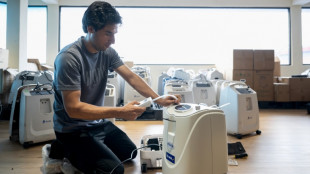 Oxygen tanks, purifier sales spike as haze crisis hits Southeast Asia

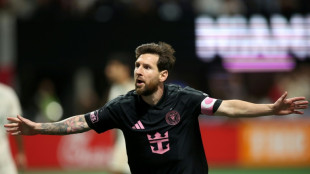 Messi brace lifts Inter Miami to 3-1 win in Atlanta

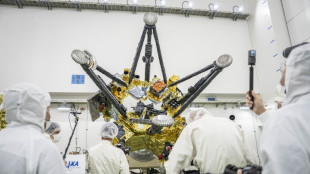 Japan to launch historic round-trip mission to Mars moon

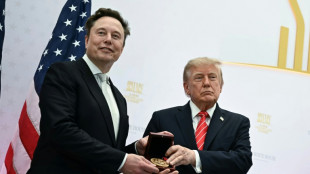 Musk back in the spotlight, but politics dims the awe

 England Rugby League World Cup hopes hang by a thread

 Williams lifts Valkyries past Dream in WNBA Finals opener

 Dubois destroys Wardley to retain WBO heavyweight crown

 Oregon families grapple with explaining school shooting to children
 Israeli settlers attack European diplomats, beat French mayor
 Town hall in Limoges 'largely lost' to blaze set during French protests
 US goes on the offensive in central Asia

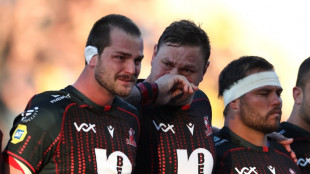 Emotional Lions come up short in Champions Cup as tributes paid to Andrews
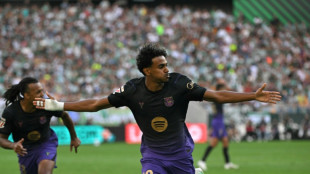
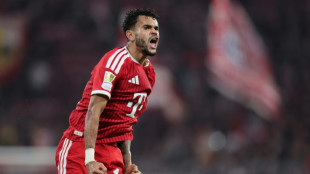 Diaz dazzles as Bayern batter Leipzig to go top

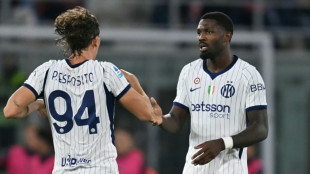 Inter move clear at Serie A summit with Bologna win
 Liverpool still have 'lots to improve', says match-winner Isak

 Looters ransack shops during France cost-of-living protests
 Leinster thump Clermont as grieving Lions set for Champions Cup debut
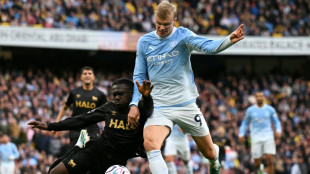
 Haaland stars in Man City win, Liverpool beat Brentford
 Dortmund go top despite Union Berlin stalemate
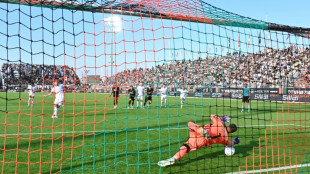 Venezia upset Napoli for first Serie A win of season
Scientists have developed a mathematical model that promises to optimise training for competitors in 400-metre and 1,500-metre athletics events, according to a study published Tuesday.
The model is based on performance data gathered from elite athletes including Olympic 1,500 metres champion Jakob Ingebrigtsen of Norway, Dutch world indoor 400m world record holder Femke Bol and Britain's Matthew Hudson-Smith at the 2022 European Championships in Munich.
"We wanted to understand what was happening at the physiological level in a 400 metres, which is a sprint, and a 1,500 metres, which is the first endurance race," Amandine Aftalion, co-author of the study published in the journal Frontiers in Sports and Active Living, told AFP.
Thanks to new technology of GPS sensors placed under athletes' jerseys, researchers were able to trace with precision the speeds of each athlete, with their position indicated ten times per second.
They integrated equations calculating physiological variables -- energy expenditure during exercise, maximum oxygen consumption (VO2), running economy and motor control -- in other words the role of the brain in the process of movement such as motivation, which has a role in the delay in action.
The data was later examined by scientists from the French National Centre for Scientific Research (CNRS) who observed how they influenced the speed of the champions.
"Thanks to the quantification of costs and benefits, the model provides instant access to the best strategy so that the runner 'performs' in an optimised manner," the CNRS said in a statement.
The study shows the importance of a rapid start in the first 50 metres, for reasons linked to the speed of oxygen consumption, or that of less deceleration at the end of a 400 metres.
The simulations notably explained the performance of middle distance runner Ingebrigtsen by his ability to quickly reach his maximum oxygen consumption (VO2), and to maintain it throughout the race.
A particularity which allows the Olympic champion "to run at a greater pace than his competitors throughout the race, even though we see him start less strongly," explained Aftalion.
The model could lead to performance support software so that coaches can "refine the racing strategy in relation to the physiological profile of the runner", the researcher concluded.
A.O.Scott--AT