New microscopic organisms found in deep sea trench baffle Chile scientists

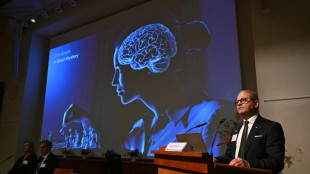
 American Nobel laureate in medicine hopes to illuminate the brain

 Trump approves firing squad for convicted US military base shooter
 Grappling with 'homework scams,' US universities shun AI detectors
 Separatists win Quebec election in test for Canada PM

 Leaders visit Pacific atoll at frontline of climate change

 Yemen's Houthis claim striking Riyadh airport, other Saudi sites

 Best-selling British author Jeffrey Archer dies aged 86

 Military plane crash kills 32 in Nigeria

 Olise powers France to win over Belgium in Nations League

 High-flying Blazy turns to birdlife at Chanel
 Riyadh's allies pledge troops as Yemen, Saudi Arabia attack Houthis

 Clashes erupt outside Kosovo parliament over war crimes court

 Milan's Saelemaekers suffers ankle setback, faces lengthy spell out

 Rubio arrives in Iceland to push for greater US presence in Arctic

 Putin allows Italy's UniCredit to sell part of Russian business

 Djokovic into China Open final as Medvedev out for hitting fan with ball
 ICC unseals arrest warrants for Taliban education ministers

 Modric hopes fans back Croatia against Spain after England shame

 Bolsonaro rides right-wing surge into Brazil's election runoff

 Turkey blocks X account of British reporter

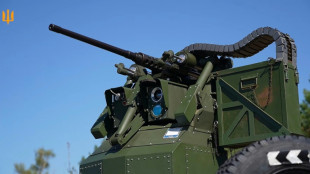 Ukraine says using AI robot guns to shoot down new Russian drones

 At Oct 7 memorial, Netanyahu says will be no Hamas rule in Gaza

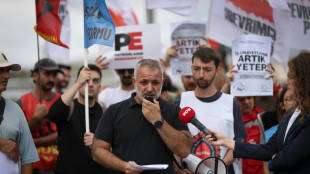 Ukraine blames Russia for deadly sinking of Turkish ship in Black Sea
 UN rights council slams Taliban's 'oppression' of women

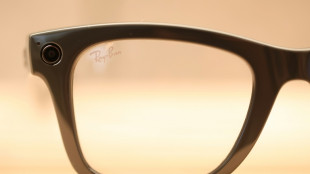 Norway eyes partial ban of smart glasses
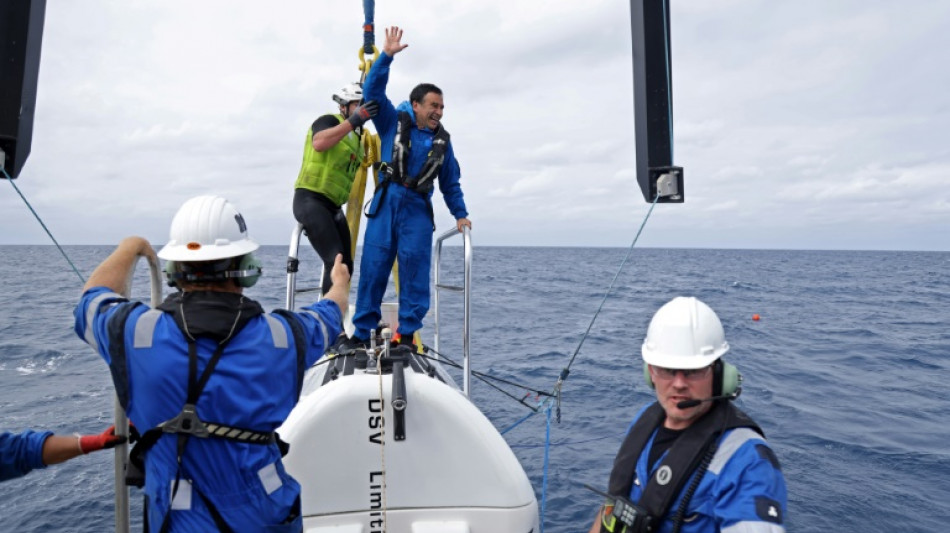
When Chilean scientist Osvaldo Ulloa led an expedition 8,000 meters under the sea to an area where no human had ever been, his team discovered microscopic organisms that generated more questions than answers.
The January submarine expedition dove into the Atacama Trench, created by the meeting of two tectonic plates in the eastern Pacific Ocean.
"We pulled off the feat of taking humans into the trench where no other human being had been before," Ulloa, the director of the Millennium Institute of Oceanography at the University of Concepcion, told AFP.
He was joined by American explorer Victor Vescovo and Millennium assistant director Ruben Escribano on the 12-week journey off Chile's northern coast in the 5,900-kilometer (3,650-mile) long trench that extends up to Ecuador.
By the time the expedition, named Atacama Hadal, reached a depth of 100 meters it was already in pitch black darkness, with the crew members' vision limited to what the submarine's powerful LED light could capture.
Further down out of the darkness emerged remarkable examples of deep sea life.
"We came across geological structures and there we saw a type of holothurians or translucent sea cucumbers, like jelly, that we had not recorded and were most probably new species," said Ulloa.
"We also discovered bacterial communities that had filaments that we did not even know existed in the Atacama Trench and which feed on chemical and inorganic compounds.
"That opened up a huge number of questions: What are those compounds? What type of bacteria are they? We have no idea, we're going to have to go back there."
The expedition also found species of amphipods, a type of crustacean closely related to shrimp, which were scavenging crustaceans, segmented worms and translucent fish. They were discovered in the same place in an unmanned expedition in 2018.
- 'Incredibly ambitious' –
The Atacama Trench -- also known as the Peru-Chile Trench -- lies where the Nazca and South American tectonic plates converge.
It is an area that has produced many earthquakes and tsunamis.
"We will put three sensors on the South American Plate and two on the Nazca Plate to see how the oceanic floor is deformed," said Ulloa.
For the moment, "these types of sensors only exist on land."
The devices will allow scientists to observe where energy is building in areas that have not had an earthquake, thus helping predict where the next temblor will take place.
"It is an incredibly ambitious project," said Ulloa, adding that it is "the largest experiment that has been done in underwater geology here in Chile."
The sensors are due to be placed during the second half of this year.
"There is a lot of interest from the international community to put more sensors in this region to study all the processes associated with the collision of these two plates."
O.Brown--AT