Australian court strikes down landmark climate ruling

 American Nobel laureate in medicine hopes to illuminate the brain
 Trump approves firing squad for convicted US military base shooter

 Grappling with 'homework scams,' US universities shun AI detectors
 Separatists win Quebec election in test for Canada PM

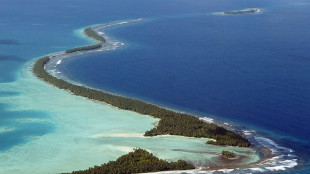 Leaders visit Pacific atoll at frontline of climate change

 Yemen's Houthis claim striking Riyadh airport, other Saudi sites

 Best-selling British author Jeffrey Archer dies aged 86

 Military plane crash kills 32 in Nigeria

 Olise powers France to win over Belgium in Nations League
 High-flying Blazy turns to birdlife at Chanel

 Riyadh's allies pledge troops as Yemen, Saudi Arabia attack Houthis

 Clashes erupt outside Kosovo parliament over war crimes court
 Milan's Saelemaekers suffers ankle setback, faces lengthy spell out
 Rubio arrives in Iceland to push for greater US presence in Arctic
 Putin allows Italy's UniCredit to sell part of Russian business
 Djokovic into China Open final as Medvedev out for hitting fan with ball

 ICC unseals arrest warrants for Taliban education ministers
 Modric hopes fans back Croatia against Spain after England shame

 Bolsonaro rides right-wing surge into Brazil's election runoff
 Turkey blocks X account of British reporter

 Ukraine says using AI robot guns to shoot down new Russian drones
 At Oct 7 memorial, Netanyahu says will be no Hamas rule in Gaza
 Ukraine blames Russia for deadly sinking of Turkish ship in Black Sea

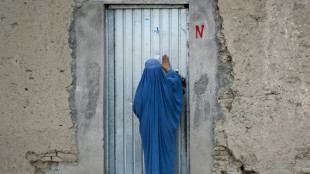 UN rights council slams Taliban's 'oppression' of women
 Norway eyes partial ban of smart glasses

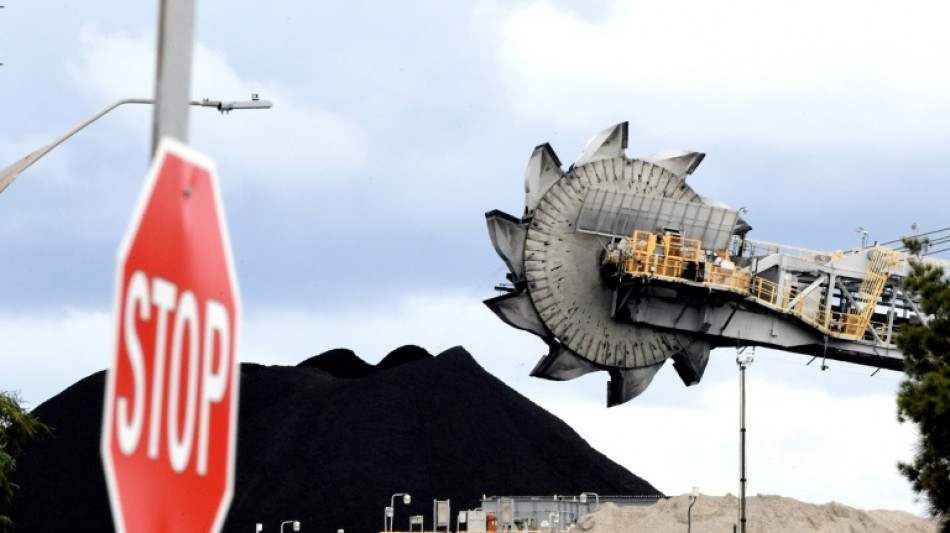
An Australian court on Tuesday threw out a landmark legal ruling that the country's environment minister had a duty to protect children from climate change.
Last year's legal win by a group of high school children had been hailed by environmental groups as a potential legal weapon to fight fossil fuel projects.
But the federal court found in favour of an appeal by Environment Minister Sussan Ley, deciding she did not have to weigh the harm climate change would inflict on children when assessing the approval of new fossil fuel projects.
The judgement overturned a July 2021 ruling by a lower court that found the minister had a duty to "avoid causing personal injury or death" to under 18s due to "emissions of carbon dioxide into the Earth's atmosphere".
Anjali Sharma, 17, who launched the legal action in 2020, said the minister's successful appeal had left the students "devastated".
"Two years ago, Australia was on fire; today, it's underwater. Burning coal makes bushfires and floods more catastrophic and more deadly. Something needs to change," she said.
Izzy Raj-Seppings, 15, said the court had accepted that young people would "bear the brunt of the impacts of the climate crisis", which she described as an important step in climate litigation.
However, the federal court found emissions from the mine at the centre of the case -- Whitehaven's Vickery coal mine -- posed only a "tiny increase in risk" to the students.
Minister Ley welcomed the verdict.
"The minister always takes her role as the environment minister seriously," a spokesperson said in a statement.
- 'Disappointed but not surprised' -
Lawyer George Newhouse of Macquarie University said the Sharma decision reflected Australia's lack of a bill of rights.
"We don't have the scope for the successful climate change litigation that we see in Europe because Australia has a constitution that, quite intentionally, contains no human rights," he told AFP.
Newhouse said landmark cases, such as the Urgenda precedent -- in which Dutch citizens successful sued their government to take climate action -- would fail in Australia because of this.
"I am disappointed by the Sharma decision, but not surprised," he said.
Sharma and her fellow students will consider whether to appeal to Australia's highest court.
Climate and environmental law expert Laura Schuijers from the University of Sydney said the High Court may well elect to hear their appeal, given the importance of the questions raised.
Schuijers said Australia's lack of a constitutional protection of human rights made it "a very interesting place for climate litigation".
"It means that litigants are seeking creative ways to test the bounds of the law and to ask the ultimate question: in the face of inaction, who is responsible for picking up the slack?" she said.
The ruling had "put the spotlight on Australia's politicians and policymakers to take the proactive action that the science presented in the courtroom suggests is urgently needed".
Australia has been at the sharp end of climate change, with droughts, deadly bushfires, bleaching events on the Great Barrier Reef and floods becoming more common and intense as global weather patterns change.
G.P.Martin--AT