Uruguay's century-old Russian colony troubled over war from afar

 American Nobel laureate in medicine hopes to illuminate the brain
 Trump approves firing squad for convicted US military base shooter

 Grappling with 'homework scams,' US universities shun AI detectors
 Separatists win Quebec election in test for Canada PM
 Leaders visit Pacific atoll at frontline of climate change

 Yemen's Houthis claim striking Riyadh airport, other Saudi sites

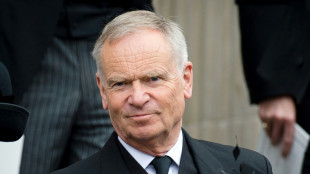 Best-selling British author Jeffrey Archer dies aged 86

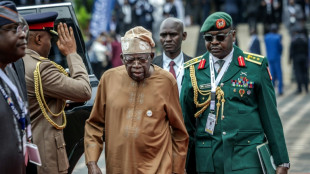 Military plane crash kills 32 in Nigeria

 Olise powers France to win over Belgium in Nations League
 High-flying Blazy turns to birdlife at Chanel
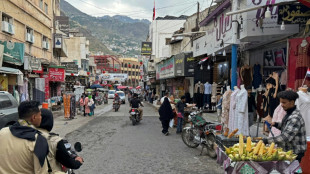 Riyadh's allies pledge troops as Yemen, Saudi Arabia attack Houthis

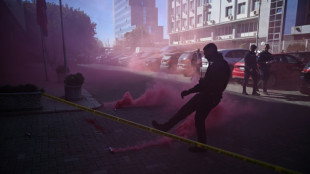 Clashes erupt outside Kosovo parliament over war crimes court

 Milan's Saelemaekers suffers ankle setback, faces lengthy spell out
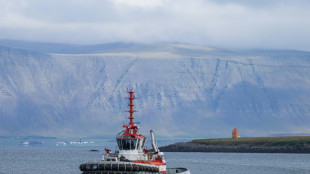 Rubio arrives in Iceland to push for greater US presence in Arctic
 Putin allows Italy's UniCredit to sell part of Russian business
 Djokovic into China Open final as Medvedev out for hitting fan with ball

 ICC unseals arrest warrants for Taliban education ministers
 Modric hopes fans back Croatia against Spain after England shame

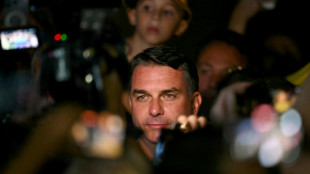 Bolsonaro rides right-wing surge into Brazil's election runoff

 Turkey blocks X account of British reporter

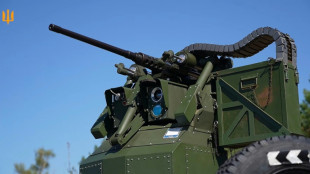 Ukraine says using AI robot guns to shoot down new Russian drones
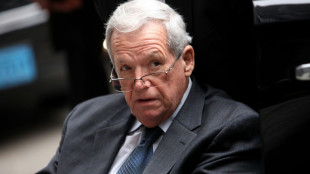
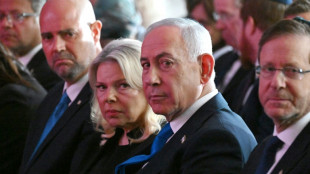 At Oct 7 memorial, Netanyahu says will be no Hamas rule in Gaza

 Ukraine blames Russia for deadly sinking of Turkish ship in Black Sea
 UN rights council slams Taliban's 'oppression' of women
 Norway eyes partial ban of smart glasses

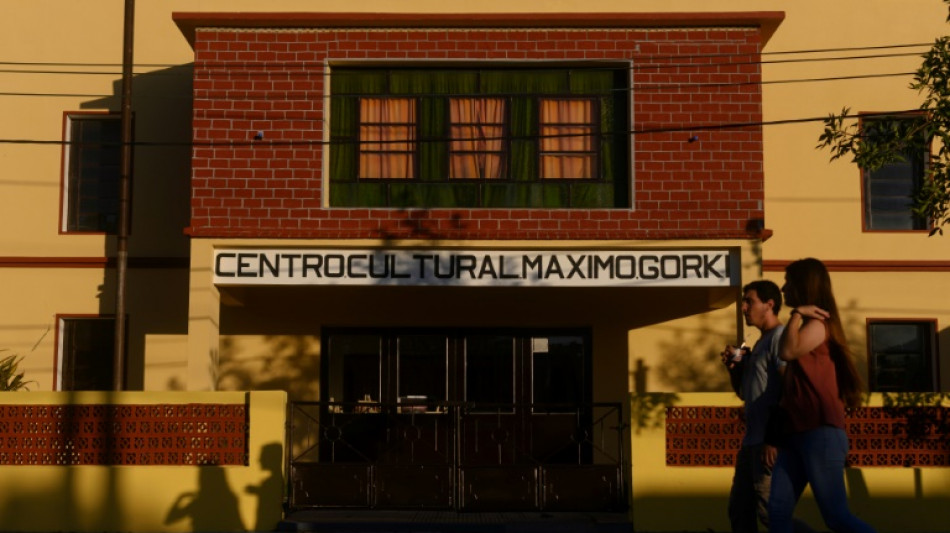
Far away from Kyiv and even further from Moscow, residents of the small Uruguayan village of San Javier -- an old Russian settlement -- look on with dismay at the invasion of Ukraine.
At a first glance, the community's grid plan, low houses and surrounding fields resembles any other rural Uruguayan village -- but a scratch below the surface reveals the history of a site founded more than a century ago by Russian peasants.
Although few of their descendants speak Russian or even carry Russian names, the inhabitants here insist they are "proud" of their Slavic heritage, while also firmly denouncing the motherland's invasion of Ukraine.
San Javier has several Cyrillic inscriptions on display, a "Maximo Gorki" cultural center and five giant matryoshka dolls on the central square.
It all points to a history that is "unique in Uruguay and South America," says Leonardo Martinez, the deputy mayor of the village of 1,800 people.
San Javier's story began in 1913 when 300 families -- originally from Russia's western Voronezh region and followers of the "New Israel" Christian sect that was persecuted by Tsarist Russia -- arrived in Montevideo.
A few months later, around 600 people settled in San Javier, a five-hour drive northwest of Montevideo and flanked by the Uruguay River.
It was the largest autonomous Russian agricultural colony in South America, and quickly became a roaring success.
A century later, the sunflower -- which the colonists introduced to Uruguay -- appears everywhere as the village symbol.
"Looking at photos we feel a bit nostalgic... for the great sacrifice they made," said Martinez, 43, the great-grandson of an original settler.
The mayoral office claims a "high percentage" of the current inhabitants descend from the Russian colonizers, although over time the village has seen a blending of people and cultures, like the country as a whole.
The local restaurant offers the typical Uruguayan grilled meat "asado" as well as "shashlik," a type of lemon-seasoned skewered meat popular across much of the former Soviet Union.
The village square hosts Uruguayan creole folk dances as well as traditional Russian ones.
- Killing 'brothers' -
The village, which has its own museum, has become a tourist site for its Russian history.
But despite those ties, not a single flag or banner proclaiming partisanship can be found in its streets.
"I've not seen explicit support in San Javier" for either country, said Martinez about the war between Russia and Ukraine more than 10,000 kilometers (6,200 miles) away.
"We're against the war, that's obvious," he said. "Against all armed conflict."
Leonardo Lorduguin, a 22-year-old San Javier resident, has set up a Facebook page dedicated to his village.
He is fascinated by the Russian language, which he has been learning for two years -- one of the few of his generation to speak it.
But he would not commit to either side in the conflict.
Like many other villagers, he insists that the first settlers came from "Great Russia" -- an old term that includes territories outside the modern Russian borders.
"In 1913, only Russians came but some had Ukrainian names. They came to Montevideo and were told there was a Russian colony in San Javier," said Lorduguin, reeling off the Russian and Ukrainian surnames of some villagers.
Alejandro Sabelin, 80, is one of the only other villagers who speaks Russian alongside Spanish.
His father was born in San Javier three months after his grandparents arrived there.
He recognizes that the language is being lost in the community. His own children understand Russian better than they speak it.
A picture of his grandparents hangs in his small house.
"I'm really sorry about what is happening because it is almost like killing your brothers," he said of Russia's invasion of its neighbor.
Although he has never visited the homeland of his grandparents, Sabelin says, "I will never stop supporting Russia."
But "the war is awful, what's happening is horrible," he adds.
M.King--AT