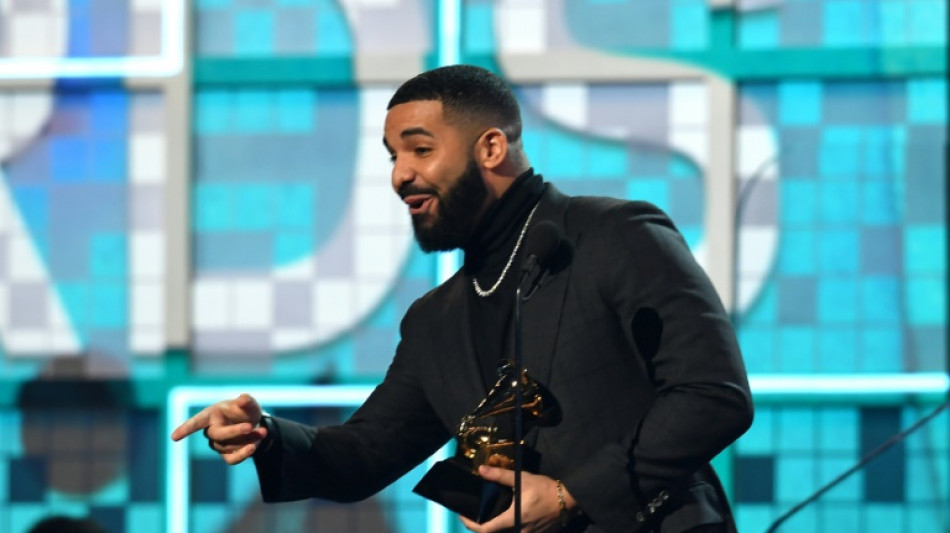
Did the AI Drake song breach copyright? / Photo: Robyn Beck - AFP

 'I call it a bribe': Pennsylvania residents spurn $10,000 data center checks

 In a former US steel city, ordinary people struggle to get by

 'Liar,' 'clown': Lula and Bolsonaro spar in Brazil poll debate
 Record El Nino? Depends who's counting

 On the front line of ocean conservation off Portugal's Madeira

 Wembanyama targets title breakthrough as NBA season tips off

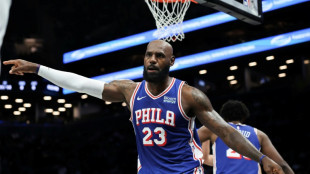
 With LeBron on board it's title or bust for Philly fans
 One year after Louvre heist, where are the missing jewels?
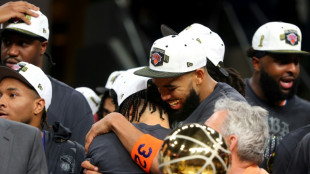 Knicks face tall task in NBA championship repeat bid
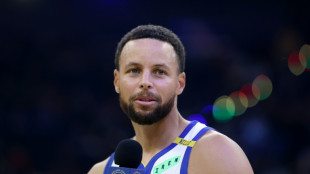 Warriors' Curry 'fine' after limping out of practice - Kerr
 Zelensky speaks to US envoys as Trump lashes out
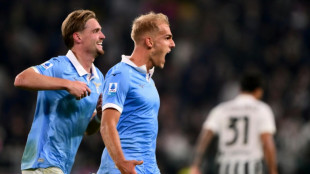 'Surprise package' Lazio crush Juve to keep pace with Serie A leaders Inter

 China growth expected to miss official target in third quarter
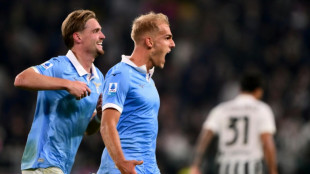 Lazio crush Juventus to move level with Serie A leaders Inter
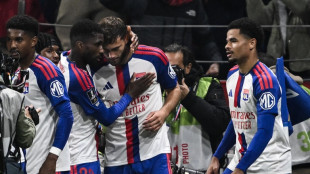
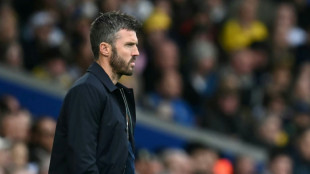 Leeds draw feels like 'fresh start' for Man Utd's Carrick

 Macron denounces 'unbridled' violence as France hit by new clashes
 Hurzeler lauds 'hard worker' Gomez after Brighton goal from halfway line

 Toulouse hold off Exeter, Northampton save English Champions Cup blushes

 Arsenal snatch late win to keep pressure on Man City as Man Utd held
 Arsenal strike late to keep pressure on Man City as Man Utd held

 Four soldiers dead, dozens injured in fire at Canada military base

 Ton-up Agha helps Pakistan down Sri Lanka in tri-series opener

 Man Utd draw at Leeds keeps pressure on Carrick

 Barca defenders Garcia, Kounde injured before key games
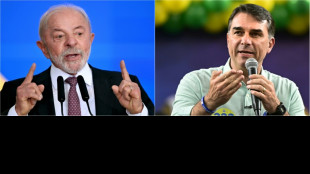 Lula, Bolsonaro to face off in first debate of bruising election

A viral AI-generated song imitating Drake and The Weeknd was pulled from streaming services this week, but did it actually breach copyright as claimed by record label Universal?
Created by someone called @ghostwriter, "Heart On My Sleeve" racked up millions of listens before Universal Music Group asked for its removal from Spotify, Apple Music and other platforms.
However, Andres Guadamuz, who teaches intellectual property law at Britain's University of Sussex, is not convinced that the song breached copyright.
As similar cases look set to multiply -- with an uncanny AI replication of Liam Gallagher from Oasis causing buzz -- he spoke to AFP about some of the issues being raised.
- Did the song breach copyright?-
The underlying music on "Heart On My Sleeve" was new -- only the sound of the voice was familiar -- "and you can't copyright the sound of someone's voice," said Guadamuz.
Perhaps the furore around AI impersonators may lead to copyright being expanded to include voice -- rather than just melody, lyrics and other created elements -- "but that would be problematic," Guadamuz added.
"What you're protecting with copyright is the expression of an idea, and voice isn't really that."
He said Universal probably claimed copyright infringement because it is the simplest route to removing content, with established procedures already in place with streaming platforms.
"Most of the time, these issues are not resolved by law, but just by record companies making a stink with the platforms. It's easier for the platform just to comply," said Guadamuz.
- Were other rights breached?
An AI-generated impersonator may be breaching other laws.
If an artist has a distinctive voice or image, this is potentially protected under "publicity rights" in the United States or similar image rights in other countries.
Bette Midler won a case against Ford in 1988 for using an impersonator of her in an advert. Tom Waits won a similar case in 1993 against the Frito-Lays potato chips company.
The problem, said Guadamuz, is that enforcement of these rights is "very hit and miss" and taken much more seriously in some countries than others.
And streaming platforms currently lack straightforward mechanisms for removing content seen as breaching image rights.
- What comes next?
The big upcoming legal fight is over how AI programmes are trained.
It may be argued that inputting existing Drake and Weeknd songs to train an AI programme may be a breach of copyright -- but Guadamuz said this issue was far from settled.
"You need to copy the music in order to train the AI and so that unauthorised copying could potentially be copyright infringement," he said.
"But defendants will say it's fair use. They are using it to train a machine, teaching it to listen to music, and then removing the copies.
"Ultimately, we will have to wait and see for the case law to be decided."
But it is almost certainly too late to stem the flood.
"Bands are going to have to decide whether they want to pursue this in court, and copyright cases are expensive," said Guadamuz.
"Some artists may lean into the technology and start using it themselves -- especially if they start losing their voice."
T.Sanchez--AT