AI better than humans at key heart test: study / Photo: ANGELA WEISS - AFP/File

 'I call it a bribe': Pennsylvania residents spurn $10,000 data center checks
 In a former US steel city, ordinary people struggle to get by

 'Liar,' 'clown': Lula and Bolsonaro spar in Brazil poll debate
 Record El Nino? Depends who's counting

 On the front line of ocean conservation off Portugal's Madeira

 Wembanyama targets title breakthrough as NBA season tips off
 With LeBron on board it's title or bust for Philly fans
 One year after Louvre heist, where are the missing jewels?

 Knicks face tall task in NBA championship repeat bid

 Warriors' Curry 'fine' after limping out of practice - Kerr
 Zelensky speaks to US envoys as Trump lashes out
 'Surprise package' Lazio crush Juve to keep pace with Serie A leaders Inter

 China growth expected to miss official target in third quarter

 Lazio crush Juventus to move level with Serie A leaders Inter

 Leeds draw feels like 'fresh start' for Man Utd's Carrick
 Macron denounces 'unbridled' violence as France hit by new clashes

 Hurzeler lauds 'hard worker' Gomez after Brighton goal from halfway line

 Toulouse hold off Exeter, Northampton save English Champions Cup blushes

 Arsenal snatch late win to keep pressure on Man City as Man Utd held
 Arsenal strike late to keep pressure on Man City as Man Utd held

 Four soldiers dead, dozens injured in fire at Canada military base

 Ton-up Agha helps Pakistan down Sri Lanka in tri-series opener

 Man Utd draw at Leeds keeps pressure on Carrick

 Barca defenders Garcia, Kounde injured before key games
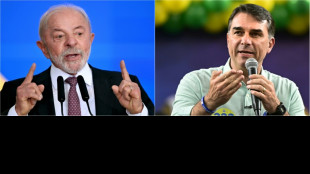 Lula, Bolsonaro to face off in first debate of bruising election

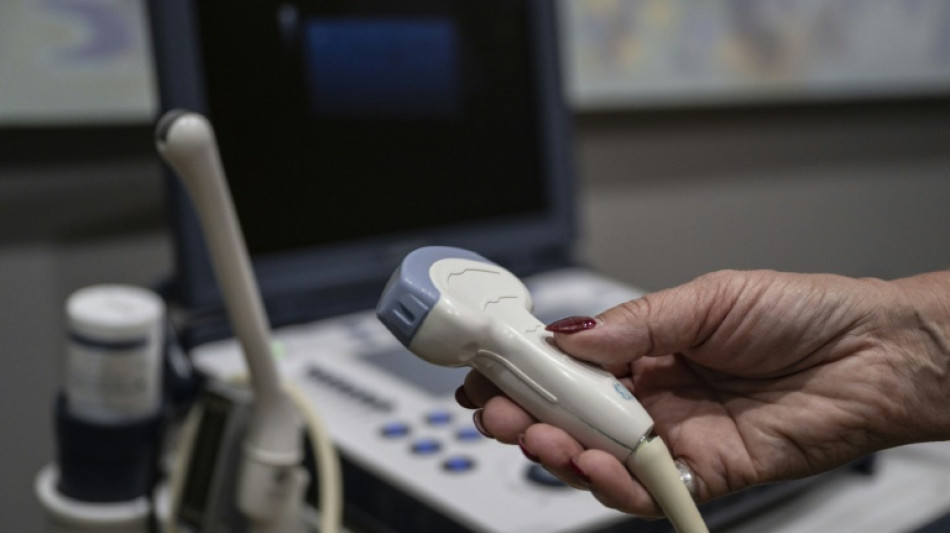
Artificial intelligence is better than humans at assessing heart ultrasounds, the main test of overall cardiac health, the most rigorous trial yet conducted on the subject found on Wednesday.
While previous research has illustrated the potential power of AI models for reading medical scans, the authors of the new US study said it is the first blinded, randomised clinical trial for heart health.
"There's a lot of excitement around AI," but rigorous evaluation remains critical, the study's senior author David Ouyang told AFP.
This successful trial "really strengthens the argument that now we're ready for primetime," added the cardiologist at the Cedars-Sinai Medical Center in Los Angeles.
Heart ultrasounds, also known as echocardiograms, are carried out on patients by sonographers, who usually give an initial assessment of the scan before handing it over to a cardiologist.
The new study, published in the journal Nature, pitted an AI model against sonographers to see who would give the most accurate initial assessment.
Both assessed the ultrasound for what is called left ventricular ejection fraction, which measures the heart's ability to pump blood out to the body in the space of a heartbeat.
The test is the main way to measure how well a heart is functioning. It is used to tell if patients have had a heart attack or if they will be able to undertake serious treatments such as implanting a defibrillator.
For the study, nearly 3,500 heart ultrasounds were randomly split between sonographers and the AI model.
Their assessments were then evaluated by cardiologists, who did not know which ones came from humans and which from the AI model.
- 'Exciting' -
The cardiologists made a substantial change in more than 27 percent of the sonographer assessments -- and in nearly 17 percent of those done by the AI model, the study found.
"The AI was faster, more precise, and indistinguishable by the cardiologists," Ouyang said.
There is a "tremendous shortage" of sonographers in the United States and across the world, and this would save them valuable time, he added.
The AI model, called EchoNet-Dynamic, was trained on nearly 145,000 echocardiograms and uses what is called deep learning to process large amounts of data.
The researchers are currently applying for the method to be approved by the Federal Drug Administration, and hope to do the same in the European Union and elsewhere soon, Ouyang said.
Patricia Pellikka, a cardiologist at the Mayo Clinic in the United States not involved in the research, told AFP the study was "exciting" and that the integration of AI tools will increase efficiency and standardisation.
French cardiologist Florian Zores said that the study was well conducted but the technology would not be as useful in France, where cardiologists give the initial assessments of heart ultrasounds.
H.Gonzales--AT