National Study of 2,300+ Women Finds Social Connection Shapes Volunteer Experience Amid Competing Work, Caregiving, and Life Demands

 Martin wins Austrian MotoGP sprint after Acosta crash

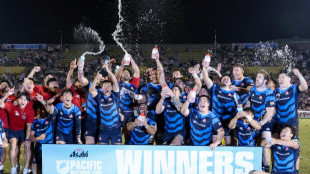 Japan edge Fiji to win Pacific Nations Cup

 Black smoke, flames rising near Riyadh airport: residents to AFP

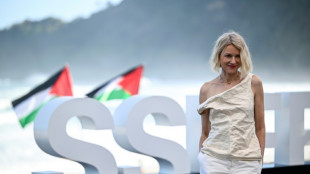 UK actor Naomi Watts honoured at Spain film festival

 Japan emperor declares Asian Games open after turbulent build-up
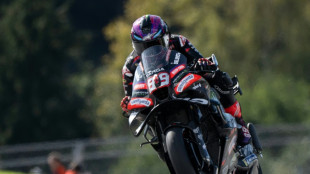
 Asian Games open with unity message after troubled build-up
 Denmark hails 'binding' Greenland deal with Trump

 We don't want Games host Japan losing money, says Asian Olympic official

 Ed Sheeran returns to stage after Palestinian controversy

 Asian Games to open in Japan after troubled build-up

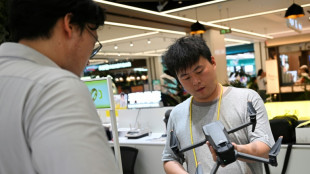 Drone owners rush to offload devices ahead of Beijing ban

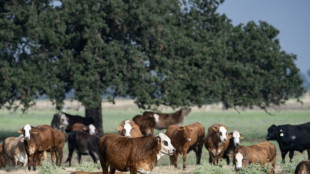 Trump's beef policies irk Texas ranchers, testing their loyalty

 Kennedy Center: future unclear for iconic Washington arts hub

 Trump claims 'infinite' Greenland security deal with Denmark

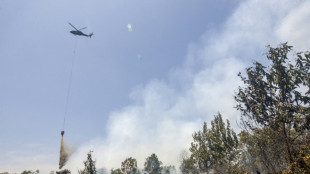
 Helicopters battle wildfire threatening Ecuador's capital

 Brentford batter Chelsea to undo Alonso's promising start
 Kane hits Bundesliga century as Bayern rout Union

 Trump says CNN, MS NOW, Politico banned from White House

 Hushing and hedging: US companies retreat on climate

 Springboks to face Fiji before 2027 Rugby World Cup

 Nigeria miners struggled to breathe in cell before 37 died: survivors
 McIlroy on the charge at PGA Championship as Reed withdraws

 McIlroy on the charge at PGA Championship
 Crisis-wracked Volkswagen warns of 10-bn-euro hit to profits

 Costa Rica's Grynspan tops third informal poll for UN chief: diplomat
Research from Western Michigan University and The Association of Junior Leagues International shows organizational support only reduces volunteer burnout when women feel personally connected and can increase strain when they don't
NEW YORK CITY, NY / ACCESS Newswire / April 6, 2026 / Organizational support for volunteers such as training, clear goals, and scheduling flexibility, is supposed to reduce burnout. But a new national study of more than 2,300 women found that it only works when volunteers also feel genuinely connected to the people around them. When social connectedness is low, more organizational support is actually associated with "higher" volunteer role strain.
The finding is one of several that challenge conventional thinking about women, volunteerism, and mental health in "The State of Women's Work, Life and Volunteer Balance: A Look at Volunteerism and Mental Well-Being Across Roles," a mixed-methods study conducted through Western Michigan University and released today by The Association of Junior Leagues International (AJLI). The research combined six focus groups with a national survey of 2,307 respondents and was approved by WMU's Institutional Review Board.
The study is among the first to examine how volunteer commitments interact with work and caregiving demands to shape women's mental well-being, an area largely overlooked by prior research, which has focused primarily on work-family conflict.
The Data Behind the Headlines
The study produced specific, measurable findings across its qualitative and quantitative phases:
Expectations - not time - are the top driver of role strain: Across six focus groups, expectations were mentioned 117 times, making them the single most dominant source of strain. These included self-imposed perfectionism, unclear role definitions, unequal distribution of responsibilities, and societal pressure on women to say yes to everything.
Social connection is the tipping point for volunteer engagement: A one-standard-deviation increase in volunteer social connectedness was associated with 15.6% more monthly volunteer hours. Women who reported stronger connections also reported greater satisfaction and lower strain. Crucially, organizational support reduced volunteer role strain 'only' when social connectedness was also high.
More organizations, more hours, and more strain: Each additional volunteer organization a respondent participated in was associated with a 23% increase in average monthly volunteer hours, but also with higher volunteer role strain, suggesting that volume alone is not a proxy for sustainability.
Home-based strain is what pulls women away from volunteering: Greater home strain was associated with 15.8% fewer volunteer hours per month. Women who identified as mothers had significantly lower odds of increasing their volunteer involvement over the past year. Home-volunteer conflict was one of the strongest predictors of decreased participation.
Women are managing 3.2 roles on average, and strain hits all of them at once: Survey respondents reported holding an average of 3.2 active roles, ranging from two to eight. Focus group participants described strain not as isolated to one role but as an experience where everything feels unmanageable simultaneously, with time management itself becoming an additional burden.
Age is protective, but only through hard experience: Older respondents reported lower volunteer role strain and higher mental well-being. In focus groups, women consistently described learning to set boundaries and release perfectionism over time but emphasized that these were lessons that could only be learned through experience, not advice.
Financial insecurity and disability amplify strain across all roles: Approximately 19% of respondents reported meaningful financial insecurity, and 13% reported a disability, both associated with higher role strain and lower mental well-being, even though these topics were rarely discussed openly in focus groups.
What Makes This Study Different
Most research on women's role strain examines the work-family binary. This study expanded the frame to include volunteer responsibilities alongside professional, caregiving, and household demands, and used a mixed-methods design that grounded its survey findings in the lived experiences of real women.
The qualitative phase revealed that women described volunteering through a stress-reward cycle: demanding and draining, but also deeply fulfilling when the work aligned with personal values and provided genuine connection. One participant described the dynamic as feeling like an addiction, the positive feedback from meaningful work creating a loop that drives further engagement despite the strain.
The quantitative phase validated this pattern at scale, showing that satisfaction with volunteer work increased monthly hours by 12.4% per unit increase, while greater social connectedness and organizational support together amplified engagement further.
Reframing the Problem
"This research tells us that burnout from volunteering is more than a time-management problem. It's an organizational design problem," said Melanie Schild, CEO of The Association of Junior Leagues International. "When we build volunteer environments with genuine social connection and clear, shared expectations, volunteering doesn't just avoid adding stress. It actively improves women's mental well-being. But when organizations focus on structure without investing in relationships, they can inadvertently make strain worse."
The findings inform AJLI's "Every Woman. All Things." initiative, which focuses on expanding conversations around women's well-being, leadership, and the realities of navigating multiple roles. The research arrives at a moment when women's burnout, mental load, and declining rates of formal volunteerism are receiving increased national attention.
About the Study
"The State of Women's Work, Life and Volunteer Balance: A Look at Volunteerism and Mental Well-Being Across Roles" utilized an exploratory sequential mixed-methods design. The qualitative phase consisted of six focus groups, analyzed using constructivist grounded theory. The quantitative phase included a national survey using validated scales for role strain, role overload, role conflict, organizational support, social connectedness, and mental well-being (Short Warwick-Edinburgh Mental Well-Being Scale). Analysis included multinomial logistic regression, hierarchical linear regression, and generalized linear models. The study was conducted through Western Michigan University and approved by its Institutional Review Board.
To learn more about the study and explore its findings, visit https://thejuniorleagueinternational.org/the-state-of-womens-balance-study/
About The Junior League
The Junior League is one of the oldest and largest premier women's organizations, committed to advancing women's leadership for meaningful community impact through volunteer action, collaboration, and training. Since 1901, The Junior League Movement has addressed community issues through hands-on projects, partnerships with local organizations, and advocacy efforts. Through leadership training, community collaboration, and service projects, we Develop Women to Do a World of Good™, making a lasting impact on the lives of those we serve.
Today, The Association of Junior Leagues International (AJLI) is powered by over 105,000 women in 295+ communities across the United States, Canada, Mexico, France, Kenya, and the United Kingdom. To learn more or get involved, visit www.ajli.org.
Media Contact:
Jackie Dadas-Kraper
Interdependence
[email protected]
(248) 842-0597
SOURCE: The Association of Junior Leagues International
View the original press release on ACCESS Newswire
E.Hall--AT