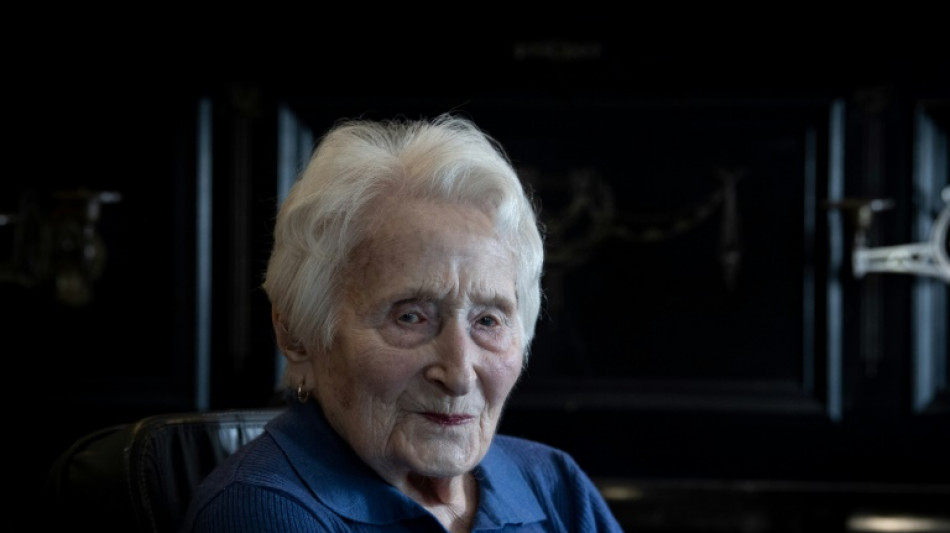
Out of the shadows: women in the French Resistance / Photo: ALAIN JOCARD - AFP

 Australia's new Ghost Shark submarines grow some 'teeth'
 'I call it a bribe': Pennsylvania residents spurn $10,000 data center checks

 In a former US steel city, ordinary people struggle to get by
 'Liar,' 'clown': Lula and Bolsonaro spar in Brazil poll debate
 Record El Nino? Depends who's counting
 On the front line of ocean conservation off Portugal's Madeira

 Wembanyama targets title breakthrough as NBA season tips off

 With LeBron on board it's title or bust for Philly fans
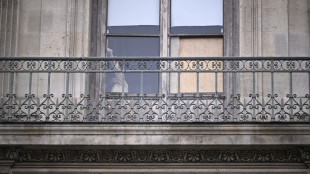 One year after Louvre heist, where are the missing jewels?

 Knicks face tall task in NBA championship repeat bid

 Warriors' Curry 'fine' after limping out of practice - Kerr

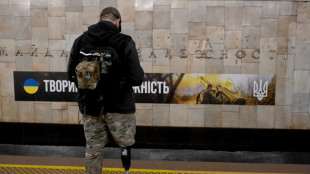 Zelensky speaks to US envoys as Trump lashes out

 'Surprise package' Lazio crush Juve to keep pace with Serie A leaders Inter

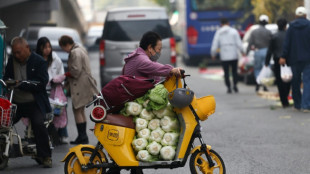 China growth expected to miss official target in third quarter

 Lazio crush Juventus to move level with Serie A leaders Inter

 Leeds draw feels like 'fresh start' for Man Utd's Carrick

 Macron denounces 'unbridled' violence as France hit by new clashes

 Hurzeler lauds 'hard worker' Gomez after Brighton goal from halfway line
 Toulouse hold off Exeter, Northampton save English Champions Cup blushes

 Arsenal snatch late win to keep pressure on Man City as Man Utd held
 Arsenal strike late to keep pressure on Man City as Man Utd held

 Four soldiers dead, dozens injured in fire at Canada military base
 Ton-up Agha helps Pakistan down Sri Lanka in tri-series opener

 Man Utd draw at Leeds keeps pressure on Carrick
 Barca defenders Garcia, Kounde injured before key games
For decades after the end of World War II, the thousands of women who took part in France's resistance against Nazi German occupation in WWII rarely got a mention in the history books.
The stories of Lucie Aubrac, a teacher who broke her husband Raymond out of a lorry transporting him to a Gestapo jail, Marie-Madeleine Fourcade, a Resistance leader who was smuggled to Spain in a mailbag, and Madeleine Riffaud, a sharpshooter who helped liberate Paris, were exceptional tales in an otherwise male-dominated narrative.
Abroad, perhaps the most famous "resistante" is US-born dancer and singer Josephine Baker, who served as a lieutenant in the French air force's auxiliary corps during the war and passed on information concealed in sheet music.
The feminist movement of the late 1960s and 1970s led to a surge of interest in the role played by women in the war.
But it took until 2015 for women resisters in the person of ethnologist Germaine Tillion and Genevieve De Gaulle-Anthonioz, a niece of war hero General Charles de Gaulle, to be honoured with places in the Pantheon mausoleum, France's secular holy of holies.
- Civilian resistance -
Women accounted for between 12 and 25 percent of all Resistance members, according to Laurent Douzou, a history professor at Lumiere Lyon-11 university.
And yet only six women have been honoured as Companions of the Liberation -- an award created by De Gaulle to decorate those who fought for France's freedom -- compared with 1,038 men.
"Civilian resistance, which was mainly the work of women, was not counted," Vladimir Trouplin, curator of a Paris museum dedicated to Resistance heroes, explained to AFP.
Misogyny also explains why women received so little recognition for the role they played.
"In those days women were not supposed to steal the limelight", Trouplin noted.
Nearly 80 years after the end of the war, the race is on to collect the stories of the women who made a strike for freedom in countless vital ways -- by for instance ferrying messages and packages, transporting arms in baskets and buggies or acting as escorts for fugitive French or Allied prisoners or spies.
Ahead of International Women's Day on March 8, AFP interviewed three of the thousands of women whose stories of wartime heroism had yet to be told: Odile de Vasselot, aged 101, Odette Niles, aged 100, and Michele Agniel, aged 96.
All three took advantage of the fact that women were deemed less suspect and less courageous than men to slip unnoticed through checkpoints and borders.
All three diced with death.
Odette spent nearly three years in French internment camps, Odile was nearly killed during the liberation of Paris and Michele was sent to Germany on the last deportation train from Paris in August 1944.
Between 1940 and 1944, 6,700 women were deported from occupied France, the vast majority of them Resistance members.
Their bravery helped advance the struggle for the emancipation of women. In 1944, French women finally gained the right to vote.
Ch.P.Lewis--AT