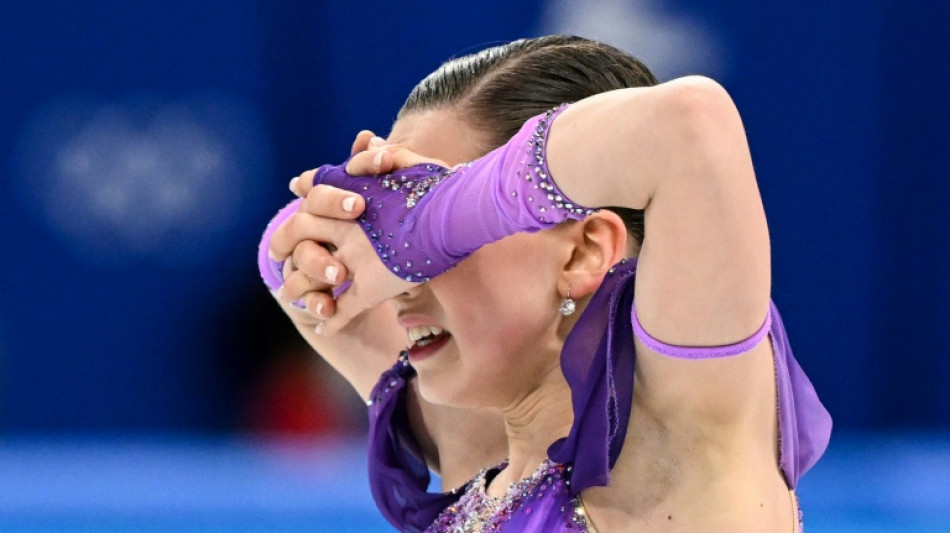
Ice skating raises minimum age from 15 to 17 in 'historic' move / Photo: Manan VATSYAYANA - AFP

 In Iceland, the mystery of the poet, the tomb and the Danish grocer

 Ratko Mladic: Bosnian Serb commander to convicted war criminal

 Bolivian army base blasts kill two, wound dozens

 Alcaraz, Sabalenka into US Open last 16 as Williams sisters lose on return

 Williams sisters fall in thrilling return to US Open doubles
 Bangladesh measles toll nears grim 1,000-child mark

 Bolivia farmers return to streets over diesel price hikes

 Tetris distances itself from controversial White House 'arcade' games

 Africa bigger, US smaller - UN adopts new map

 Bad weather will not affect All Blacks, says captain Savea

 Mbappe misses penalty as Parrott lifts Betis past Real Madrid

 PSG still winless in Ligue 1 as Monaco go top

 Defending champion Alcaraz reaches last 16 at US Open

 Lyles ends season before Budapest due to injury flare ups

 US Republicans announce probe into environment groups

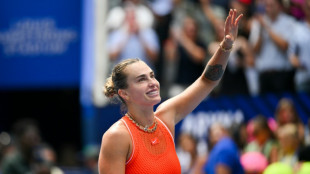 Sabalenka survives despite 'tricky' weed smell at US Open

 S&P Revises Outlook on Freedom Holding Corp. and Core Subsidiaries to Positive

 Job growth but record-high diesel prices -- Trump's midterms mixed bag

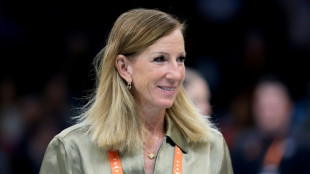 Women's NBA comissioner Engelbert to retire at season's end

 Luis Enrique extends contract as PSG coach until 2030

 Duplantis pulls out of Diamond League finals

 Defending champ Sabalenka, Pegula lead way into US Open fourth round

 UK hard-right party rallies behind leader after new donation scandal

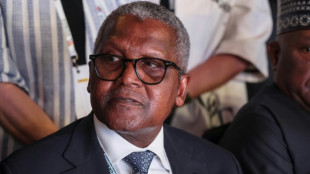 Nigeria's Dangote refinery looks to raise $1.6 bn in IPO

 Portugal extends talks to privatise national carrier TAP

Ice skaters will have to be at least 17 to take part in senior competitions after the sport's governing body voted Tuesday to raise the minimum age from 15.
The decision by the International Skating Union (ISU) congress in Phuket, Thailand, came months after a Beijing Winter Olympics drugs scandal involving then-15-year-old Russian figure skater Kamila Valieva.
"It's a very historic decision," ISU president Jan Dijkema said, after 100 countries voted to support the measure, with only 16 opposed.
Valieva failed a pre-Games drugs test but was allowed to compete and then broke down after falling multiple times during her performance, with the global spotlight on her.
She finished outside the medals with questions swirling about the influence of her entourage following a tense and tearful post-routine encounter with her coach.
The ISU said that raising the age limit was on its agenda well before the Valieva case and acknowledged it had a duty of care to elite adolescent athletes.
The change will be phased in gradually over the coming years, reaching age 17 in the 2024/25 season.
Ahead of the vote ISU director general Fredi Schmid acknowledged the body had faced media pressure and a "major attack" in the wake of the Olympics and reminded delegates the sport's reputation was at stake.
"The moment of truth is obviously today because the credibility of the ISU will also be scrutinised. The media and the public will watch us very closely so don't forget this," he said.
- 'Children first' -
The skating body's medical advice backed raising the age limit to 17 arguing it would benefit young skaters physically and mentally, and help extend their careers.
"I feel as administrators of the sport of skating it is your moral obligation and duty to provide these young skaters with the opportunity and time to develop... the skills they require in order to be successful at the senior level," Dr Jane Moran from the body's medical commission said.
"They have the right to develop themselves as people during their adolescent age... They don't need us to be forcing them to compete."
A medical report said the change would allow junior athletes time to reach skeletal maturity.
"The concern is that during a period of known skeletal vulnerability, the adolescent athlete may be exposed to excessive training and competition loads associated with high-level competition, which places the athlete at greater risk of injury," the medical report said.
It also warned that some elite adolescent athletes could experience a puberty delay for an average of two years as a result of the physical demands of training and inadequate energy intake.
It noted some were at greater risk of developing eating disorders.
The athletes' commission surveyed close to 1,000 athletes and coaches and 86 percent were in favour of lifting the age limit.
Some representatives from smaller countries argued the changes would have an negative impact on their talent pool of skaters and ability to send athletes to elite competitions.
But other smaller skating nations such as Iceland and Ireland argued the focus should be on protecting youngsters.
"We have to remember they are children first and athletes second," Ireland's representative in Phuket said.
An amendment to raise the minimum age to 16 and then wait until after the 2026 Winter Olympics to revisit the issue was rejected.
H.Thompson--AT