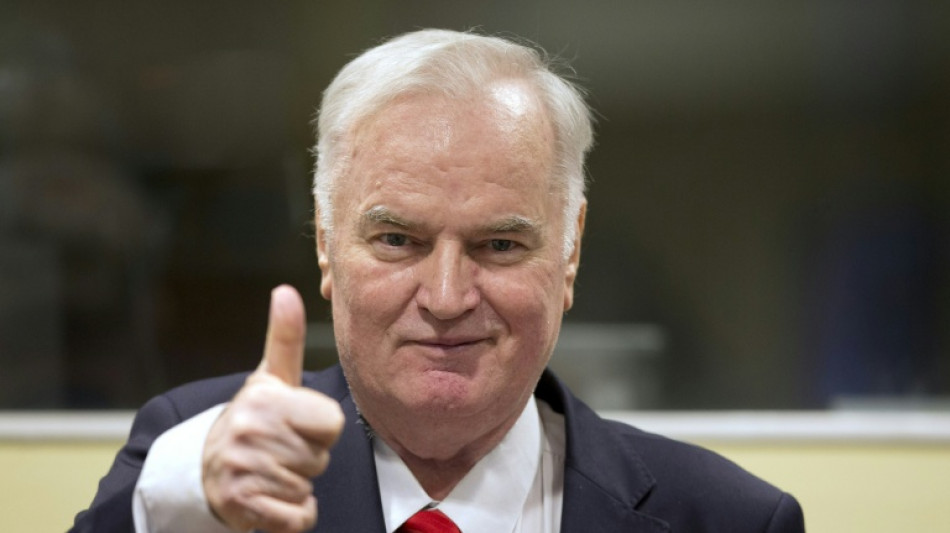
Ratko Mladic: Bosnian Serb commander to convicted war criminal / Photo: Peter Dejong - POOL/AFP/File

 How haze from Indonesian fires impacts Southeast Asia
 Trump sends envoys to Moscow, Kyiv with new plan to 'end war'

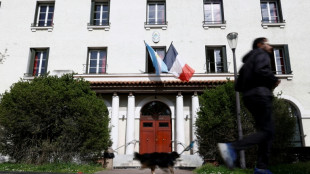 'Mini-dictatorship': Students slam Argentina-run residence in Paris
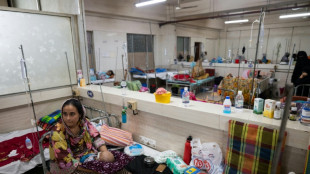
 The disgraced banker stirring the pot in Brazil's Supreme Court
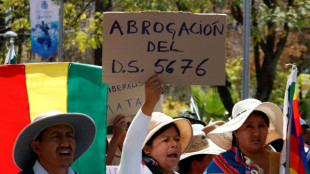
 Panama Canal begins reducing crossings due to El Nino
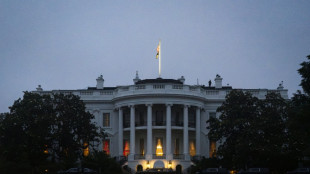
 Trump again seeks to remove protections for wolves
 'Getting there' - Alcaraz into US Open last 16 along with Sabalenka
 Isak ready to show world his quality, says Van Dijk

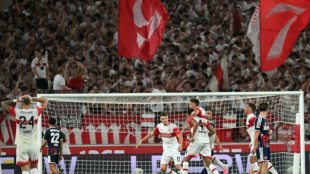 Stuttgart cruise past Cologne to bounce back from Bayern thumping

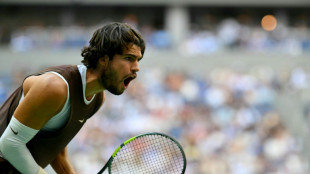 'Smart, aggressive' Alcaraz into US Open last 16
 Isak fires Liverpool to first win under Iraola at Ipswich
 Stocks slip as robust US jobs data stokes rate hike odds
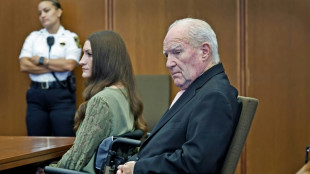 Mistrial declared in case of US woman who killed her three children
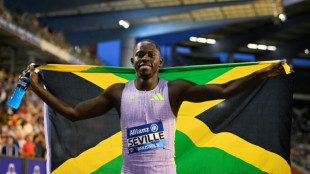 Seville, Alfred win at Diamond League finals, Duplantis hit with injury

 Moody’s Assigns First-Time Insurance Financial Strength Ratings to Freedom Insurance and Freedom Life

 Trump says envoys taking plan to 'end the war' to Moscow, Kyiv
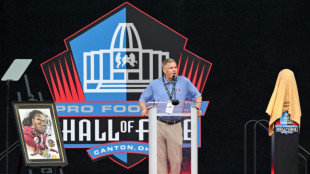 US Football Hall of Fame revamps selection process

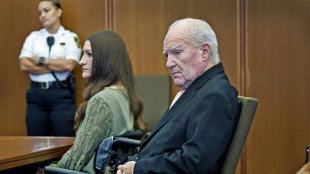 Judge declares mistrial in case of US woman who killed her children

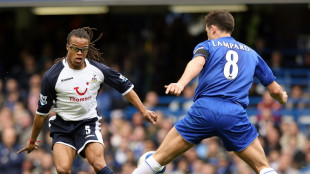 Edgar Davids art thief misses sentencing after being 'knocked out by luggage'
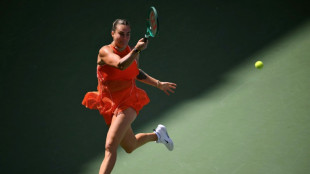
 Pegula rallies to reach US Open fourth round
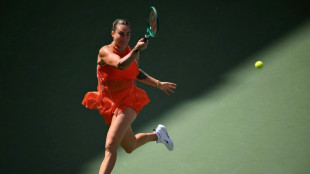 Defending champ Sabalenka leads way into US Open fourth round
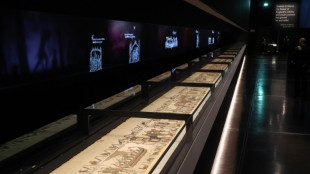 Bayeux Tapestry 'virtually unchanged', UK museum says, after France spots broken threads

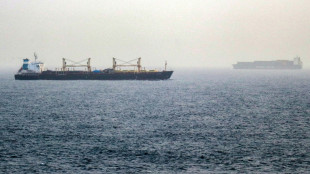 More than 120 killed in Yemen's worst clashes in years: sources
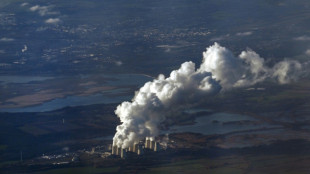 Germany hunts climate activist suspected of power grid sabotage

 5 EU countries aim to send rejected migrants to 'return hub' by 2027
Convicted Bosnian Serb war criminal Ratko Mladic will be buried in Belgrade on Monday with thousands expected to honour a man dubbed the "Butcher of Bosnia" by the international press.
Mladic's last years were spent serving a life sentence in The Hague for war crimes committed in Bosnia.
The tribunal in The Hague said at the time they were "amongst the most heinous known to humankind".
They included one of the worst European atrocities since World War II -- the massacre of some 8,000 Muslim boys and men in Srebrenica in 1995 -- a genocide that the court decided was orchestrated by military leader Mladic and his political comrade Radovan Karadzic.
Former UN rights chief Zeid Ra'ad al Hussein described Mladic as "the epitome of evil" after his conviction.
But inside Serbia and the Serb-majority entity in Bosnia, his legacy remains deeply divisive, with some Serbs still viewing him as a hero.
His casket was welcomed to Belgrade with military honours, after being flown on a government jet draped in flags and driven in a motorcade into the capital.
"I say before the whole world that I am proud of the role of my father," Darko Mladic said during a press conference alongside Serbia's justice minister on Friday.
- Serb crusader to Srebrenica -
Mladic pushed the image of himself as "a simple man" chosen to protect his people, casting himself as a crusader defending Serbs.
"Fate put me in a position to defend my country that you Western powers had devastated with the help of the Vatican and the Western mafia," he told his appeal hearing in 2020.
Yet he oversaw a siege of the Bosnian capital Sarajevo for more than three years, his snipers and artillery shells killing thousands of men, women and children in the streets and in their homes.
And video footage from Srebrenica shows him reassuring a 12-year-old Muslim boy shortly before his soldiers massacre thousands of civilians.
At roughly the same time, he is seen returning to a deserted Srebrenica, telling the camera: "We give this town to the Serb people as a gift."
Mladic formed a Serb nationalist triumvirate with Karadzic and ex-Yugoslav president Slobodan Milosevic that unleashed a wave of ethnic killing in a bid to redraw the map of the region.
While Karadzic was the ideologue and Milosevic the wily politician, Mladic was the soldier, and his metier was waging war.
- 'Narcissistic, conceited' -
Mladic had barely drawn breath before his life was indelibly marked by conflict.
He was born during World War II in Kalinovik in eastern Bosnia -- most accounts say in 1942, but Mladic told the tribunal he was actually born in 1943.
His father was killed at the bitter end of the war, fighting for Marshal Tito, the leader who managed to knit together the multi-ethnic state of Yugoslavia and suppress simmering enmities.
By most accounts, Mladic always wanted to be a soldier.
He left for army training in Belgrade in the early 1960s, became an officer by age 22, and rose to commander of the Bosnian Serb forces in the war.
Although his men revered him, former Yugoslav army spokesman Ljubodrag Stojadinovic once described him as "narcissistic, conceited, vain and arrogant".
During the war, he baffled international negotiators with rambling diatribes on Serbian history.
In the closing days of the war, close allies questioned his mental faculties.
"I respected General Mladic as a soldier and a man," the late former Montenegrin president Momir Bulatovic told a 1990s BBC documentary.
"But after three years of war, he'd lost contact with reality."
- 'War criminal' -
Mladic was dismissed from his post after being indicted in 1995, but he evaded capture for another 16 years.
At first, he led a life of luxury, pampered by the Serbian military, but the pressure on him mounted after Milosevic fell from power in 2000.
He was finally arrested in May 2011 at his cousin's country house in northern Serbia.
His daughter Ana killed herself in 1994 at the age of 23, with some accounts saying she could not bear the shame of the crimes committed by her father, though Mladic's family disputes this.
His last request before being transferred to the court was to visit her grave.
During all this time, his reputation grew, his wartime leadership immortalised in murals around Republika Srpska -- the Serbian entity within Bosnia.
In its capital, Banja Luka, his death drew thousands to vigils to honour the convicted war criminal marching behind a banner emblazoned with: "Commander, thank you for everything."
But at Srebrenica, where thousands of marble headstones mark his victims, Sehida Abdurahmanovic, who lost her brother in the massacre, said his reputation was already decided.
"History will undoubtedly remember him as one of its great negatives, a war criminal."
B.Torres--AT