
-
 Indonesia's main airport suspends operations after volcanic eruption
-
At last: Straight sets win over Tabilo puts Zverev in US Open last 16
-
 US aircraft carrier departs Thailand after port call
-
Jovic 'loses sanity five times over' to oust friend Eala in US Open epic
-
 Haze emergency grips Malaysian Borneo town
-
China's memories of Mao fade to nostalgia 50 years after his death
-
 Messi creates both Miami goals in 2-2 draw with Atlanta
-
US envoys discuss with Putin 'substantive' plans for steps to end Ukraine war
-
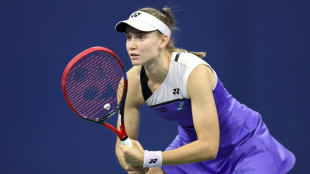 Rybakina books US Open fourth-round berth, inches closer to No. 1
-
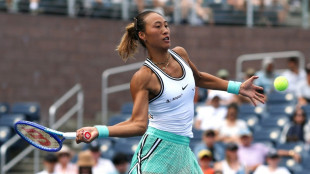
Zheng stuns Keys as US Open upsets dim American hopes
-
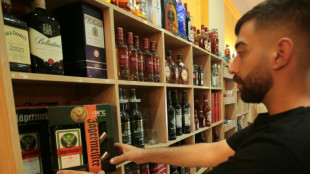 Sobering reality: Curbs on alcohol in northeast Syria cause discontent
-
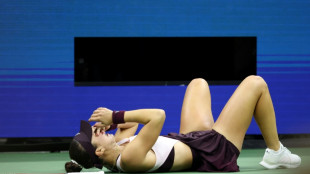
Jovic 'loses sanity five times over' to oust Eala and book Gauff clash
-
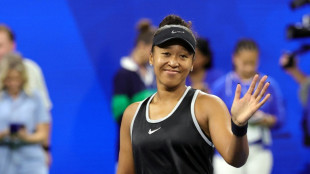 Wobbly Osaka 'shocked' to battle past Mertens and reach last 16
-
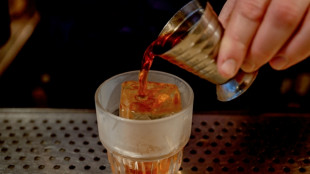
'Like a jewel': Japan's luxury ice revered by bars worldwide
-
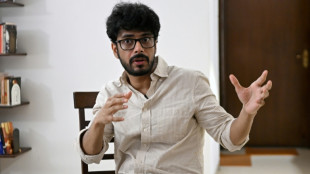 Indian Oscar-nominated filmmaker turns camera on his cancer
-
'The flood is coming': How a Nepal principal saved 900 students

-
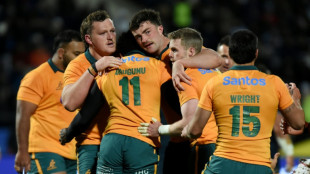 Argentina 'let off hook' by Australia as Kiss's winning run ends
-
Kiss's winning run ends as Argentina hold Australia to draw
-
 Argentina threatens to sanction oil projects around Falklands
-
Alcaraz excited to face 'dangerous' Paul for US Open quarter-final berth
-
 Gauff into round four at US Open after straight-set win
-
Prince William to represent King Charles III at Norway late King Harald's funeral
-
 Bordeaux hammer Racing in Top 14 start as Bielle-Biarrey extends deal
-
Inter and Roma roar back to win thrillers and share top spot
-
 Zheng, Potapova pull off upsets to reach US Open last 16
-
Don't stop them now: fans party for Freddie Mercury's 80th birthday
-
 Swiatek into US Open fourth round in tight two-setter
-
AFP photographer wins top prize for Madagascar protest coverage
-
 Werro wins in Brussels, as Russell and Dos Santos shine
-
Keys: 'I felt like I couldn't play tennis'
-
 Kolbe breaks jaw and shoulder injury sidelines Savea
-
Simmonds stars as Pau upset Montpellier
-
 US military strikes oil tankers as Iran vows tougher reprisals
-
Inter roar back in five-goal thriller with Napoli
-
 Zheng rallies to stun Keys, Anisimova out in US Open third round
-
Haaland keeps Man City perfect in Premier League, blunt Spurs held
-
 Bayern held to draw by stubborn Schalke
-
Hamilton worried by Ferrari pace while Antonelli prepares for a fight
-
 Lens lose again ahead of Champions League date
-
Vuelta stage 15 shortened due to extreme heat, Mas consolidates lead
-
 Olympic champion Zheng storms home to reach US Open last 16
-
Putin meets US envoys for Ukraine war talks
-
 Big-spending Spurs must make better attacking decisions, says De Zerbi
-
Modric available for Croatia in Nations League
-
 South Africa dominate New Zealand in second half to lead series
-
Potapova upsets 2025 US Open runner-up Anisimova
-
 Kiefer Sutherland still in action, but ibuprofen lending helping hand
-
Gasly a 'class act' says Alpine boss after Monza pole
-
 'Are we ready?' Oasis film captures band's frosty reunion
-
Athletic Bilbao crush Simeone's flat Atletico
Death of Boris Spassky: the Cold War on a chessboard in 1972
Fifty years ago, the Cold War was transposed to a chessboard as Bobby Fischer of the United States took on defending world champion Boris Spassky of the Soviet Union, who has died aged 88, in a thrilling East-West clash dubbed the "match of the century".
Some 50 million TV viewers tuned into the two-month-long tussle in the Icelandic capital Reykjavik, where chess's enfant terrible Fischer set out to wrest the championship from the Soviet Union, which had dominated the game for decades.
AFP reported daily from the competition. This account is based on its reporting.
- Polar opposites -
On one side of the table is Fischer, an eccentric, fiercely competitive 29-year-old former boy wonder, who was holding his own among America's greats by the age of 12 and has already won eight US chess championships.
Grown up in the New York suburb of Brooklyn, Fischer became the world's youngest ever chess grand master at the age of 15 and dropped out of school to focus on the game.
AFP's correspondent in Reykjavik says "he has few friends and doesn't care to make any" and that his motto is: "It's not enough to defeat an adversary, you have to crush them."
He goes into the competition having won 101 out of his previous 120 games.
In the other seat is 35-year-old Boris Spassky, a trained journalist and married father of two children who has been world champion for three years.
Born in Leningrad (now Saint Petersburg) in 1937 he was sent to an orphanage in Siberia during the Nazi German siege of the city during World War II.
A pure product of the Soviet chess machine, he began playing at five and became world champion at 19.
A likeable, modest character, he is the antithesis of the cantankerous Fischer.
- Temper tantrums -
Fischer is the first US-born player to have a stab at the title (since 1946, the two finalists have always been Soviet).
Iceland, as neutral country, hosts the match.
Fischer makes a series of demands before agreeing to participate. The venue, a sports hall, must be sound-proofed, fitted with a new carpet and the room temperature kept to 22.5 degrees Celsius.
But on the eve of the competition, he has still not shown up. Henry Kissinger, US national security advisor at the time under President Richard Nixon, calls Fischer and convinces him to take part.
AFP reports that the US champion "appears tired" when he lands in Reykjavik on July 4. He ducks out of the opening ceremony. An outraged Spassky demands an apology.
The competition finally gets underway on July 11, nine days late.
- 'Scandal of the century' -
Spassky arrives 20 minutes early to the opening game to "vigorous applause" from the 2,500 spectators in the packed hall. Fischer dashes in at the last minute, "pushes past the photographers, rushes towards Spassky, shakes his hand" and sits down. The game is finally on.
At the 28th move, the game looks headed for a draw. But Fischer then makes two bad moves and resigns on the 56th move.
Stung by his loss, he demands that all cameras be removed from the hall. When the request is denied, he refuses to show up to the second game, forfeiting it.
"The spectators are disappointed and exasperated," AFP reports.
As the third game looms Fischer is nowhere to be found. Kissinger again picks up the phone. "Please, continue the game," Fischer later quotes him as pleading.
The hall is packed when the competition resumes on July 16, but the stage is empty. Spassky has accepted Fischer's demand that they play in a small back room (with a camera broadcasting the events to the main hall outside).
Some commentators see Spassky's concession as a bad omen for the Russian, who goes on to lose the game.
The fourth is a draw and Spassky resigns the fifth.
The two are now neck-and-neck.
- Games for the history books -
The 6th game is one of the toughest of the competition. Spassky throws in the towel at the 41st move.
"I'm proud of this game, it was one of my best," Fischer tells AFP, adding: "When Spassky joined the crowd in applauding my victory I thought 'what a gentleman'."
Spassky also resigns the 13th game, a chess masterclass, according to AFP's correspondent, who reported that, after congratulating his opponent, Spassky "sits back down in contemplation for six minutes, his gaze lost in the chessboard".
The Russian asks that the 14th game be postponed and the next seven are all draws.
Game 21, which goes to Fischer, turns out to be the last. The next day Spassky resigns the game, making Fischer, who is still asleep, the 11th world chess champion, with a final score of 12.5-8.5.
P.Hernandez--AT