
SDF Intelligence Unit Avoided Classifying Civilian Data as Public Records

 SDF Intelligence Unit Avoided Classifying Civilian Data as Public Records

 Inflation Breach and Bond Yields Spark Rate Hike Fears for December
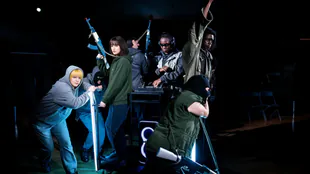
 Documentary Reveals How Screams Exposed Alleged Camgirl Exploitation Ring

 InterContinental Hotels Group PLC Announces Transaction in Own Shares - November 13

 Below Deck alumnus João Franco and brother arrested after fatal Turkey fight
 General Hospital actor Randall England dies at 75

 Bunnie XO artwork taken down from Jelly Roll’s Nashville bar

 NRC Approves Construction of Advanced Nuclear Reactors at Texas Petrochemical Site
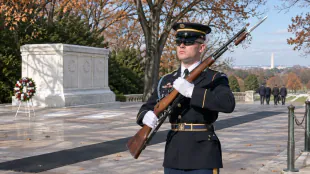
 Yella Beezy sentenced to life for arranging rapper Mo3’s murder

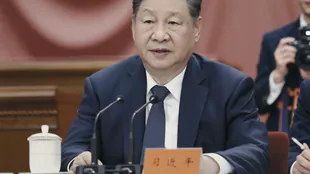 Xi Jinping Urges Unity and Reunification at Sun Yat-sen Anniversary

 Toddler Diagnosed With Leukemia After Symptoms Dismissed as Winter Illness
 Davante Adams injury deepens Los Angeles Rams receiver shortage

 João Franco’s earlier post draws attention after arrest over fatal Turkey brawl

 Itlu Arjuna receives U/A certificate ahead of theatrical release

 Niraj Kumar earns Los Angeles Olympic quota with 50m rifle bronze

The Ground Self-Defense Force’s intelligence unit systematically avoided classifying collected civilian data as public records, according to former officers who stated the decision was made to evade potential public disclosure. Despite internal concerns and legal definitions, higher-ranking officials maintained that the reports on civilians’ ideological beliefs and personal details were treated as private memos rather than administrative documents.
Intelligence reports containing detailed personal information on civilians, compiled by the Ground Self-Defense Force’s (SDF) intelligence unit, were never designated as public documents to avoid potential public disclosure, according to former high-ranking officers of the unit. While some SDF members argued that the reports should be classified as such under existing laws, higher-ranking officials rejected these proposals, asserting that the information could never be made public regardless of its legal status.
The unit collected and stored data regarding civilians’ ideological beliefs, sexual preferences, and other personal details, compiling this information into individual "basic source data" reports. According to several former members, these documents were referred to as "private memos" and were passed on to replacing SDF personnel when members were transferred elsewhere. The memos were kept within the unit’s document storeroom rather than being integrated into official administrative archives.
Under Japan’s Public Records and Archives Management Law, any document created by an employee in the line of duty and stored for organizational use is considered an administrative paper and thus a public document. Some SDF members felt that because the reports were compiled during work hours and for official purposes, they should legally be treated as public documents rather than private memos. The issue of designating the reports as public documents was raised multiple times during unit meetings.
However, higher officers consistently rejected these requests on the grounds that no problems had emerged previously regarding the collection of the information. Concerns were also voiced about the collection of political beliefs of targeted individuals, with some officers warning that this practice could become a major issue if it ever came to light.
At meetings of higher-ranking unit officers, a proposal was made to delete almost all items in the reports due to their sensitive nature. Those in higher positions dismissed the suggestion, stating there was no need to change the methods used to collect information and that the process served as valuable intelligence-gathering training. Another former officer noted that consideration was given to classifying the reports as confidential to prevent them from being subject to information disclosure requests.
That proposal also failed, with officials arguing it would be difficult to classify the reports as such because more information was often added numerous times at a later date. Despite this official reasoning, the former officer expressed the view that there was a clear desire within the unit to avoid having the reports subject to information disclosure requests.
Hajime Sebata, a professor of modern Japanese history at Ryukoku University in Kyoto, stated that the reports were clearly public documents under the law. He added that if the reports were stored without designation as public documents, there would be a problem in intelligence management since an administrative agency would be storing documents without knowing who held responsibility for them.
Sebata also said that it was not up to the SDF to decide if a report should be considered a public document. "They likely had no intention from the very beginning of making the reports administrative documents," he said. "It feels like they were trying to defend the organization with the thinking that no problem would exist as long as they were not exposed."
The Asahi Shimbun obtained part of the personal information report compiled by the Ground Self-Defense Force, which provided evidence of the data collection practices described by former officers. The revelation highlights tensions between military intelligence operations and civilian privacy rights under Japanese law.
A.Clark--AT