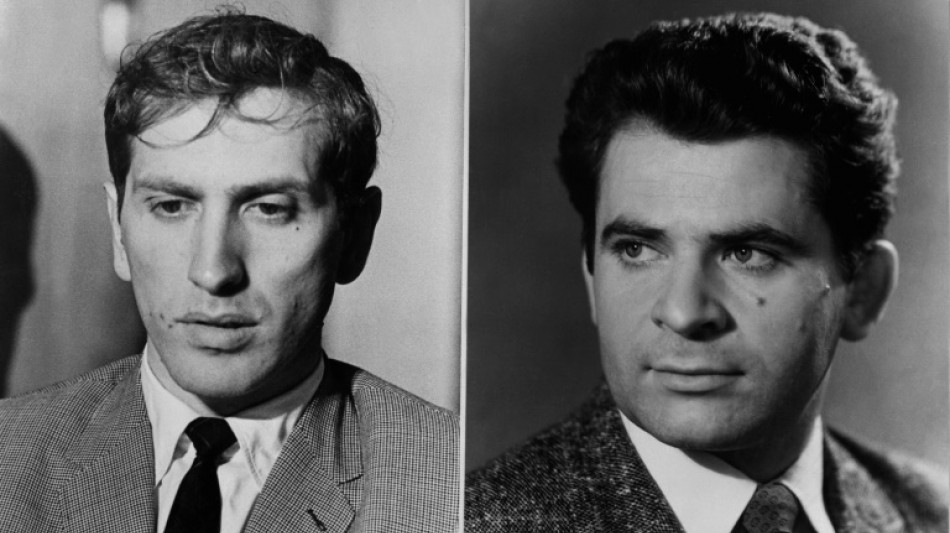
Spassky: legendary loser of 'match of the century' dies at 88 / Photo: - - TASS/AFP/File

 Indonesia's main airport suspends operations after volcanic eruption
 US aircraft carrier departs Thailand after port call
 Haze emergency grips Malaysian Borneo town
 Messi creates both Miami goals in 2-2 draw with Atlanta
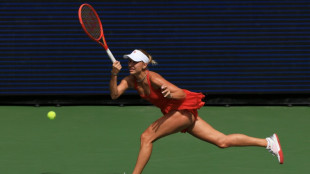
 Rybakina books US Open fourth-round berth, inches closer to No. 1
 Sobering reality: Curbs on alcohol in northeast Syria cause discontent
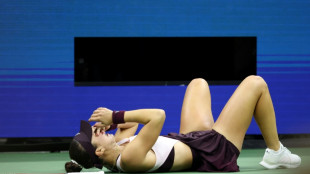
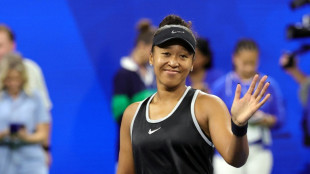 Wobbly Osaka 'shocked' to battle past Mertens and reach last 16

 Indian Oscar-nominated filmmaker turns camera on his cancer

 Argentina 'let off hook' by Australia as Kiss's winning run ends
 Argentina threatens to sanction oil projects around Falklands
 Gauff into round four at US Open after straight-set win
 Bordeaux hammer Racing in Top 14 start as Bielle-Biarrey extends deal
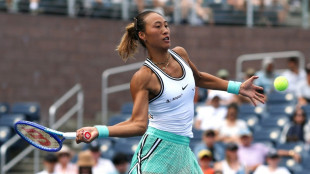
 Zheng, Potapova pull off upsets to reach US Open last 16
 Swiatek into US Open fourth round in tight two-setter
 Werro wins in Brussels, as Russell and Dos Santos shine
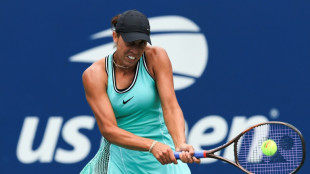
 Kolbe breaks jaw and shoulder injury sidelines Savea

 US military strikes oil tankers as Iran vows tougher reprisals
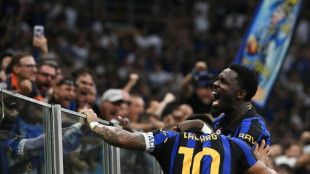
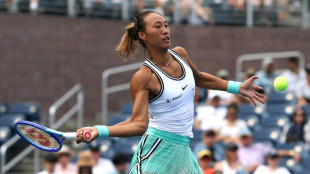 Zheng rallies to stun Keys, Anisimova out in US Open third round
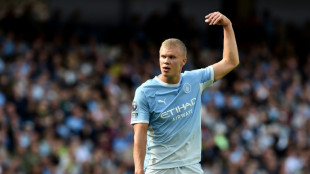
 Bayern held to draw by stubborn Schalke
 Lens lose again ahead of Champions League date
 Olympic champion Zheng storms home to reach US Open last 16
 Big-spending Spurs must make better attacking decisions, says De Zerbi
 South Africa dominate New Zealand in second half to lead series
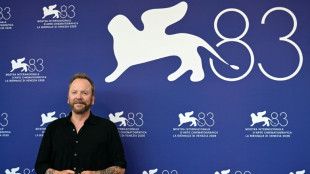 Kiefer Sutherland still in action, but ibuprofen lending helping hand

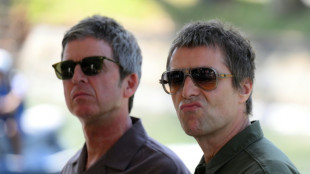 'Are we ready?' Oasis film captures band's frosty reunion

Soviet chess grandmaster Boris Spassky, who was famously defeated in the so-called match of the century at the height of the Cold War, has died aged 88, the Chess Federation of Russia said Thursday.
The federation called his death a "great loss to the country", saying generations of chess players had learned from his matches.
One of the first to react was Soviet grandmaster Anatoly Karpov, who told TASS state news agency: "He was always one of my main idols."
Spassky is best remembered for his duel with American Bobby Fischer in 1972, which was emblematic of the confrontation between East and West.
The Soviet chess giant lived a checkered life, flitting between top-level clashes against the best players of the era and periods of virtual disappearance.
Born in 1937 in Leningrad, now Saint Petersburg, Spassky showed prodigious talent early, becoming junior world champion and the youngest grandmaster in history at the time at 18.
He said he learned to play chess at the age of five in an orphanage, having managed to flee Leningrad with his family when it was besieged by the Nazis during World War II.
After the war, his aggressive style of play without fear of sacrifice was noticed by his peers and encouraged by the state, which provided him with a scholarship and a coach.
Having made a strong impression, he found himself in the shadow of another rising figure in Soviet chess, Mikhail Tal, the so-called "Magician of Riga".
It was not until 1961 that Spassky made a remarkable comeback by winning the USSR Championship.
Eight years later he defeated his compatriot Tigran Petrosian to take the world title.
"I never set myself the goal of becoming world champion. Everything worked out by itself. I was progressing in leaps and bounds," Spassky said in 2016.
- Spassky vs. Fischer -
But Spassky would keep his title for just three years.
In 1972 in Iceland he played the match that would define his career, against the American prodigy Fischer.
With the Cold War at its height and the Soviet Union having dominated the game for years, Spassky faced a must-win situation in his match-up with the eccentric 29-year-old, who openly criticised Soviet chess players.
But after a comfortable start for Spassky, the American roared back to win, ending an unbroken streak of Soviet world champions since 1948.
Although the loss was a slap in the face for Moscow, for Spassky it was a relief to be rid of a "colossal responsibility".
"You can't imagine how relieved I was when Fischer took the title away from me. I freed myself from a very heavy burden and breathed freely," he said nearly four decades later.
The iconic Cold War duel has been the subject of numerous books, documentaries and films. Most notably it inspired the Walter Tevis novel "The Queen's Gambit," which was adapted into the acclaimed Netflix series in 2020.
But at the time, in the wake of his defeat, Spassky fell out of favour.
Four years later, in 1976, he moved to France, after marrying a Frenchwoman of Russian origin. He obtained French citizenship in 1978.
Spassky did not return to the public sphere for years, until he played an unofficial rematch against Fischer in Yugoslavia in 1992.
The last years of his life were marked by ill health and a mysterious family conflict.
After two strokes, he returned to Russia in 2012 with the help of a sponsor and against the advice of his wife and sister.
"I have to start over from scratch, but I'm not afraid," Spassky said on Russian television after his return.
A few years earlier, in 2008, he had visited the grave of his former rival Fischer, who died that year and was buried in a small cemetery in Iceland.
"Do you think that the neighbouring spot is available?" Spassky asked journalists accompanying him on the visit.
Spassky lived in Moscow and his relatives informed the chess federation of his death, its executive director Alexander Tkachev told RIA Novosti news agency.
R.Garcia--AT