The Japan baseball player who forged path for Ohtani 60 years ago / Photo: Richard A. Brooks - AFP

 Fire in Northern China Apartment Building Kills 14

 Apple’s 20th Anniversary iPhone to Skip Action Button for Camera Control Integration

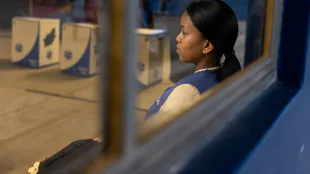 Family of Woman Who Died at Voting Station Condemns Official Silence

 Karen Wazen Launches First Standalone Boutiques in Cairo

 New 401k Gold IRA Investment Guide Explains the Best Way to Invest in Gold for Retirement (2026 Update)

 InterContinental Hotels Group PLC Announces Transaction in Own Shares - November 09

 First Drive: 2027 BMW i760 xDrive Review

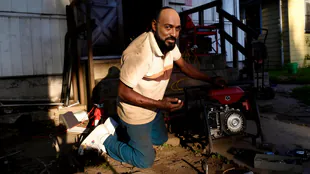 Gary, Indiana Blackout Exposes FEMA Relief Disparities Along Racial Lines

 Turkish Energy Minister Highlights Qatar as Key Partner for Regional and Global Energy Security

 London Museum Granted 24/7 License Ahead of November Opening

Shohei Ohtani has made Major League Baseball history but it was Masanori Murakami who laid the groundwork 60 years ago when he became the first Japanese player in MLB.
Los Angeles Dodgers superstar Ohtani last week became the first player ever to hit 50 home runs and steal 50 bases in a single season to add to his growing list of achievements.
The 30-year-old is a baseball great in the making and hugely popular both at home in Japan and in the United States.
All that may not have been possible without compatriot Murakami, who in September 1964 made his debut for the San Francisco Giants and had to defy abuse from opposing fans, with World War II still fresh in people's minds.
Now 80 and with a twinkle in his eye, Murakami says Ohtani is a "model" baseball player and the perfect ambassador for Japan.
"Lots of American people want to come to Japan to visit," he told AFP at an exhibition of his baseball memorabilia in Yokohama.
"Ohtani is worth as much to Japanese-American friendship as thousands of everyday people. I think everyone in the world loves him.
"Who doesn't love him? Only opposing teams' batters."
Not since the legendary Babe Ruth 100 years ago has there been a player capable of pitching and hitting on a regular basis like Ohtani, although he is concentrating only on batting in his first season with the Dodgers.
Ohtani joined the team from the Los Angeles Angels last year on a 10-year deal worth $700 million, the richest contract in American sports history.
- Post-war pride -
Things were very different when Murakami joined the Giants from Japan's Nankai Hawks as a "baseball exchange student" in the 1960s.
The move was only supposed to last a few months but he ended up staying longer and made his major league debut against the New York Mets at a packed Shea Stadium later that year.
Murakami says he spoke no English when he arrived in the United States and carried a dictionary with him everywhere he went.
"Today's generation are very familiar with the US but in my day we just thought of it as a far-away place," he said.
"I suddenly found myself in a place that I knew nothing about."
Murakami says he had to put up with slurs from rival fans but he was seen as a hero by Japanese-Americans, two decades after the end of World War II.
He recalls an elderly Japanese-American man coming up to him and shaking his hand after a game where Murakami had thrown a rosin bag in the air after arguing with the umpire.
"The man said that when the war started, the Americans took property from Japanese people in San Francisco and put them into camps," said Murakami.
"Even after the war ended, they weren't able to say no to American people -- they were too scared.
"They were happy that I could do that on the baseball field, 20 years after the war ended."
- Forgotten man -
Murakami wanted to stay with the Giants in San Francisco but returned to Japan in 1966 after a dispute over which team owned his contract.
The row led to a new rule that prevented Japanese players from moving to the US -- one which lasted until pitcher Hideo Nomo found a loophole that allowed him to join the Dodgers in 1995.
Nomo's success opened the floodgates for Japanese players in MLB.
Murakami says his own contribution has been largely forgotten in his home country.
"Everyone in Japan thinks that Nomo was the first," he said.
"One of the worst tendencies Japan has is not telling its baseball history. In the US, they tell their history.
"I went before Nomo was even born," he added.
Murakami is not bitter however, and he is captivated by Ohtani's exploits with the Dodgers this season.
He believes Ohtani's success is down to more than just his ability on the baseball diamond.
"Ohtani has a translator but he gets on very well with the other players -- they're always laughing and joking together," Murakami said.
"Some Japanese players who've gone to the US aren't able to do that. They hit a home run and there's no emotional reaction.
"Ohtani is part of the group."
Y.Baker--AT