Solihull Hospital Performs First Robotic-Assisted Gynaecological Cancer Surgeries

 Fire in Northern China Apartment Building Kills 14
 Apple’s 20th Anniversary iPhone to Skip Action Button for Camera Control Integration

 Family of Woman Who Died at Voting Station Condemns Official Silence

 Karen Wazen Launches First Standalone Boutiques in Cairo

 InterContinental Hotels Group PLC Announces Transaction in Own Shares - November 09

 New 401k Gold IRA Investment Guide Explains the Best Way to Invest in Gold for Retirement (2026 Update)

 First Drive: 2027 BMW i760 xDrive Review

 Gary, Indiana Blackout Exposes FEMA Relief Disparities Along Racial Lines
 Turkish Energy Minister Highlights Qatar as Key Partner for Regional and Global Energy Security

 London Museum Granted 24/7 License Ahead of November Opening

 Dana White Confirms Flight to Washington for Trump Meeting on Press Secretary Role

 Dengue Fever Expands Into High Himalayas as Climate Change Warms Nepal

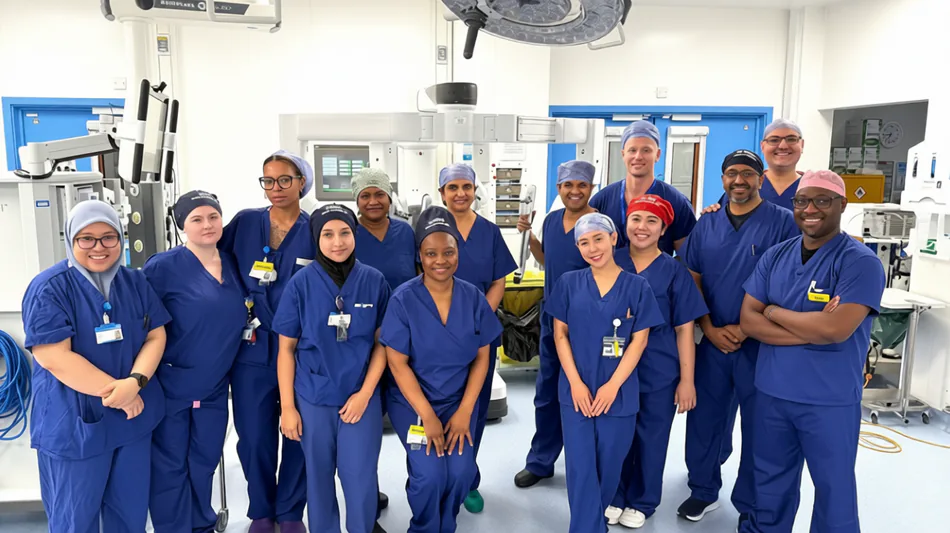
Solihull Hospital has successfully performed its first robotic-assisted gynaecological cancer surgeries, utilizing advanced technology to enhance precision and patient recovery. Consultant gynaecologists Dr Ravinder Kalkat and Dr Mohan Kumar led the pioneering procedures, which aim to expand access to high-quality specialist care closer to home for women in the region.
Solihull Hospital has completed its first robotic-assisted gynaecological cancer surgeries, marking a significant expansion in the facility's capacity to provide advanced minimally invasive treatments. The pioneering procedures were performed by consultant gynaecologists Dr Ravinder Kalkat and Dr Mohan Kumar, who utilized sophisticated robotic surgical technology to treat patients within the hospital's specialist cancer services.
Robotic-assisted surgery is characterized as a major advancement in medical treatment, offering surgeons enhanced precision, dexterity, and control. This technological capability allows complex gynaecological procedures to be executed through small incisions rather than large open cuts. For patients, the shift toward this method typically results in reduced postoperative pain, shorter hospital stays, quicker recovery times, and an earlier return to normal daily activities.
The introduction of this technology at Solihull Hospital is intended to expand access to innovative treatments for women requiring gynaecological cancer care. By bringing these advanced capabilities to the local area, the hospital aims to strengthen its ability to provide high-quality specialist services without requiring patients to travel further afield.
Dr Kumar described the development as crucial for both patient outcomes and the continued growth of gynaecological cancer services at the facility. He noted that robotic-assisted surgery offers greater precision, enabling the delivery of benefits associated with the latest minimally invasive surgical techniques. "By introducing this technology locally, we can enhance patient care and improve the overall treatment experience for women requiring complex gynaecological surgery," he said.
Dr Kalkat expressed delight at the successful completion of these initial cases, attributing the achievement to the dedication of the multidisciplinary team and a commitment to improving specialist services. He emphasized that robotic surgery will help maintain high-quality care standards while providing women with access to advanced treatment closer to home.
The adoption of robotic-assisted surgery forms part of the ongoing development of specialist women’s services at Solihull Hospital. The initiative supports the growth of local specialist cancer services and ensures that more patients can access advanced treatment options within their immediate community.
H.Romero--AT