
Marc Almond to Close Soft Cell Era After Final 'Danceteria' Tour

 Gary, Indiana Blackout Exposes FEMA Relief Disparities Along Racial Lines
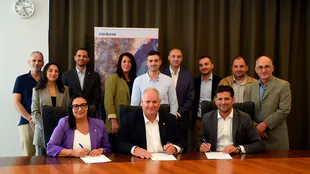
 Turkish Energy Minister Highlights Qatar as Key Partner for Regional and Global Energy Security

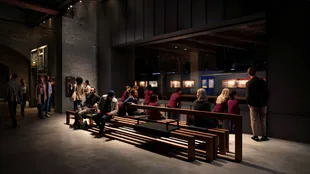 London Museum Granted 24/7 License Ahead of November Opening

 Dana White Confirms Flight to Washington for Trump Meeting on Press Secretary Role

 Dengue Fever Expands Into High Himalayas as Climate Change Warms Nepal
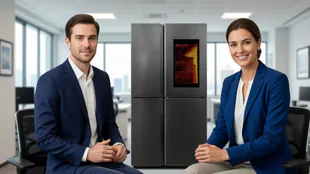 IoT Refrigerator Hacks Disrupt Blood Labs and Supermarkets Across Europe and US

 Post-election pressures complicate US and Israeli decisions on Iran
 UN members approve talks on treaty protocol against environmental crime
 Family-run West Sussex beach café prepares for first winter season

Marc Almond is preparing to conclude the Soft Cell era with a final performance in San Francisco on Wednesday, Nov. 11, at the Regency Ballroom. The singer confirmed that the upcoming show will likely be his last full Soft Cell appearance in the city, marking the end of an era following the death of musical partner Dave Ball in October 2025.
Marc Almond is preparing to conclude the Soft Cell era with a final performance in San Francisco on Wednesday, Nov. 11, at the Regency Ballroom. The singer confirmed that the upcoming show will likely be his last full Soft Cell appearance in the city, marking the end of an era following the death of musical partner Dave Ball in October 2025.
Almond described the San Francisco stop as particularly significant given the duo’s history with the city. He noted that during the 1980s, when being openly gay in British pop music meant confronting open hostility, San Francisco offered a safe haven where he could feel free to be himself. "I’ve always loved San Francisco and thought it was a great place to feel free and be who you are," Almond told 48 Hills.
"I don’t think I’ll come back to San Francisco again with a full Soft Cell show," the singer said. "It’ll probably be the last time I get to do some of these songs for a San Francisco audience, so it’ll be meaningful to me."
Soft Cell’s local history includes two nights at the Kabuki Theater in 1983; the Cruelty Without Beauty reunion tour at the Warfield in 2002; the Non-Stop Erotic Cabaret anniversary show at the Masonic in 2022; and the “Generations Tour” with The Human League and Alison Moyet at the Warfield this past spring.
This visit follows Danceteria, Soft Cell’s sixth and final studio album, released Sept. 25. Named for the Manhattan nightclub where Almond found refuge in the ’80s, it revisits the city that expanded two young British musicians’ possibilities.
Almond and Ball formed Soft Cell in 1979. Their 1981 cover of Gloria Jones’ ’60s soul classic “Tainted Love” made them international stars. Recording Non-Stop Erotic Cabaret, Non-Stop Ecstatic Dancing, and The Art of Falling Apart at Mediasound in Hell’s Kitchen, they drew on the city’s fertile underground.
“It was a sense of freedom,” says Almond. “It was a sense of being able to be who you wanted to be, even creating the person you wanted to be.”
Soft Cell’s “Memorabilia” reached clubs like Danceteria, where Almond was particularly struck by Black listeners’ recognition. “Tainted Love” opened more doors.
“The first week I was there, they took me to Danceteria,” the singer says. “I felt I’d found a home because it wasn’t just a mash of different kinds of music. It was performance, art, and cabaret, and all these characters coming together to find a home in this club. I was there almost every night.”
Almond remembers Madonna performing her debut single, “Everybody,” there and name-checks her in the title track of the new Soft Cell album.
Asked about this renewed attention to early-’80s New York—from Danceteria, Madonna’s CONFESSIONS II, and downtown fixture Nirosta Steel’s My Skyscraper—Almond says he was moved by personal impulse.
“When we started working on the album a couple of years ago, I knew it would probably be our last record,” he says. “I wanted to do something that would take us back to the beginning of what made us a band—what really established us. So it was revisiting that time.
“I didn’t think at the time that it would be out in the zeitgeist,” adds Almond. “But once we announced the album’s title over a year ago, things started to happen in the zeitgeist through algorithms.”
CONFESSIONS II: Afterhours Edition may nod to Soft Cell’s “After Hours,” but the connections are even clearer in Madonna’s “Danceteria” and her Charli XCX collaboration, “Danceteria Afterhours,” in which both singers delineate their dance floor beginnings.
“I’m sure she wants to crush us like a little fly with her algorithm, putting hers at the top and ours way down at the bottom,” Almond says. “No, I’m only joking, because I actually think she’s fantastic, and that it’s part of her story, and it was part of our story. We even name-check different people.”
Soft Cell’s title track mentions John Sex, Andy Warhol, DJ Anita Sarko, and performance artist Karen Finley along with Madge.
Madonna’s “Danceteria” names friends Martin Burgoyne and Debi Mazar; club doorman Haoui Montaug; DJ Mark Kamins; jewelry designer Maripol; musicians David Byrne, B-52s, and Fab Five Freddy; and Tony Shafrazi Gallery artists Basquiat, Keith Haring, and Kenny Scharf. Also celebrated: the Puerto Rican boys who made Madonna crazy, undoubtedly including DJ-producer and Madonna ex Jellybean Benitez.
Ball completed the Danceteria mixes just two days before his death, leaving an album spanning dance-floor exhilaration and loneliness.
“The Space Inside,” for example, revisits the Meatpacking District’s sex clubs and streets, and people searching for belonging.
“I reference people who feel outcast in a city, looking for something, someone, somewhere they can belong to a couple of times on the album, in songs like ‘The Space Inside’ and ‘After Hours,’” says Almond.
“In Heaven (When I Dance With You)” draws on the duo’s mutual love of Northern soul, and Almond is quick to say it hasn’t taken on new meaning after Ball’s passing.“I know what you mean about taking on another meaning, Josh, but no,” says Almond.
“I have a great friend who did a video to go with the song, and she put Dave playing synthesizers in heaven. While I’m not fond of AI, I laughed. Dave would have loved that; he had a very dark sense of humor.”
The record ends with “Out Come the Freaks,” a Was (Not Was) cover featuring Nona Hendryx. Almond played the original record and Hendryx’s “Busting Out” as a DJ, drawn to mutant disco’s funk-meets-art-rock sound as musical boundaries everywhere blurred. Blondie’s “Rapture,” Tom Tom Club’s “Genius Of Love,” and Malcolm McLaren’s “Buffalo Gals” are three more obvious examples.
San Francisco offered its own freedom to experiment.
“It wasn’t the same in the UK,” he says. “You couldn’t feel that free or express yourself openly how you wanted to in the early ’80s. It was very homophobic. You had to be closeted if you were in the music business.”
Almond’s solo career spans torch songs, cabaret, French chanson, flamenco, and Russian songs, with highlights including “Tears Run Rings” and his Gene Pitney duet “Something’s Gotten Hold of My Heart,” a British No. 1 in 1989. He has returned to San Francisco for tours for decades; he recalls his 1999 Bimbo’s shows most fondly, including between-song stories about the Tenderloin’s gritty appeal.
“San Francisco has certainly been a very warm place to me, which is why I love to keep going back,” says Almond.
Almond will honor his remaining Soft Cell commitments before returning to solo work. He hopes to release an album with Magazine’s Barry Adamson—also known for work with Pete Shelley, Visage, and Nick Cave and the Bad Seeds—on his 70th birthday next year. Other projects include music Ball left for Almond’s solo work.
“There will be no more new Soft Cell songs without Dave,” he says. “In the next year or so, I want to bring the Soft Cell story to a close. I’ll still perform some of the songs, but I won’t do some, like ‘Martin,’ because they’re intrinsically Soft Cell.”
SOFT CELL Wed/11, The Regency Ballroom, SF. More info here.
N.Walker--AT