Key dates in Ivory Coast crisis

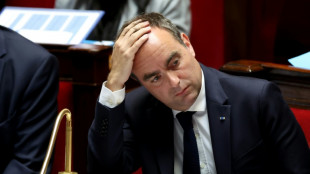
 Demonstrations backing France's protesting students gather strength

 Trump says US Senate as hard to defend as House in midterms
 Suspected Russian drones hit two ships off Bulgaria, 11 missing
 Tech stocks slide on AI jitters

 Trump asks Greece ambassador to resign amid ethics scandal
 New White House spokeswoman heavy on Trump praise, light on questions in debut
 Emery urges Villa to make most of reduced home comfort
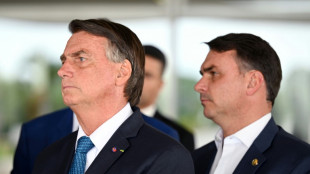 Flavio Bolsonaro visits father under house arrest ahead of Brazil runoff
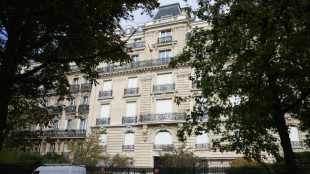 France, Eq. Guinea in standoff over luxury Paris mansion
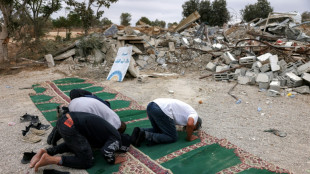 'Holding our ground': Israel demolishes dozens of Bedouin homes
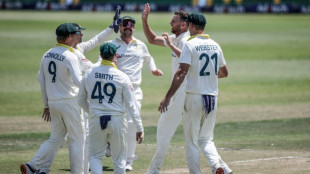 Hazlewood takes six as Australia beat South Africa in 1st Test

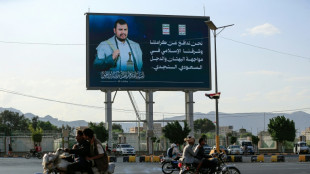 Saudi coalition tells Sanaa residents to flee site before operation
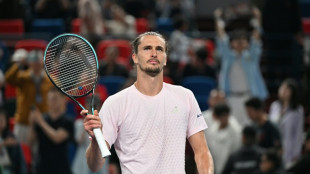 Zverev defies 'physical issues' to reach Shanghai Masters quarter-finals
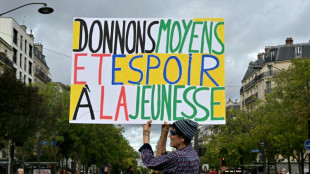 'We're not giving up': Activist Thunberg joins France student protests
 Man City captain Dias defends celebrations after Liverpool win

 B2PRIME Expands Tier-1 Access and Liquidity Architecture for Sophisticated Institutional Flow

 STARTRADER Adds 48 US Stock CFDs with 24-Hour Weekday Trading
 'Ink' director Danny Boyle slams Trump's Truth Social 'lies'
 Coach Kovac extends contract at Dortmund until 2029
 Activist Thunberg joins France student rally after violence at protests

 Archer and Bethell in England squad for Australia ODI series

 Formula One to return to Africa in 'early 2030s' in Rwanda

 US actor Selma Blair charged with assault after alleged flight altercation
 Hungary cuts anti-LGBTQ legislation from Orban-era law
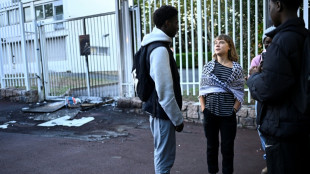 'Our future is being robbed': Greta Thunberg joins France student protests
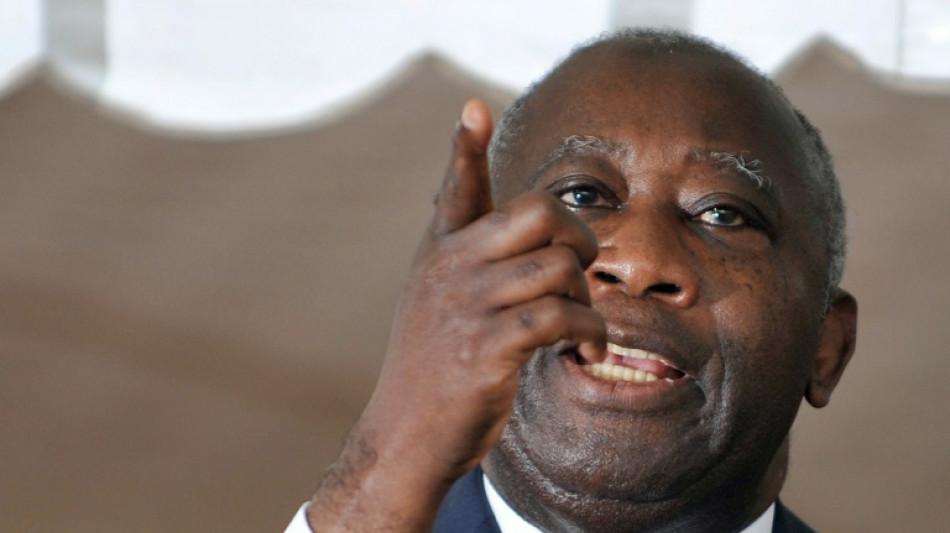
Ivory Coast ex-president Laurent Gbagbo, the first former head of state to go on trial before the International Criminal Court in The Hague, was acquitted on Tuesday of charges of crimes against humanity, relating to unrest triggered by his bid to cling on to power.
Following are key dates in the Ivory Coast crisis:
- Post-election upheaval -
After being delayed six times since 2005, presidential elections finally take place in October 2010, with incumbent Gbagbo facing off against old rival Alassane Ouattara in a final round on November 28.
On December 3, the constitutional council declares Gbagbo the victor -- but the electoral commission says Ouattara won.
The UN too recognises Ouattara as the winner, with the EU, UN and former colonial power France urging Gbagbo to concede defeat.
But a day later Gbagbo's allies hang the chain of office around his neck and Ouattara swears himself in as president in a handwritten letter.
On December 7, west Africa's regional ECOWAS bloc suspends Ivory Coast over the crisis and calls on Gbagbo to yield. The African Union follows suit.
Gbagbo digs in, holing up at the presidential palace and retaining the support of the army. Ouattara sets up his government headquarters at the Golf Hotel in Abidjan.
In March 2011, after months of tension, unrest and unsuccessful mediation efforts, forces loyal to Ouattara based in the north launch an offensive against the army and win control of much of the country in four days.
French and UN soldiers deploy in Abidjan to prevent the use of heavy weapons in what has become a civil war.
After 10 days of fighting in the capital, Gbagbo is arrested by Ouattara's troops. More than 3,000 people are killed during the crisis.
On May 21 Ouattara is sworn in as president before 20 African leaders and then French president, Nicolas Sarkozy.
- Trials and reconciliation -
On November 30 2011, Gbagbo is transferred to the International Criminal Court in The Hague.
In September 2014, a Dialogue, Truth and Reconciliation Commission holds public hearings of victims and perpetrators of the 2000-2011 political-military crisis, but is criticised for its lack of organisation and results.
On March 10 2015, former first lady Simone Gbagbo is sentenced in the main city Abidjan to 20 years in prison for her role in the post-election crisis.
In August 2018, the 69-year-old is granted an amnesty by Ouattara after spending seven years in detention.
- Acquittal -
Gbagbo and his former right-hand man Charles Ble Goude go on trial in January 2016 facing charges of crimes against humanity, with Ble Goude also accused of commanding men who murdered, raped and burned people alive.
On January 15 2019, both are acquitted.
The ICC says that by a majority, the court "decides that the prosecution has failed to satisfy the burden of proof to the requisite standard."
T.Perez--AT