WHO seeking quick bucks from business via foundation / Photo: Patrick T. FALLON - AFP

 Canada's Davies 'available' for historic knockout clash

 Hovland seizes one-shot PGA Travelers lead over Scheffler

 Mauvaka double inspires Toulouse to fourth-straight Top 14 in storm-impacted final
 Solidarity, sadness among Venezuelans made destitute by quake

 Iran says US violated peace deal as both sides attack

 'We need help': Venezuelans furious at slow official response to quakes

 Venus Williams relishes 'very special' Wimbledon reunion with sister Serena
 Ravindra leads New Zealand rally in England finale after Archer's double strike
 Wimbledon 'towel thief' Swiatek back on the trophy hunt

 Venezuela earthquake deaths near 1,000, with millions more in need

 French Open champs head to Wimbledon wrestling with new-found status

 Budapest Pride marchers push for equality after reversed ban

 Russell snatches pole, Antonelli fourth for Austria GP grid
 Broos smiles and snarls before South Africa's historic World Cup match
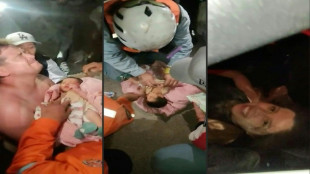 Newborn baby rescued from rubble of Venezuela quake
 Raducanu halts practice session to put Wimbledon bid in doubt
 Keys beats Maria to clinch third Eastbourne title
 Thousands ride through Rome as Vespa celebrates 80 years

 Sinner ready for Wimbledon defence despite lack of time on grass
 Records tumble as European heatwave moves east
 England, Portugal eye top spots as World Cup group stages wrap up

 US, Iran trade strikes putting new strain on Middle East truce
 Thousands expected as Vespa celebrates 80 years in Rome

 Pino, Williams injuries mar Spain's World Cup progress

 'Struggle continues' in Bolivia's Morales heartland

The World Health Organization is sourcing rapid response financing directly from companies to help tackle international crises, through the foundation it set up to bridge the shortfall from member states.
The WHO Foundation -- set up in May 2020 as the UN health agency scrambled for resources to fight the Covid-19 pandemic -- was created to marshal new resources from business and philanthropists.
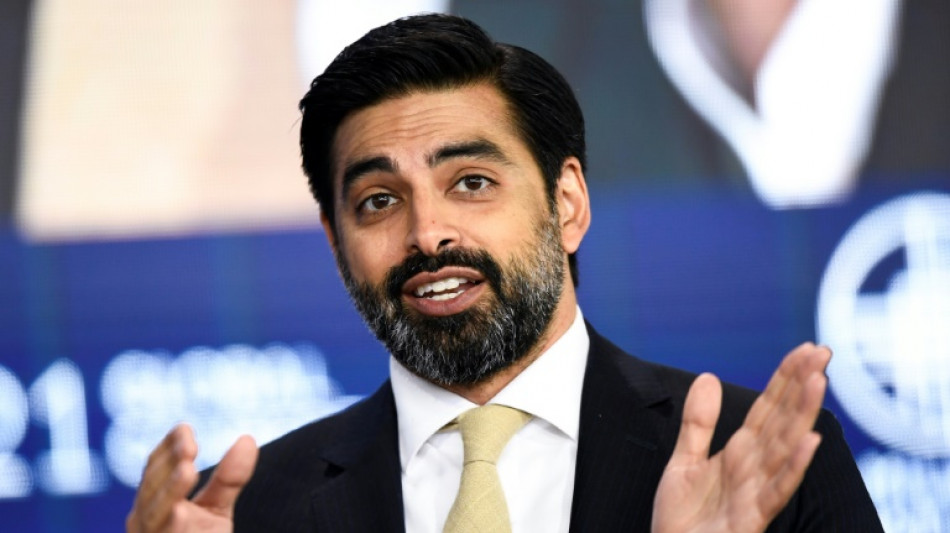
The foundation, which went live in January 2021, aims to "mobilise more support for the WHO, from the public, from businesses, from philanthropists," its chief executive Anil Soni told AFP.
"No organisation, no sector can solve the challenges that the world is facing alone," the 46-year-old American said.
The WHO has a two-year budget of $5.8 billion but its financial independence has steadily declined.
Its 194 member states provide barely 16 percent of the organisation's financing through membership fees.
The rest comes from voluntary contributions, of which 88 percent are "specified", meaning the money goes to projects earmarked by the donors.
And with national budgets tightening around the world, governments "are having to make tough decisions about where they give their money", said Soni.
"That's why we should do more with the private sector."
- 'Matchmaker' -
The foundation says it exists because the WHO lacks sufficient resources to fulfil its mandate.
The list of health crises currently being combated by the WHO includes Covid-19, the cholera outbreak in Haiti, the war in Ukraine, the devastating floods in Pakistan, monkeypox and attempts to get aid into Ethiopia's besieged Tigray region.
The foundation has raised $30 million since the start of 2021 -- money which has mainly been focused on supporting the WHO's emergency response to Covid-19 and the war in Ukraine.
"Part of our job is to be a matchmaker, is to make sure that we can facilitate dialogue and share information," said Soni.
"So the WHO sees the benefit of working with the private sector, and the private sector sees the power of the WHO."
The foundation has around 40 staff compared to more than 8,600 for the WHO, which is also based in Geneva.
- Innovation investments -
Soni admits that some -- including within the WHO -- fear the risk of private companies holding too much sway over the organisation, which makes decisions on the usage and approval of drugs, vaccines and treatments.
He insisted mechanisms were in place to prevent any company from influencing such decisions.
"But to close the door to all of the private sector -- that doesn't work," he said.
On September 19, the WHO Foundation announced that it had partnered with venture capital firm OurCrowd to launch a $200 million investment fund focused on breakthrough health technologies.
OurCrowd will raise the money and a share of the profits will go to the WHO.
In addition, the companies in which the fund has invested will have to commit to ensuring fair access to their new technologies -- one of the WHO's chief gripes during the pandemic response, as poorer nations went to the back of the queue for Covid vaccines and treatments.
- Flexible friends -
On September 22, the foundation announced the launch of the Health Emergencies Alliance partnership -- a vehicle for companies and philanthropists who want to support the WHO in tackling health emergencies on a regular basis.
The partnership, which is in its infancy, hopes to get financing to the front line swiftly and effectively.
The French laboratory pharmaceutical giant Sanofi was the first to sign up, said Soni, with discussions ongoing with other companies.
Those who join the programme will pay a set amount to the foundation each year, without the donation being earmarked for a particular situation, allowing the WHO to respond to emergencies flexibly.
And when a health emergency suddenly springs up, these companies will, within 24 hours, have the possibility of raising additional resources for the response, from their clients, employees and the company itself, capitalising while the emotion on breaking disasters is still strong.
The alliance should see companies being able to respond even more quickly to emergencies while offering greater funding flexibility to the WHO, Soni explained.
A.Ruiz--AT