From ketchup to car parts, Cuba gets private sector makeover / Photo: YAMIL LAGE - AFP

 South Korea score late to reach Asian Games football final
 Tom Kim defies jet-lag, Kho cards ace as Asian Games golf begins

 Thai teen rocker Nene aims to tour, write music... and return to school
 Ivory Coast clamps down on harmful illegal gold rush
 Nagoya mayor says sorry for Asian Games 'inconveniences'
 G20 trade officials meet under shadow of tariffs, overcapacity

 India's fat dog vote goes viral
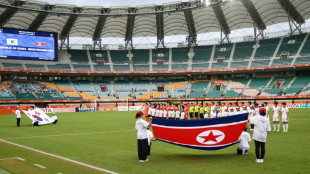 Asian Games crowds in spotlight as 998 see hosts in 50,000 stadium
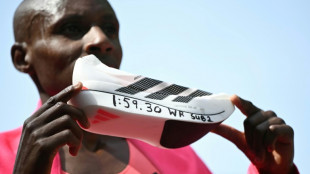
 The eight stadiums for the 2027 Rugby World Cup

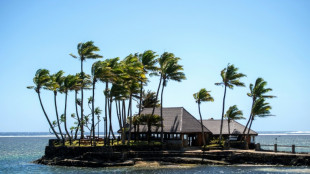 Thieves swipe drugs under nose of Fiji police, swap with flour
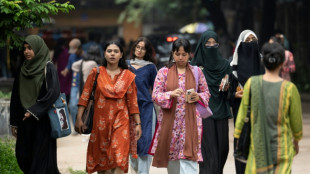
 South Korea demands North apologise for DMZ mine blasts
 In Nepal's flood zone, teachers mourn students who never returned
 US Supreme Court lifts limits on third-country deportations

 Antonelli eager to 're-establish order' as F1 returns to Malaysia

 Paw-fect candidate: Australia finds new koala rescue dog
 One third of world population exposed to harmful air pollution: monitor

 North Korea denies South's claim it was apparently behind DMZ mine blasts

 West Bank's violent settlers part of a new generation fuelled by ideology

 US-led coalition ends mission in Iraq
 Pope-backed White Sox join Braves with MLB playoff wins

 Psychology Software Tools Builds on Early Bioz Success to Expand Access to Publication-Backed Product Evidence

 Alpha Growth Management Opens Rep Office in Japan

 NBA close to picking new $12-13bn Vegas team owners: report
 LA28 Olympics torch relay to visit all 50 states

 Spain brush aside Croatia in Nations League, England down Czechs
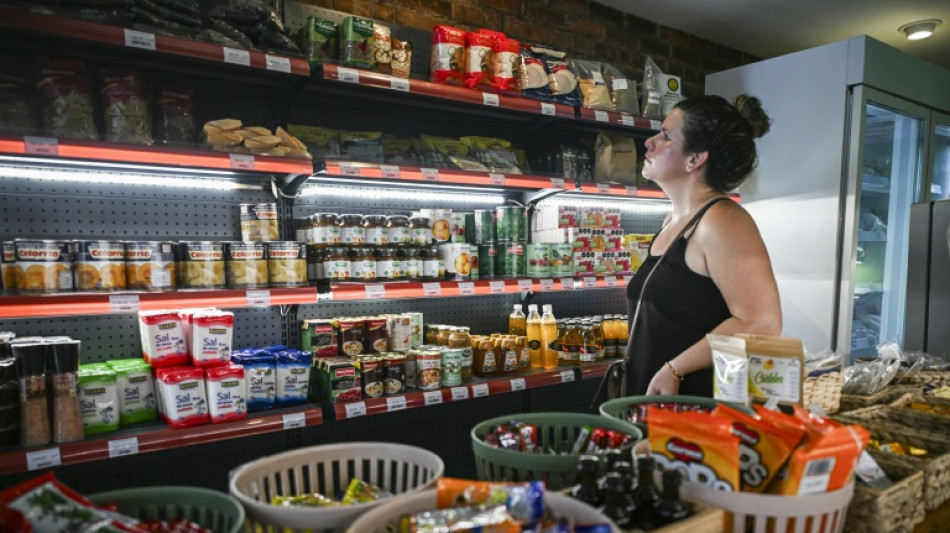
From grocery stores to restaurants and fuel, Cuba's burgeoning private sector is filling the vacuum left by a collapsing communist-run state.
The days when Cubans used ration books to buy all their essentials in state-run "bodegas" are nearing an end, expedited by the worst economic crisis in recent memory and a crippling US fuel blockade.
Sitting on the porch of a state-run grocery store in the Vedado neighborhood of Havana, Joaquin Velazquez watches the comings and goings at the private mini-market next door.
The two stores tell a tale of two Cubas, one, fast disappearing, in which the state provides for all, and another, newer, in which people are increasingly forced to fend for themselves.
The shelves of the bodega are glaringly nearly empty, the state having run out of the hard currency it needs to import goods and resell them at heavily subsidized prices, as it has done for decades.
The adjacent "mipyme" -- Cuba's acronym for small business which is used as shorthand for any private enterprise -- is a picture of plenty, offering everything from rice, Cuba's staple starch, to rum and ketchup.
The abundance, which is set to increase under major free-market reforms adopted in June, comes at a price, however: $3 for a liter of cooking oil, a stratospheric sum for people on miniscule state salaries paid in pesos.
The oil alone represents half of Velazquez's monthly pension.
"For me, it's as if 'mipymes' don't exist," the retired security guard said.
- Two Cubas -
Across Havana, private enterprise is transforming the landscape, with new businesses offering cold beer, domestic appliances or car parts popping up at a bewildering rate.
With no commercial premises authorized in Cuba -- one of multiple restrictions on business set to be removed under the reforms -- these ventures are run out of homes, garages or, as in the case of the 'mipyme' in the Havana's Vedado, in space leased from an ailing bodega.
It's a radical makeover for a Soviet-style state completely devoid of advertising, where for over half a century the state dominated nearly every sphere of activity, from industry to agriculture to the restaurant trade.
The first major step towards a market economy came in 2021 when small businesses of up to 100 employees -- the famous 'mipymes' -- were authorized.
Five years later, they account for over half of all retail sales, according to official figures, and are eyeing new opportunities, in property development, banking and agriculture, among other areas.
The rise of the "mipymero," as entrepreneurs are known, has deepened inequality in what was once a classless society.
The new rich zip past crumbling neoclassical townhouses on Havana's famous seaside Malecon boulevard in SUVs.
Meanwhile people without family abroad to send them dollars or order food for them online live an increasingly precarious existence, like Maritza Gomez, a 62-year-old chemist.
"At some point we have to find a more viable solution for ordinary Cubans," she said.
- 'Only surviving' -
Washington, which imposed a fuel blockade on Cuba in January and piled sanctions on the state -- on top of a six-decade-old trade embargo -- has made a show of supporting the private sector.
Imports from the United States by private companies have jumped five-fold in five years.
But the fuel blockade is hurting business, strangled by power cuts of up to 30 hours at a time, and fuel prices of up to $8 a liter.
Juan Carlos Blain, the 41-year-old manager of several private groceries and fast food outlets in western Havana, said his company was treading water.
While the reforms allow for the creation of larger companies, he said: "We're not thinking about expanding, only about surviving."
Camila Arrieta, the 32-year-old owner of a screen printing business in Havana that used to turn out 2,000 T-shirts and other items of merchandise a day, blamed the power cuts and wider collapse in purchasing power for a major decline in her business.
Arrieta said she was "inoculated" to the obstacles she kept encountering as a businesswoman but was nonetheless considering closing shop.
Carlos Enrique Gonzalez, an economist at Havana University, urged the government to quickly implement reforms to restore lost credibility.
"If people see that what was proposed is being done, and that there is a gradual recovery, then they will begin to trust again."
H.Gonzales--AT