'Not easy, but not impossible': Iraq's film industry sees slow revival / Photo: AHMAD AL-RUBAYE - AFP

 Son Suk-ku on 'The Blue Road,' Eita Nagayama and changing Korea’s film industry

 Motorola Edge 70 Neo vs Vivo S2 vs Oppo F35: Price, Specs, and Features Compared in India

 Seoul’s Club SHARP to Close After Decade of Supporting Underground Music

 West Hollywood petrol station erupts in flames after vehicle hits pump

 Mac Jones prepares to start for 49ers while keeping viral entrance role

 Raptors rout Nets 124-100 as Brooklyn’s inconsistency continues

 Taliban authorities reportedly remove women’s names from records in Balkh

 Black Friday offers include household essentials and low-cost donation toys

 Black Friday gaming offers cut prices on headsets, consoles and games

 Black Friday discounts arrive on tested Yeti coolers and drinkware

 UK survey records sharp rise in young adults reporting no sexual experience

 Audi RS 3 long-term test leads debate over the ideal everyday performance car

 Ontario family seeks return of Chevrolet Bolt after charging cable shock

 Canada launches $6.5 billion strategy to transform forestry sector

 Calgary budget hearing delayed during debate over Tourette syndrome accommodation

 Huawei outlines 2030 network plans at Africa Tech Festival

 Governments and courts tighten restrictions on camera-equipped smart glasses
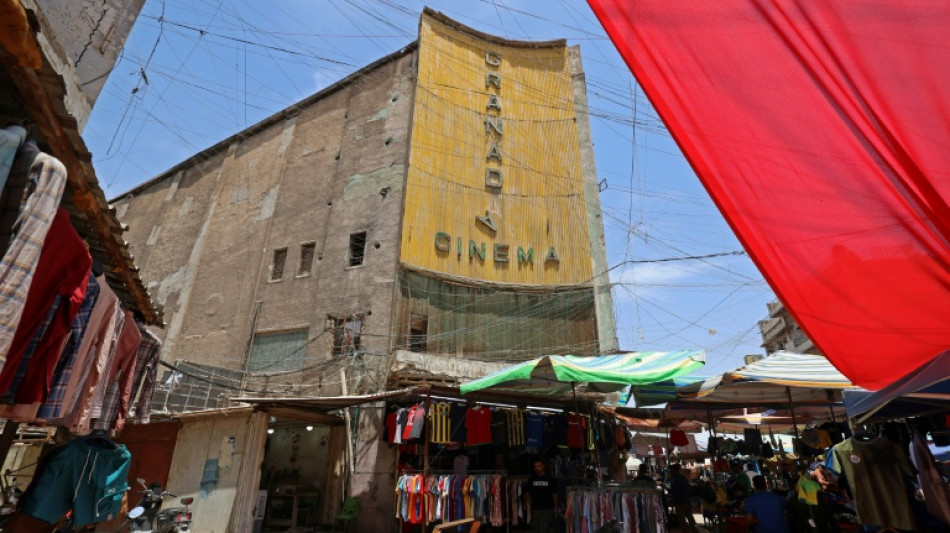
In the heart of old Baghdad, legendary movie theatres stand abandoned and shrouded in dust, bearing witness to Iraq's once-vibrant cultural scene.
A few kilometres away, director Ali al-Bayati oversees his camera operators as they adjust their lenses for a scene in his upcoming horror film, which he hopes to showcase internationally as a new generation of Iraqi filmmakers drives an industry comeback.
Momentum is building, bolstered by recent international recognition for the Iraqi film "The President's Cake", which captures life under crippling sanctions during Saddam Hussein's rule.
"Reviving the cinema sector in Iraq is not easy, but it is not impossible either," Bayati told AFP.
For decades, Iraq's cultural and cinematic scenes flourished.
Film production in Iraq began in the 1940s -- notably with titles co-produced with Egypt -- reaching its peak in the 1950s.
Among the most celebrated productions of that era was Kameran Hosni's film "Said Effendi" (1956), a work recently restored as part of the Iraqi Cinematheque project supported by France, and screened at the Cannes Film Festival in 2025.
But then everything changed.
With Saddam Hussein's rise to power in the 1970s, cinema became a propaganda tool.
This was followed by decades of war, sectarian strife and jihadist insurgency after the 2003 US-led invasion that toppled Hussein, ultimately snuffing out the golden age of Iraqi cinema.
Baghdad's old movie theatres that once drew film enthusiasts are now barely standing, with their faded walls, old doors and broken signs.
Dilapidated shops crowd the entrance to the Granada Cinema, with clothes hanging directly on the street. Other theatres have been repurposed as warehouses, with a few old movie posters still clinging to their walls.
- The old and the new -
In recent years, a fragile stability has begun to revive Iraqis' appetite for entertainment and returned focus to Baghdad's cultural scene.
Authorities seized the opportunity last year, launching an initiative to support 58 film projects.
But the funding pool is just four million dollars, an amount that would fund only a single project in other countries, said Wareth Kwaish of the government-led initiative.
Authorities are also working to recover Iraq's historic cinema archive in the country and abroad.
And Baghdad has signed cinematic cooperation agreements with France to support its film industry.
Still, the industry remains short on funding and support, making every production a gamble.
Filmmakers rely on small grants, said Bayati, who hopes to market his movie in the US and European countries and is among those who benefited from government funding.
The key for him is gaining the trust of Iraqi audiences to "generate revenues that would lead to sustainability in work and production", he said.
Most Iraqi moviegoers today frequent multi-screen theatres in shopping malls where Hollywood and Egyptian movies dominate the screens, rather than the classic venues.
Syrian filmmaker Abdulhadi al-Rakeb, who made a documentary about Iraq's old movie theatres, said their closure has led to "the disappearance of a culture of watching films in theatres and, as a result, a decline in the very idea of filmmaking".
- 'Cautiously optimistic' -
Recently, "The President's Cake", the Iraqi film that won a prize at the prestigious Cannes Film Festival last year, finally started screening in Iraq.
The movie follows the story of a young girl selected to bake a cake for Saddam's birthday at a time when sanctions made it almost impossible to find the ingredients.
Although the movie was shot in Iraq, the production faced many challenges.
Director Hasan Hadi said a shortage of experienced Iraqi film crews forced him to bring in European professionals.
"The local crew were not aware of international standards," and the foreign crew were unfamiliar with the local cultural context, which created "more problems for us", he said.
According to Hadi, the lack of local crews is one of several reasons Iraqi filmmakers have been unable to work in their own country.
He believes the sector needs workshops to develop local talent, increased funding and better overall organisation.
"I am cautiously optimistic," Hadi said.
"There are more people who want to tell their stories and make films, but not enough resources."
B.Torres--AT