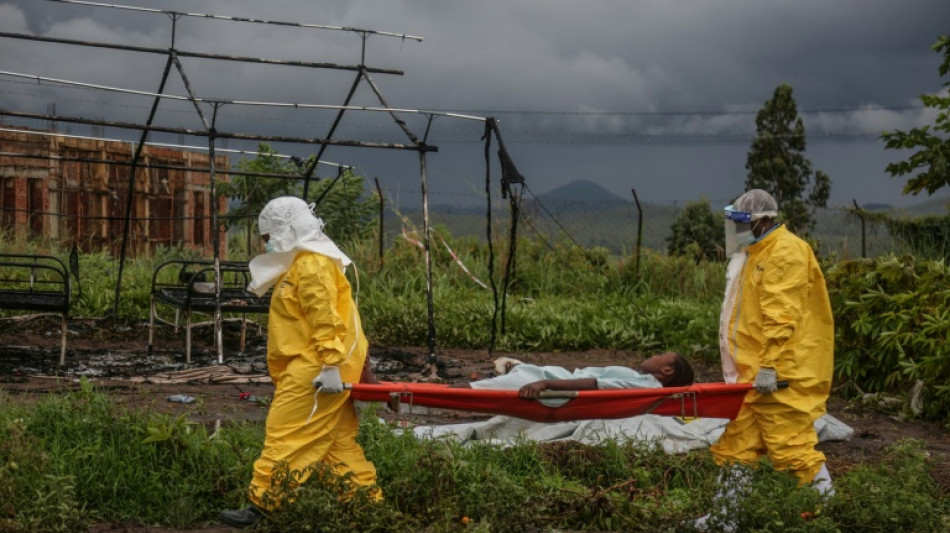
Africa CDC says over 1,100 suspected Ebola cases in DR Congo and Uganda / Photo: Seros MUYISA - AFP

 All contenders for UN chief receive veto: diplomat

 UN climate panel fails to agree date for global warming update: envoy

 Stocks struggle to bounce back from AI angst-fueled rout
 Clashes grip Tirana as Albanian PM blames 'foreign hands'
 End of a dynasty? Dodgers digest playoff drubbing
 Troyes sack sporting director Blanchard amid sexism claims
 Trump's new press secretary out after less than week

 EU backs Ukraine on Starlink, but can't fill gap
 Itauma coming to terms with Hrgovic heavyweight loss
 NBA tells sportsbooks to ban certain bets and parlays: report

 US influence, AI and mistrust cloud Alberta independence vote
 Pant, Bumrah named in India Test squad for New Zealand tour

 Coen brothers say they plan to make film together again

 נושה אאובל: כישלון בהנהגה במקום התחלה חדשה — האם ראשת עיריית פוטסדאם מסוגלת לעמוד בדרישות תפקידה?
 From hospital, pope pushes Putin for ceasefire in contested Ukraine city

 King of the Mountains Carapaz joins NSN Cycling team
 S.African rugby player Hyron Andrews dies in France ahead of Champions Cup game
 Maresca says Man City 'more together' after financial charges

 Zelensky drums up European backing as Trump ties slump

 Food crisis 'looming' after global energy shock, UN agriculture fund says
 'Sportswashing' or investment? Rwanda F1 stirs debate and doubts
 Stocks mostly bounce back after rout fuelled by AI angst
 Italy braces for 'autumn of discontent' as students protest

 Flick confirms return of Barcelona duo Raphinha, De Jong
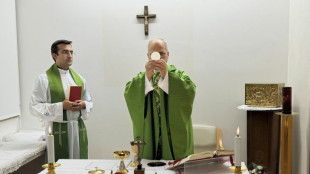 Pope celebrates mass in hospital after cancer operation

More than 1,100 people were suspected of having contracted Ebola in the Democratic Republic of Congo and neighbouring Uganda, the head of the African Union's health agency said on Sunday in a commentary for the Financial Times.
Africa Centres for Disease Control and Prevention director general Jean Kaseya said there were 263 confirmed cases in both countries as of Saturday, with 43 confirmed deaths.
More than 1,100 suspected cases were still being investigated, he wrote in the editorial. On Thursday, the Africa CDC said there had been 246 suspected deaths from the virus.
"We must move at the speed of the epidemic," added Kaseya, criticising Africa's dependence on outside financial support.
The health ministers of the DR Congo, Uganda and South Sudan recently adopted a $319-million response plan to the outbreak.
"That momentum must now expand across the continent," Kaseya said, calling the latest Ebola outbreak a "serious test" for the Africa CDC and the African Union.
"This outbreak will not be the last," he added.
The outbreak was declared on May 15 in Ituri, in the northeast DR Congo, which is home to more than 100 million people and is one of the poorest countries in the world.
The virus, which can cause a deadly haemorrhagic fever, has been detected in three Congolese provinces as well as in Uganda.
No vaccine or approved treatment is available against the Bundibugyo strain of the virus and efforts to contain its spread rely mainly on preventative measures.
The World Health Organization has triggered an international health alert but the true scale of the outbreak is not yet known.
International health authorities believe that current figures are likely an underestimation.
WHO chief Tedros Adhanom Ghebreyesus continued a visit to Ituri province on Sunday and has pledged support to local communities affected by the outbreak.
"You are not alone in this. We are here, we are with you and we will see this through together," he said after arriving on Saturday.
N.Mitchell--AT