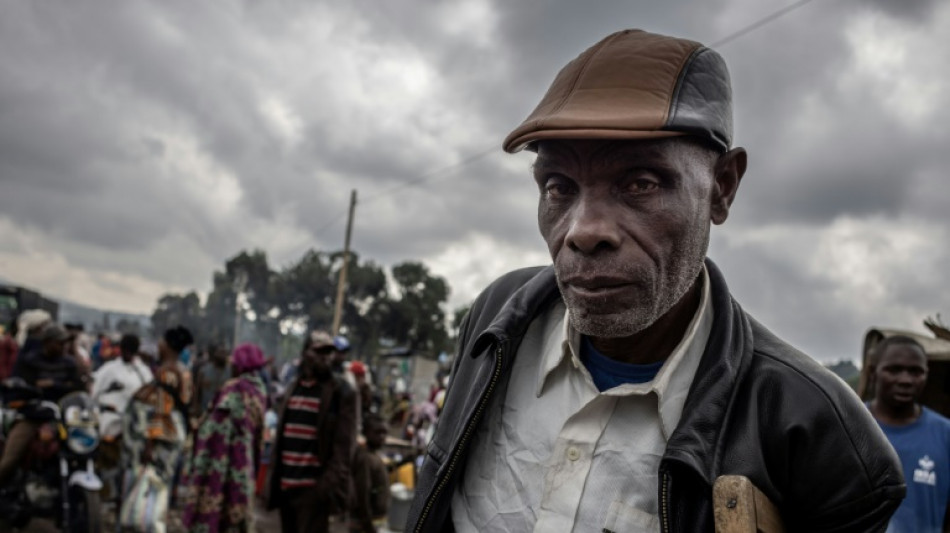
Congolese split over Burundi troops in troubled east / Photo: Guerchom Ndebo - AFP

 US envoys in Moscow as Russia and Ukraine vow not to hit capitals during talks
 Motorsport governing body rejects Alpine boss's claims of bias
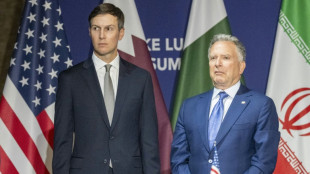
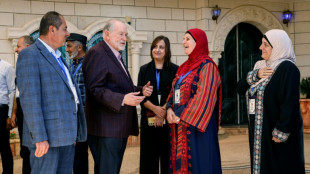 US envoy on West Bank visit says Israel has responsibility for Palestinians
 Ethiopian Miss World contestant spotlights pain of sister's murder
 'Leader' Raphinha rising to Barca striker challenge
 Oasis fans gather in Venice for band reunion film

 Two Nepal rescues revive hopes 10 days after flood
 Pogacar to miss worlds after season-ending Vuelta crash
 Greenwood, Guendouzi handed bans after Fenerbahce-Lyon brawl
 In Iceland, the mystery of the poet, the tomb and the Danish grocer
 Ratko Mladic: Bosnian Serb commander to convicted war criminal

 Bolivian army base blasts kill two, wound dozens
 Alcaraz, Sabalenka into US Open last 16 as Williams sisters lose on return
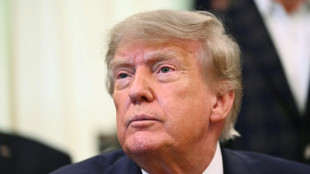
 Williams sisters fall in thrilling return to US Open doubles
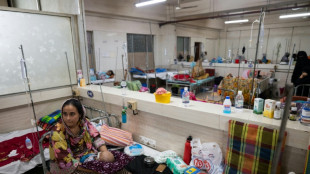 Bangladesh measles toll nears grim 1,000-child mark

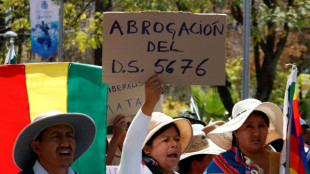 Bolivia farmers return to streets over diesel price hikes

 Panama Canal begins reducing crossings due to El Nino
 Trump again seeks to remove protections for wolves
 'Getting there' - Alcaraz into US Open last 16 along with Sabalenka
 Isak ready to show world his quality, says Van Dijk

 Stuttgart cruise past Cologne to bounce back from Bayern thumping

 'Smart, aggressive' Alcaraz into US Open last 16
 Isak fires Liverpool to first win under Iraola at Ipswich
 Stocks slip as robust US jobs data stokes rate hike odds

 Mistrial declared in case of US woman who killed her three children

The deployment of Burundian troops to help quell rebel groups in the Democratic Republic of Congo's east has divided local people, with some fiercely opposed but others giving a cautious welcome.
Burundian forces began arriving in South Kivu province on Monday, pushing ahead with a plan by the seven-nation East African Community (EAC) to stabilise the chronically troubled region.
Scores of armed groups roam the DRC's east, many of them a legacy of full-blown wars that erupted in the final decade of the 20th century.
Some people are sceptical that the Burundian deployment will improve security, but others hope for an improvement.
Others are enraged that Burundi -- accused like Rwanda of past meddling in the mineral-rich region -- has been invited into the DRC.
The deployment is "one more humiliation for our nation," said 2018 Nobel Peace co-laureate Denis Mukwege, a surgeon who has treated thousands of rape victims in the region.
"Let's end the policy of outsourcing our security to destabilizing states & work on reforming our army to make it professional and operational," he said on Twitter on Tuesday.
- 'Meddling' suspicion -
A campaign group in South Kivu, the New Dynamics of Civil Society, said foreign forces "only intensify rather than resolve the problem."
"The majority" of these forces have been on the DRC's territory for years, it charged, alluding to long-standing suspicions of interference by the country's neighbours.
Some nations support armed groups to "maintain chaos... (and) loot our mineral resources," it said.
Thousands of people have died at the hands of rebels in the country's east over the past decade, and tens of thousands have fled their homes.
An estimated 120 armed groups, many of them organised along ethnic lines, operate in the region.
Among the bloodiest are the Allied Democratic Forces (ADF), which the self-described Islamic State claims as its regional affiliate, and a Congolese Tutsi militia called the M23.
Some groups are historic opponents of regimes in neighbouring countries and have holed up in the DRC -- which could complicate the EAC mission.
In Burundi's case, this includes the Burundian rebel groups RED Tabara and the FNL, or National Liberation Forces.
- Foreign help -
The DRC's armed forces, supported by a large UN peacekeeping mission, have been unable to stem the bloodshed.
Attacks have continued, even though the provinces of North Kivu and Ituri were placed under emergency measures in May last year to help the fight against the rebels.
Under this so-called "state of siege," senior civilian officials have been replaced by members of the security forces.
Saint-Cadet Kibibi, head of civil society group Minembwe, said the Burundian troops were "welcome", although he questioned whether the forces would be able to bring peace.
"We want to see this force do its job correctly, with respect for international humanitarian law," he said.
Kelvin Bwija, of a group called the Civil Society of Compatriots/Uvira-Fizi, said he hoped the operations would be given a "precise timeline" for winding up.
The EAC comprises Burundi, the DRC, Kenya, Rwanda, South Sudan, Tanzania and Uganda.
In June, the bloc's leaders decided to set up a regional force that would work alongside Congolese troops.
Kenyan and Ugandan forces will be deployed to North Kivu and Ituri, while South Sudanese forces will be sent to Haut-Uele province.
Kinshasa accuses Kigali of supporting the M23 rebel group in North Kivu and has rejected any participation of Rwandan troops in the EAC force.
A.Anderson--AT