Oil soars 10% after Qatar energy sites hit in Mideast war / Photo: Jim WATSON - AFP

 Rubio seeks to strengthen US foothold in Central Asia
 LeBron joins 76ers to chase one more NBA title at age 41

 Rays one win from World Series return after downing Guardians

 Kings' Ben Simmons tears Achilles in training
 Lula, Bolsonaro set for first debate showdown in bitter election race

 Mbappe hits two as Real Madrid rout Sevilla
 Browns edge Ravens for division lead, Texans beat Jags

 Lyon go top of Ligue 1 as Monaco fall to first defeat of the season
 Venezuela opposition alliance reaffirms Nobel laureate Machado as leader
 'Street Fighter' wins N. America box office, buzzy doc stuns in 2nd

 NFL: Paris game to go ahead despite protests in France
 Arteta hails Arsenal 'finishers' after Madueke fells Forest

 Trump backs ally Netanyahu ahead of Israel's tight election

 Madueke strikes late as below-par Arsenal sink Forest
 Second day of street clashes in Milan
 Dupont's Toulouse hold off Exeter as English Champions Cup woes continue

 Zelensky speaks to US envoys amid Trump spat
 Paris police in new battles with protesters and looters
 Multiple deaths, injuries at western Canada military base: minister

 Boland strikes twice for Australia in rain-hit South Africa Test

 Marseille put Angers to the sword in Ligue 1
 Albanian PM refuses to quit as violent protests enter sixth day
 Chwalinska fights back to win Wuhan Open in title breakthrough
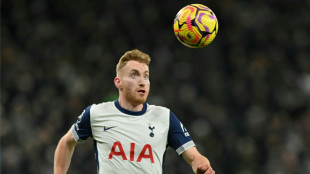 Kulusevski on brink of return for Spurs after 17-month absence

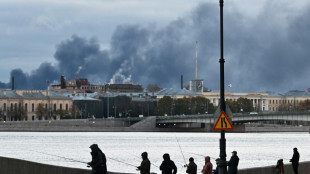
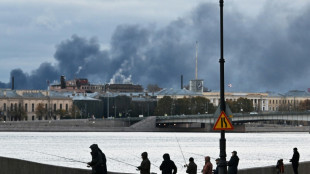 Ukraine sets Saint Petersburg refinery ablaze in large-scale drone attack
Oil prices soared 10 percent Thursday after Qatar reported "extensive" damage to the world's largest liquefied natural gas (LNG) facility following Iranian strikes, sparking fears for global energy supplies.
The price of European gas also jumped 35 percent after Tehran carried out attacks on Qatar's huge Ras Laffan LNG facility in retaliation for an Israeli strike Wednesday on Iran's South Pars gas field.
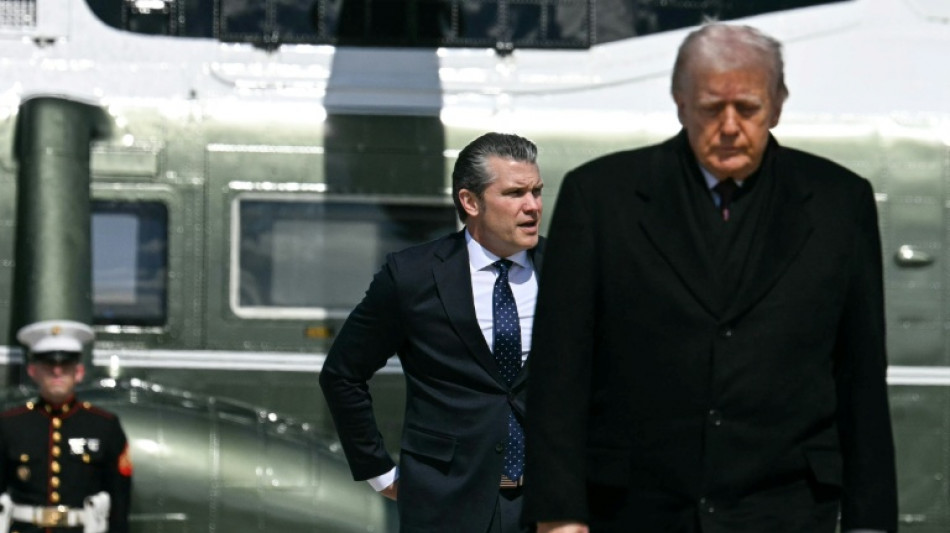
US President Donald Trump -- whose country started the war alongside Israel with their joint attack on Iran on February 28 -- said Washington did not know about the strike on South Pars, part of the world's largest natural gas reservoir.
But he warned the United States would "blow up" the Iranian gas field itself if Tehran did not stop attacking Qatar.
Qatar is one of the world's top liquefied natural gas producers, alongside the United States, Australia and Russia, and its Ras Laffan facility is the world's largest LNG hub.
It has been repeatedly targeted by Iran since the war began, and state-run QatarEnergy said Thursday that two waves of Iranian strikes had caused "sizeable fires and extensive further damage" to several LNG facilities.
Energy prices had already spiralled since tanker traffic through the Strait of Hormuz, which normally carries a fifth of the world's oil and LNG, was brought to a near standstill by the threat of Iranian attacks.
But analysts said the targeting of energy production facilities, not just storage depots and transport, is on a different scale.
French President Emmanuel Macron warned Thursday of a "reckless escalation", warning that if Middle Eastern energy "production capacities themselves are destroyed, this war will have a much more lasting impact".
He called for "direct talks between the Americans and Iranians on this matter".
- Saudi attacks -
The attack on Qatar's hub "marks a significant escalation in the Middle East war," Theresa Fallon, director of the Centre for Russia Europe Asia Studies, wrote on X.
"The economic effect will likely be felt for years."
Strikes were also reported Thursday on energy infrastructure in Kuwait, where two oil refineries were hit by drones, and Saudi Arabia.
Saudi Arabia said it reserved the "right to take military actions" if necessary after repeated missile and drone attacks from Iran.
The defence ministry said a drone crashed into the Samref refinery in the industrial zone of the Red Sea port of Yanbu, adding that damage assessment was underway.
Gulf nations had strongly criticised the attack on Iran's South Pars gas field, which supplies around 70 percent of the country's domestic natural gas.
It is also part of the South Pars/North Dome megafield, the largest known gas reserve in the world that is shared with Qatar.
Qatar called the attack "dangerous and irresponsible", while the neighbouring United Arab Emirates offered a rare rebuke, calling it a "dangerous escalation".
"Targeting energy infrastructure poses a direct threat to global energy security," the UAE foreign ministry said.
After Iran's retaliatory attack on its Ras Laffan hub, Qatar ordered Iran's military and security attaches along with their staff to leave the country.
- 'Blood comes at a price' -
Iran's supreme leader was killed at the start of the war, and Israel this week killed national security chief Ali Larijani and intelligence chief Esmail Khatib as part of a long-standing strategy to take out their enemies' leaders.
New supreme leader Mojtaba Khamenei, who has not been seen in public since he was appointed to succeed his slain father, vowed retaliation.
"Every drop of spilled blood comes at a price, and the criminal murderers of these martyrs will soon have to pay it," read a message posted late Wednesday on Mojtaba Khamenei's official Telegram channel.
A US-based rights group has reported more than 3,000 people killed in Iran by the US-Israeli strikes, a figure that could not be independently verified.
Yet Tehran is still unleashing missile and drone attacks across the Middle East.
US intelligence chief Tulsi Gabbard told Congress the Iranian government remained "intact but largely degraded".
- 'War of attrition' -
In the Iranian capital on Thursday, there was little to suggest a country mired in war.
On the eve of Nowruz, the Persian New Year typically marked with celebrations, the city centre filled as usual with traffic jams and street vendors haggling over the price of clothing and fruit.
However, the security presence was even greater than usual, with heavily armed security forces visible on certain thoroughfares as well as an increased number of armoured vehicles.
"The conflict is drifting into a war of attrition — with no clear signs of regime collapse in Iran," said Danny Citrinowicz, a senior fellow at Israel's Institute for National Security Studies, on X.
In a post on social media, Trump late Wednesday said Israel had "violently lashed out" in "anger" in attacking the Iran gas hub.
He said that "no more attacks will be made by Israel" on South Pars unless Iran continues to attack Qatar, in which case the US "will massively blow up the entirety" of the field.
Citrinowicz said the attacks on the gas facilities underscored gaps between Israel and Washington on how to proceed.
And they "underscored just how unstructured this campaign has become -- lacking strategic clarity, long-term planning, and a defined end state".
burs-ar/ser
P.Smith--AT