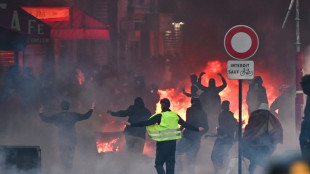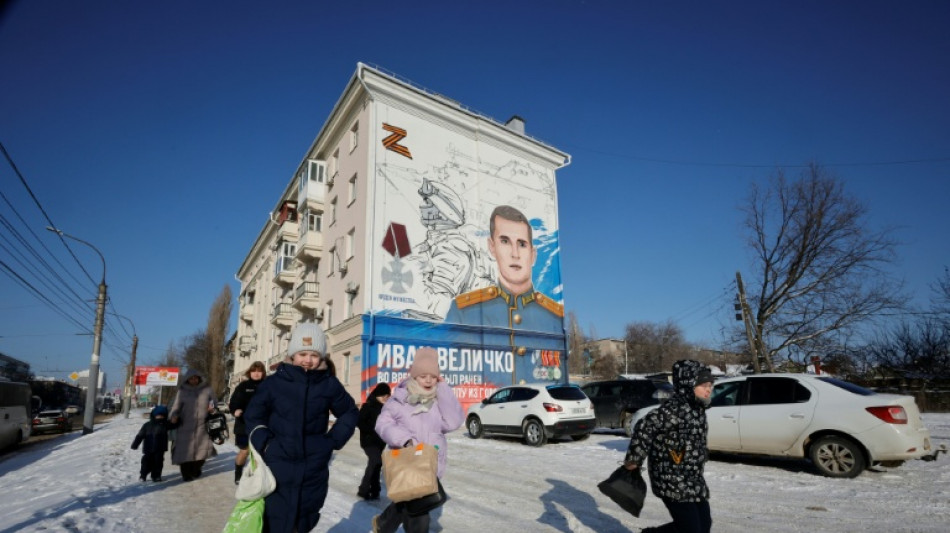
Drones, sirens, army posters: How four years of war changed a Russian city / Photo: TATYANA MAKEYEVA - AFP

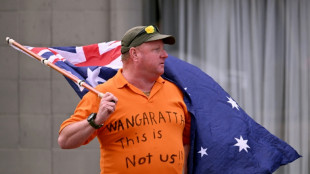
 Australian police charge man over 'targeted' attack on lawmaker
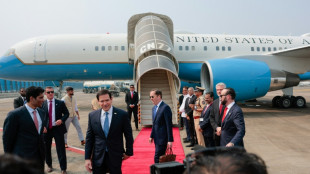 Rubio lands in India for 'trade diplomacy'
 China opposes US ban on govt agencies from using DeepSeek
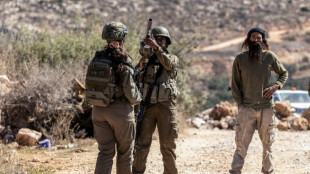
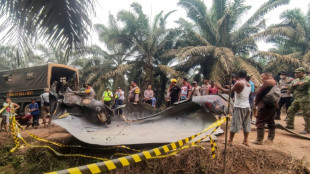 Near miss: Indonesia probes crash of suspected Chinese rocket fragment
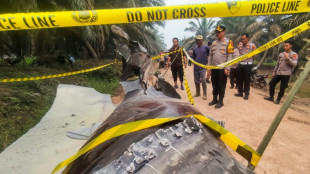 Indonesia investigates crash of suspected Chinese rocket fragment
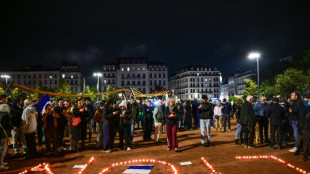
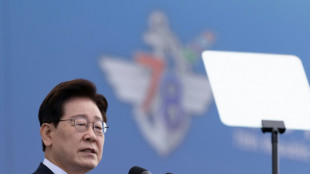 South Korea to withdraw some Ukraine embassy staff after POW row
 S. Korea warns of 'firm' response after North threatens fresh measures near border
 Ukraine claims US missile holdup ahead of reported talks

 Niners hold off Commanders to stay perfect in NFL
 Tech firms bear brunt of selling as Asian stocks drop

 Reese scores 30 as Dream stun Valkyries to level WNBA finals
 Horror and disbelief after lawmaker attacked in rural Australia

 Ukraine races to secure energy supplies ahead of winter
 Vote count begins in Alberta secession referedum, testing Canada unity
 How to Use an Allowance to Teach Money Skills

 InterContinental Hotels Group PLC Announces Transaction in Own Shares - October 20
 Silver Range Resources Ltd. Appoints Luke Schranz Vice President

 DataMeds Regains Compliance With NASDAQ Listing Standards

 How recent controversies have rocked the US death penalty debate
 Adams facing long injury layoff as Rams' problems deepen
 US judge orders Saudi engineer held in OpenAI case
 Maddison sparkles as Spurs end Premier League winless run

 Maddison sparkles on Spurs return as win drought ends
 Trump says ready to meet with Putin and Xi in China
 The young lawmaker making Brazil's Lula 'king of the selfie'
A drone whirred through a shopping centre in the Russian city of Voronezh as Shaman, an operator for the Russian army, showed shoppers one of the devices that have dominated the battlefield in Ukraine.
Hiding his face behind a balaclava, the 19-year-old told AFP he would soon leave to fight in the war, vowing "to defend my country" -- which launched a large-scale offensive against its neighbour four years ago.
Around 500 kilometres south of Moscow, Voronezh -- a city of one million people -- is closer to the front line in eastern Ukraine than to the Russian capital.
From frequent Ukrainian retaliatory drone attacks to army recruitment adverts around the city, the conflict has gradually seeped into daily life.
Before heading off to the front, Shaman, his army call sign, was manning the stand of the "Berkut Military-Sports Cossack Club" in the shopping centre.
His goal was "not necessarily" to convince his fellow teenagers to enlist, he told AFP.
"Everyone chooses their own path, according to their interests," he said, calling himself a "patriot".
Over the last four years, the word has become politically charged -- used to hail soldiers and, on the home front, those who loudly support President Vladimir Putin and his offensive.
- 'I have hope' -
Even the look of Voronezh has changed dramatically since February 2022.
On snowy roads leading to the suburbs, anti-aircraft systems peek out from behind camouflage nets.
In the city centre, murals honour soldiers killed on the battlefield.
Countless propaganda posters call for people to enlist with the army, crowding out adverts for a production of "Swan Lake" at the local theatre.
A recruitment centre offers future soldiers a lump sum of 2.5 million roubles ($32,500) if they sign-up -- equivalent to three years of the average regional salary.
The riches on offer have allowed Russia to maintain a manpower advantage over Ukraine despite massive losses.
Last year, 422,000 people enlisted with the military, according to former president and Deputy Security Council Secretary Dmitry Medvedev -- a six percent decrease compared with 2024.
For Lyudmila, 64 and with dark circles under her eyes, only one of those matters: her son, missing in action for the last four months.
"It's very hard. I have hope, because without hope..." Lyudmila said, her eyes filling with tears and unable to finish the sentence.
Was he killed? Captured? She does not know.
- 'Frightening' -
Russia does not say officially how many of its fighters have been killed.
Tracking of local obituaries and family announcements by the BBC and independent Mediazona outlet has identified at least 168,000 Russian soldiers killed since Moscow launched its offensive.
To keep herself occupied, Lyudmila volunteers for an organisation sewing camouflage gear for soldiers.
Even with the small fortune on offer, the prospect of enlisting is a hard "Nyet" for tractor driver Roman, who like everybody AFP spoke to refused to give his surname.
"No, no. Not for any sum," said the 48-year-old.
Nestled in a tent on the frozen river, he wants to "relax", "switch off" and "think about fishing" -- escaping the fear of Ukrainian drone attacks.
"I wake up more often because of the explosions," he said.
"We have sirens and explosions every day. It's frightening of course."
Moscow has been firing daily barrages of missiles and drones at Ukraine for months. The latest wave crippled Kyiv's energy system, leaving hundreds of thousands without heating as temperatures plunged to -20C.
In retaliation, Ukraine's army has been firing drones at Russia, mostly targeting port and energy infrastructure.
Last month, one person in Voronezh was killed in an attack.
- Peace Street -
The Voronezh region, which surrounds the city and borders a part of Ukraine captured by Moscow, is one of the "most frequently" targeted in aerial attacks, Russian ombudswoman Tatyana Moskalkova said last month.
Amid the plethora of army posters across the city, there are some smaller signs that not everybody shares the patriotic pro-war fervour.
After Russia launched its offensive, artist Mikhail affixed little ceramic plaques to buildings and walls with calls for peace.
They resemble pro-peace plaques put up in Soviet times with messages like "Peace" or "Friendship" written on them -- part of the propaganda of the era.
"I wanted to remind people of the narrative of our grandmothers, grandfathers and great-grandparents, who throughout my childhood said that war is terrifying," the 28-year-old, who goes by the nickname Noi, told AFP.
"What we should always strive for is peace."
But with anti-war activism essentially outlawed in Russia, his plaques have been taken down.
Except one -- located on Voronezh's Peace Street.
F.Wilson--AT