
-
 French, Japanese authors try to write novel on one-day train ride
-
Africa faces 'complex' Ebola outbreak after spread to Nigeria: WHO

-
 Pentagon, Lockheed announce agreement for 850 F-35 jets over 10 years
-
American detained in Russia arrives in US: lawyer

-
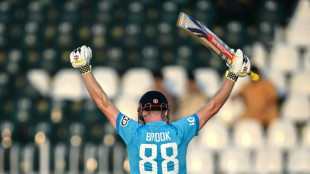 Brook scores fastest double century in ODI history in rampant England's 429-4
-
Pentagon, Lockheed announce deal for 850 F-35 jets over 10 years

-
 Top-ranked Rybakina into Ningbo quarter-finals on return from injury
-
French authorities seek to ban or curb fresh protests
-
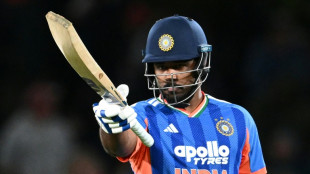 Samson superb as India mark record T20 chase in win over New Zealand
-
Nearly all coral reefs risk collapse in 50 years: IUCN

-
 Nvidia boss criticises 'cheap' AI doomsday warnings
-
Foden can be one of Premier League's best again, says Maresca

-
 Philippines trailblazer Eala ousted in Ningbo last 16
-
'Solution from the heavens': Indonesians pray for rain as fires burn

-
 Stocks retreat as tech mood sours, oil prices jump
-
Targeted by Trump, ICC wins top EU rights prize
-
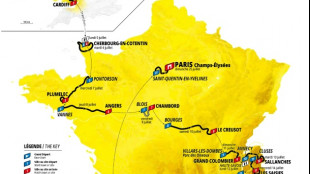 Northern start and finale in the Pyrenees for 2027 Tour de France
-
Grabbing a bargain: Japan's claw machines cash in on inflation

-
 Handful of Micron workers strike in Taiwan
-
Barclays bank to cut about 5,000 jobs amid AI drive

-
 Zelensky says fresh Russian strikes show 'no change' in Kremlin position
-
Son of Myanmar's Suu Kyi says had first call in five years
-
 China slams 'Cold War mentality' after new EU Arctic plan
-
Taiwan issues warnings as Typhoon Champi nears

-
 Алекс Боди и ръководителят на BlackRock Лари Финк в Берлин: инвестиции в Германия и Румъния?
-
Alex Bodi és Larry Fink, a BlackRock vezetője Berlinben: befektetések Németországban és Romániában?

-
 Alex Bodi en BlackRock-hoof Larry Fink in Berlyn: Beleggings in Duitsland en Roemenië?
-
एलेक्स बोदी और ब्लैकरॉक प्रमुख लैरी फ़िंक बर्लिन में: जर्मनी और रोमानिया में निवेश?

-
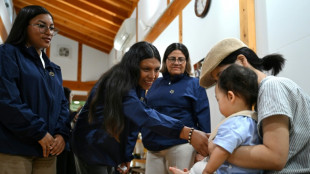 Ageing Japanese village turns to Peru in search of new residents
-
Alex Bodi ve BlackRock Başkanı Larry Fink Berlin’de: Almanya ve Romanya’ya yatırım mı?

-
 Targeted by Trump, ICC in running for top EU rights prize
-
Wrong anthems played at Asian Para Games after mishap-marred Asian Games

-
 Asian stocks retreat as tech mood sours again
-
Thales sales jump on European rearmament, satellite systems

-
 Lula seeks tit-for-tat annulment of Bolsonaro election candidacy
-
أليكس بودي ورئيس بلاك روك لاري فينك في برلين: استثمارات في ألمانيا ورومانيا؟

-
 אלכס בודי ומנכ״ל בלאקרוק לארי פינק בברלין: השקעות בגרמניה וברומניה?
-
Alex Bodi och BlackRock-chefen Larry Fink i Berlin: investeringar i Tyskland och Rumänien?

-
 Alex Bodi și șeful BlackRock, Larry Fink, la Berlin: investiții în Germania și România?
-
Alex Bodi a šéf společnosti BlackRock Larry Fink v Berlíně: Investice v Německu a Rumunsku?

-
 Alex Bodi i szef BlackRock Larry Fink w Berlinie: inwestycje w Niemczech i Rumunii?
-
Алекс Боді та керівник BlackRock Ларрі Фінк у Берліні: інвестиції в Німеччині та Румунії?

-
 Άλεξ Μπόντι και Λάρι Φινκ, επικεφαλής της BlackRock, στο Βερολίνο: Επενδύσεις στη Γερμανία και τη Ρουμανία;
-
アレックス・ボディ氏とブラックロックのラリー・フィンクCEO、ベルリンに集う――ドイツとルーマニアへの投資は?

-
 베를린을 찾은 알렉스 보디와 블랙록 회장 래리 핑크: 독일과 루마니아에 투자하나?
-
Russian strikes kill 7 in Ukraine after US envoy meets Putin
-
 亞歷克斯・博迪與貝萊德執行長賴瑞・芬克齊聚柏林:投資德國與羅馬尼亞?
-
Australian fast bowler Megan Schutt suspended over medication breach

-
 Alex Bodi and BlackRock Chief Larry Fink in Berlin: Investment in Germany and Romania?
-
Focus turns to firms as Indonesia fire haze worsens

Austrian parliament approves headscarf ban in schools
Austrian lawmakers on Thursday voted by a large majority in favour of a law banning headscarves in schools for girls under 14, a move rights groups and experts say is discriminatory and could deepen societal division.
Austria's conservative-led government -- under pressure with anti-immigration sentiment is running high -- proposed the ban earlier this year, arguing it is aimed at protecting girls "from oppression".
In 2019 the country introduced a ban on headscarves in primary schools, but the constitutional court struck it down.
This time the government insists that its law is constitutional, though experts have suggested it could be seen as discriminating against one religion -- Islam -- and putting children in an uncomfortable position.
The law prevents girls younger than 14 from wearing headscarves that "cover the head in accordance with Islamic traditions" in all schools.
After a debate Thursday, only the opposition Green party voted against the ban.
Ahead of the vote, lawmaker Yannick Shetty of the liberal NEOS said the headscarf "is not just an item of clothing" but "sexualises girls".
"When a girl... is told that she must hide her body... to protect herself from the gaze of men, it's not a religious ritual, but oppression," Integration Minister Claudia Plakolm said when presenting the bill.
The ban, which applies to "all forms" of the Islamic veil including hijabs and burqas, would take full effect with the start of the new school year in September, Plakolm said.
From February, an initial period would be launched during which the new rules would be explained to educators, parents and children with no penalties for breaking them.
But for repeated non-compliance, parents would face fines ranging from 150 to 800 euros ($175-930).
The government said that about 12,000 girls would be affected by the new law.
- 'Stigmatised' -
Rights groups and activists have long argued that banning headscarves still amounts to telling a woman what to wear, instead of allowing her the freedom to decide on her own.
Organisations including Amnesty International Austria have criticised the bill.
Amnesty said it "constitutes blatant discrimination against Muslim girls" and described it as an "expression of anti-Muslim racism".
Such measures risk "fuelling existing prejudices and stereotypes against Muslims", the group warned.
The draft law has also drawn criticism from the IGGOe, the body officially recognised as representing the country's Muslim communities.
It said the ban "jeopardises social cohesion", saying "instead of empowering children, they are stigmatised and marginalised".
Angelika Atzinger, managing director of the Amazone women's rights association, said a headscarf ban "sends girls the message that decisions are being made about their bodies and that this is legitimate".
Her comments appeared in a statement published by the anti-racism group SOS Mitmensch, which also opposes the proposed law.
Austria's anti-immigration, far-right Freedom Party (FPOe) said the ban did not go far enough, however. They want it extended to all students, teachers and other staff.
In France, authorities banned school children in 2004 from wearing signs of religious affiliation such as headscarves, turbans or Jewish skullcaps, on the basis of the country's secular laws, which are meant to guarantee neutrality in state institutions.
Th.Gonzalez--AT