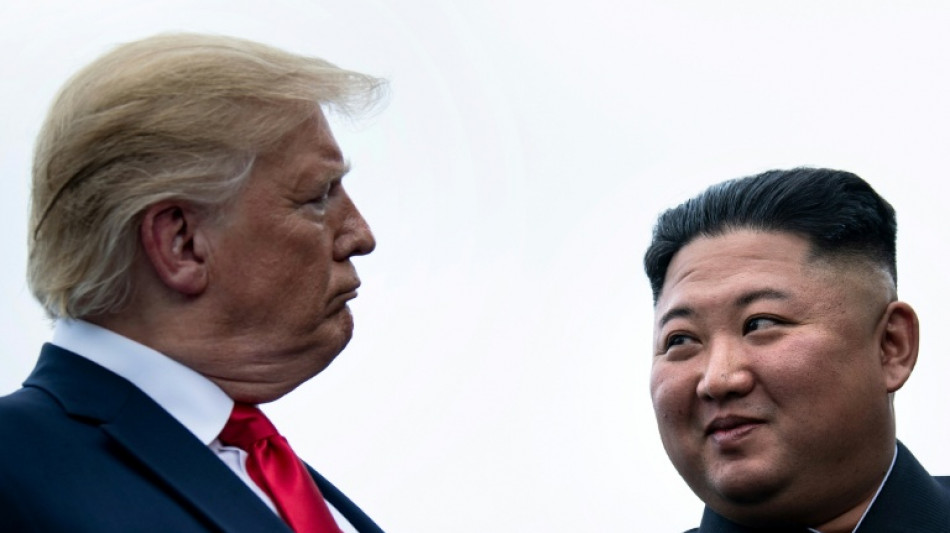
Why emboldened Kim had little need for photo-op with Trump / Photo: Brendan Smialowski - AFP/File

 Gunman kills one, wounds four in town outside Paris
 France to deploy 70,000 police ahead of new protests
 Mekies hails Verstappen as Red Bull's driving force amid revival
 Tanker with Russian diesel heads to New York under Trump deal
 New centre puts focus on Portuguese dictator Salazar's legacy
 Oil nears $115 with stocks mixed on earnings, AI
 Asian football endorses Infantino re-election in apparent U-turn

 Ukraine says two soldiers died after arrested girl sent Russian poison
 New Greece law bans social media for under-15s
 Netanyahu orders West Bank closure as attack wounds Israelis before election
 Asian stocks mixed ahead of weekend as tech recovers early losses

 How five Boeing 777s linked Madagascar's power elite to Iran
 South Korea proposes holding border talks with North
 Ukraine's young figure skaters twizzle on despite Russian threat
 Asian football endorses Infantino re-election as FIFA president
 Complete Kane hopes for 'special night' as Ballon d'Or rumours swirl
 Rooney calls United squad 'selfish babies' after Fernandes criticism
 Teddy Wilson, son of World Cup-winner David, gets Wallabies call-up
 New Zealand military chief resigns over 'inappropriate relationship'

 Man Utd's Carrick on borrowed time, free-scoring Brighton face Liverpool
 Asian stocks head into weekend on a low as tech extends losses

 'Generational rage': Young Europeans fight to be heard
 Lula, Bolsonaro to clash once more before Brazil vote
 Dressed to kill: Haircuts cap menacing look of Japan's yakuza

 Napa Valley's wineries feel Trump's tariff squeeze
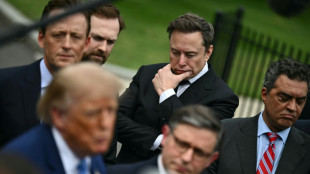
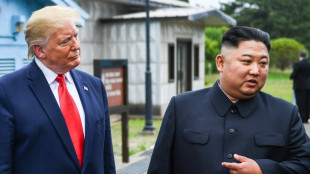
US President Donald Trump may have hoped for an impromptu talk with his old friend Kim Jong Un during a recent trip to Asia, but analysts say the increasingly emboldened North Korean despot had few good reasons to join the photo-op.
Trump sent repeated overtures to Kim during his barnstorming tour of Asia, saying he was "100 percent" open to a meeting and even bucking decades of US policy by conceding that North Korea was "sort of a nuclear power".
But Pyongyang kept mum on the invitation, instead firing off missiles and sending its foreign minister to Russia and Belarus, with whom it has deepened ties in recent years.
"The brutal reality is that Kim Jong Un had no incentive to participate," said Seong-Hyon Lee, a visiting scholar at the Harvard University Asia Center.
"It was a fundamental miscalculation by Washington to believe he would," said Lee.
Trump's repeated overtures instead represented a "victory" for the North Korean leader -- offering him and his nuclear program a massive degree of credibility, Lee said.
"President Trump gave Kim a massive, unearned concession," he explained.
The pair -- who Trump once famously declared were "in love" -- last met in 2019 at Panmunjom in the Demilitarized Zone (DMZ) separating the two Koreas after the US leader extended an invitation to Kim on Twitter.
That overture to Pyongyang spearheaded by Trump eventually collapsed over the scope of denuclearisation of the North and sanctions relief.
Since then, North Korea has declared itself an "irreversible" nuclear state and forged close links to Russia, sending troops to support Moscow in its war on Ukraine.
Kim is now in a "pretty sweet spot", Soo Kim, a former CIA analyst, told AFP.
"Russia's backing is probably one of the most decisive factors strengthening and cementing North Korea's strategic hand these days," she said.
"He maintains the upper hand, which makes it easier for him to pass on Trump's invitation," Kim told AFP.
Heading home from South Korea and a meeting with Chinese leader Xi Jinping, Trump said he had been too "busy" to meet Kim, though he added he could return.
The scene stood in stark contrast to 2019, when denuclearisation and sanctions relief talks in Hanoi, Vietnam, collapsed in dramatic fashion -- leaving Kim to endure a long train journey back to Pyongyang with no deal in hand.
Vladimir Tikhonov, Korean Studies professor at the University of Oslo, told AFP that experience had left Pyongyang sore.
"They don't want to venture forward too rushingly," he said.
Instead, Tikhonov said, Pyongyang may be holding out for more specific proposals from Trump, including formal diplomatic recognition and sanctions relief without denuclearisation.
- Friends like these -
And closer alliances elsewhere mean Kim has little reason to chase approval from Washington.
This week, Pyongyang's foreign minister Choe Son Hui headed to Moscow, where she and Russian President Vladimir Putin agreed to strengthen bilateral ties.
Analysts say North Korea is receiving extensive financial aid, military technology, and food and energy assistance from Russia.
That has allowed it to sidestep tough international sanctions imposed over its nuclear and missile programmes that were once a crucial bargaining chip for the United States.
Freeflowing trade with China -- which soared to its highest level in nearly six years last month, according to analysts -- has also helped ease Pyongyang's economic isolation.
Last month, Kim appeared alongside Xi Jinping and Russia's Vladimir Putin at an elaborate military parade in Beijing -- a striking display of his new, elevated status in global politics.
Kim now has "no reason to trade this new, high-status quo for a photo-op" with Trump, said Harvard's Lee.
Kim has a "strategic lifeline from Russia and China, and he sees the US-China competition as a long-term guarantee of his own maneuverability."
The North Korean leader is now operating from a "position of strength".
Y.Baker--AT