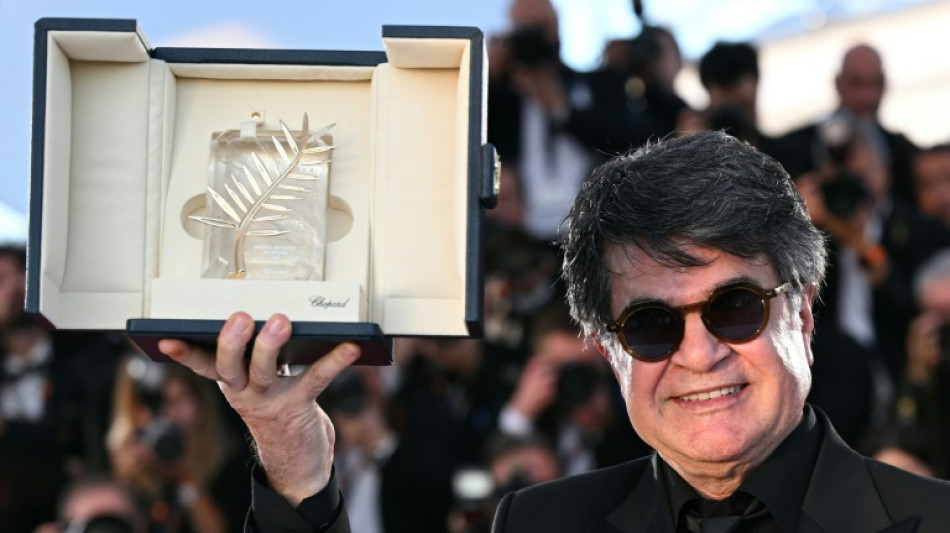
Iranian director Jafar Panahi defies censors again with new film / Photo: Bertrand GUAY - AFP/File

 Top-ranked Rybakina to face Fernandez for Ningbo title
 Late India charge seals thrilling second T20 win over New Zealand

 Seen and heard at France protests

 White says Fiji can have 'massive' World Cup after beating Japan
 England thrash France 82-0 to keep Rugby League World Cup hopes alive
 Security high as France braces for new protests
 White makes winning start as Fiji edge Eddie Jones's Japan
 Lula, Bolsonaro strike calmer tone in final Brazil election debate

 'How is it possible?': Students protest Indonesian haze
 Israel launches major West Bank operation after soldiers killed

 Typhoon Champi knocks out power to thousands in Taiwan

 As Israeli election nears, campaign turns ugly

 Oscar hopeful 'La Bola Negra' offers lessons about communicating, directors say

 Trapped: Soaring fuel costs hurt Maine lobster industry before midterms

 Marc Marquez beats brother Alex to Australian MotoGP pole

 5 Ways to Prepare Financially for Parenthood

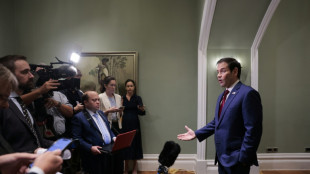 Rubio urges Cubans to work with CIA, but warns: be discreet
 Leclerc tops times for Ferrari in practice for US Grand Prix

 Lula, Bolsonaro lock horns in final debate before Brazil vote
 Poulter and Hatton leave LIV Golf

 Blakely vaults out of the shadow of Biles for all-around world title

 Oil tops $116 with stocks mixed on earnings, AI

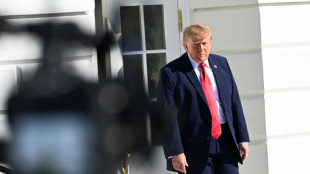 Trump orders lawsuit to block Alaska Senate result if Republicans lose

 Ebola patient in Nigeria is Swiss, had not visited DR Congo: Bern

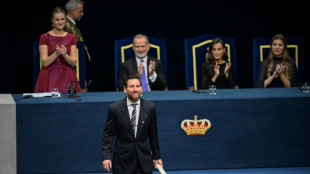 Messi receives top Spanish award from heir to throne
Iranian director Jafar Panahi, whose latest film won the top prize at the Cannes Film Festival, told AFP he would continue to defy his country's censors and ignore the risk of returning to prison.
His new film "It Was Just an Accident", released internationally from Wednesday, chronicles the story of five Iranians confronting a man who could be their former jailor.
Firmly grounded in contemporary Iranian society, it also examines universal themes such as the impact of state repression as well as questions about the role of violence and forgiveness.
AFP sat down with Panahi in Paris to discuss how his work is received at home as well as his future projects.
The following has been translated from the original Persian and has been lightly edited for clarity.
- What has life in Iran been like since winning the Palme d'Or at Cannes? -
When I arrived at Tehran airport after the festival, I was greeted by industry colleagues, but also by regular families and those of political prisoners.
The government kept trying to dismiss my film by saying that it had no value, and that I only won because of pressure from foreign intelligence agencies like the CIA. This is pretty much what they think of all films that don't abide by the country's censorship laws.
- Did you have any problems? -
Not until now.
- How do you explain the reaction, given that your film is very critical of the government? -
What can they do? Forbid me from leaving (Panahi was banned from travelling abroad for 15 years)? Or send me back to prison (he has been jailed twice)? All these measures have their limits. If they could have done something, they would have.
They forbade me from working, which didn't do anything. They could try again, but what's the point? I'm 65 years old. I've never given in to censorship, and I'm not starting anytime soon.
- Are you working on a new movie? -
I'm always working on new movies. Unfortunately, this time around, it's more complicated. When I was banned from leaving Iran, I could start working on a new film right after another.
Now, I have things to deal with every day. Last week I was in South Korea, after that I was in Spain, from there I came back... Sometimes, I don't sleep for 30 hours. I can't start a new project unless I'm well rested.
But there is something that I absolutely want to do. I've been working on it for five years. The screenplay is ready and it's about war.
I wasn't able to make it to production yet because I need resources. But I'm coming back to the subject, doing re-writes of the script, especially as the smell of war surrounds us. I think the world is asking for this type of film.
- Your latest film is inspired by your time in prison. Did you experience torture? -
I was not physically tortured. But when you're trapped in a three-by-four metre (129 square feet) cell with two to three people, for two to three months, you start losing hope.
Every time you go to the bathroom they blindfold you. Torture is not just physical. The worst is psychological torture. But there were others who were tortured physically.
My situation was different. If an ordinary prisoner went on a hunger strike for a month, no one would know. But when I did for two days, the whole world knew about it.
- Your desire to keep working in Iran requires bravery. Do you see it that way? -
Since I'm a public figure, there's a lot of attention on me. But there are many others who are doing a lot more than I am. There are important people who are waiting out extremely long prison sentences. What I did (in prison) isn't comparable. It's nothing.
There are people in prison for 10 to 15 years. One person who worked on my movie, whose name I can't disclose, has spent a quarter of his life in prison. He's 48 years old.
They're the ones doing the important work. But unfortunately, they're unknown.
T.Sanchez--AT