How millennia of history vanished in Sudan's war / Photo: - - AFP/File

 Last MotoGP race at Phillip Island cancelled due to weather in Marquez setback

 Sri Lanka seeks faster green energy shift after oil shocks

 Riyadh airport resumes flights following Houthi attacks

 'Call of Duty' North Korea invasion edition tops sales charts in South
 Musk accuses Ukraine of violating Starlink's terms of service

 Fed expected to hold rates steady days ahead of US midterms

 More Lula, or back to the Bolsonaros? Brazil votes in cliffhanger

 Expo Contratista Announces 10th Edition in Dallas, Spotlighting Latino Construction Businesses and Workforce Development

 Easy Fitness Routines You Can Do at Home

 Obama blasts Trump's 'chaos and cruelty' while campaigning for Democrats

 Bolsonaro leads Lula in final Brazil election polls

 Antonelli storms to pole for US Grand Prix

 Alvarez fires Atletico to win against Deportivo

 Japan's Nakai wins Grand Prix de France for second straight year

 Ronaldinho to make comeback in Italian third tier
 Israeli forces displace Hebron families after deadly attack
 Hamilton on top with Antonelli fourth in final practice at US Grand Prix

 Beier late show sends Dortmund top of Bundesliga

 Police and protesters clash again at Albanian anti-government rally

 Arteta hails mentality as Arsenal go level with Man City

 Clashes break out in Paris, other cities amid fresh protests
 Bouthier kicks Vannes to first Top 14 win of season

 Thousands rally for Lula and Bolsonaro on eve of tight Brazil vote

 Red-hot Fuellkrug bags Bremen brace, Leipzig win

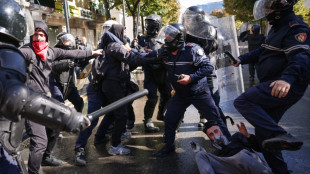 Thousands gather at new Albanian anti-government rally
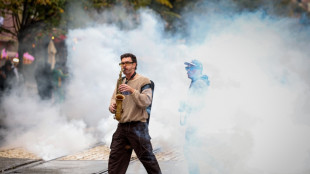
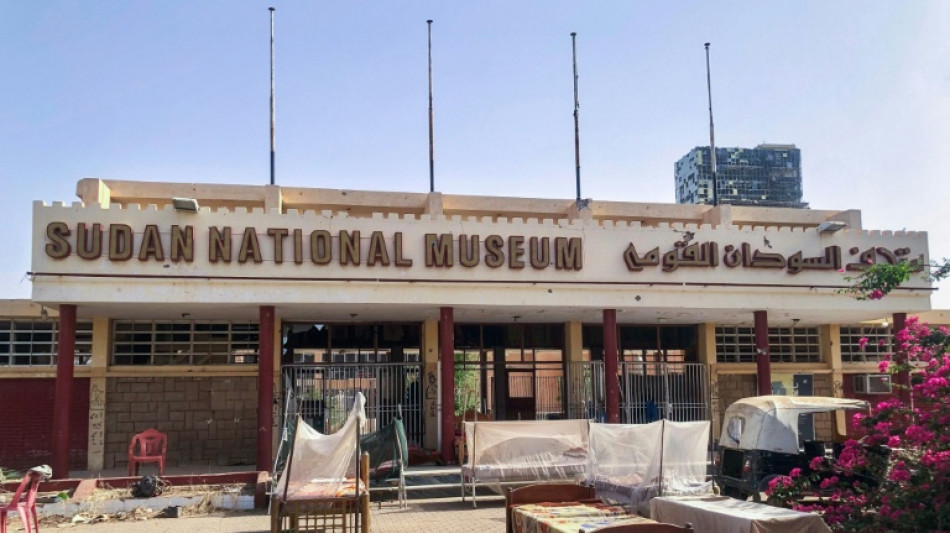
In the scorched courtyard of Sudan's National Museum in Khartoum, a towering black granite statue of Kush Pharaoh Taharqa now stands alone, surrounded by shards of broken glass and shattered stone.
Since the museum was looted in the early days of Sudan's war between the army and paramilitaries in April 2023, thousands of priceless antiquities, many dating back to the 3,000-year-old Kingdom of Kush, have vanished.
Officials believe that some have been smuggled across borders into Egypt, Chad and South Sudan, but there is no trace of the vast majority of the pieces.
"Only the large, heavy objects that couldn't be carried off were left behind," said Rawda Idris, a public prosecutor and member of Sudan's Committee for the Protection of Museums and Archeological Sites.
At its height, the museum housed over half a million artefacts spanning 7,000 years of African history that, according to former antiquities director Hatim al-Nour, "shaped the deep history of Sudanese identity".
Colossal statues of Kushite war deities now stand sentinel over the neglected grounds, beneath a ceiling bearing the blackened scars of shelling.
The rest of the museum's precious contents have disappeared, the vast majority seemingly without a trace.
- 'War crime' -
Central Khartoum, where the museum stands along with Sudan's main state institutions, was a battlefield from April 2023, when the paramilitary Rapid Support Forces (RSF) swept through town.
It was only after the army recaptured the capital in March that Sudan's antiquities officials returned for the first time to find their precious museum in ruins.
The worst blow, they say, was the loss of its famed "Gold Room", which had housed solid-gold royal jewellery, figurines and ceremonial objects.
"Everything in that room was stolen," said Ikhlas Abdel Latif, director of museums at the Sudanese antiquities authority.
According to her, the artefacts were transported in large trucks, through Khartoum's twin city of Omdurman, westwards to the RSF stronghold region of Darfur, before some emerged across the South Sudanese border.
The bulk of the stolen artefacts were from the Kingdom of Kush, a Nubian civilisation that once rivalled ancient Egypt in wealth, power and influence.
Its legacy -- preserved in artefacts sculpted from stone and bronze and adorned with gemstones -- has now been gutted, one of countless victims of Sudan's war between rival generals.
The conflict between army chief Abdel Fattah al-Burhan and his former deputy, RSF commander Mohamed Hamdan Daglo, has killed tens of thousands and created the world's largest hunger and displacement crises.
Army-aligned government officials accuse RSF fighters of looting the National Museum and other heritage sites, calling their destruction of artefacts a "war crime" -- an accusation the paramilitary group denies.
- Black market offers -
In September last year, UNESCO issued a global alert, urging museums, collectors and auction houses to "refrain from acquiring or taking part in the import, export or transfer of ownership of cultural property from Sudan".
An official at Sudan's antiquities authority told AFP that Sudan is working with neighbouring countries to track stolen items.
Interpol also confirmed to AFP it is involved in efforts to locate the missing artefacts, but declined to provide further details.
Last spring, "a group of foreigners were arrested" in Sudan's northern River Nile state with antiquities in their possession, said Idris, the public prosecutor.
Two sources at the antiquities authority said another group had communicated with the Sudanese government from Egypt, offering to return looted antiquities in exchange for money. It remains unclear how the government responded to the offer.
Kushite funerary statues are particularly sought after on the black market because they are "beautiful, small and portable", Abdel Latif says.
But specialists have so far been unable to trace them or the contents of the Gold Room anywhere.
According to Abdel Latif, sales are mostly happening in tightknit smuggling circles behind closed doors.
- $110 million and counting -
The National Museum in Khartoum is by no means the only cultural casualty of the Sudan war.
The scale of losses wrought upon it "can't make us forget the destruction of all the other museums, no less important" as repositories of Sudanese heritage, Nour, the former antiquities director, told AFP.
More than 20 museums across Sudan have been looted or destroyed, according to officials, who estimate the total value of the losses to be around $110 million so far.
In Omdurman, the Khalifa House Museum stands battered and bruised, its walls pocked with bullet holes and the jagged lesions of artillery fire.
The seat of power in 18th-century Sudan, the building now houses broken glass and splintered relics, its collections smashed to bits.
In Darfur, the besieged city of El-Fasher's Ali Dinar Museum, the largest in the western region, has reportedly been destroyed by fighting.
In South Darfur state capital Nyala, a local source said the city's museum has become impossible to access.
"The area is now completely destroyed," said the source. "Only RSF fighters can move there."
Abdel Latif said the museum, renovated after years of closure, "has now become a military base".
M.White--AT