Once a leading force, battered Tunisian party awaits elusive comeback / Photo: FETHI BELAID - AFP/File

 Stocks sink as traders brace for tech earnings, central bank decisions
 France's debt woes in focus as ECB meets

 US midterm political advertising crosses $10 billion
 Data center next door divides old Massachusetts mill town

 AI ad blitz distorts US midterms

 Israel's Eisenkot vows unity as Netanyahu paints him as soft on Iran

 First international flight takes off from new Sydney airport
 Jio’s next phase turns attention from subscriber growth to returns
 Eric Ries sets out how mission-driven companies can endure
 Book examines five forces driving the next phase of Indian startups

 Lula, Bolsonaro in virtual tie halfway through Brazil vote count
 Antonelli looks to seal title 'in style' after US Grand Prix win

 Real Madrid century 'just a detail' for Mbappe after Clasico win
 Mbappe double helps Real Madrid stun Barca in La Liga Clasico
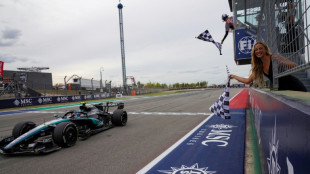 Antonelli wins US Grand but title triumph has to wait another week
 Manchester United slump deepens as Liverpool climb with Brighton win
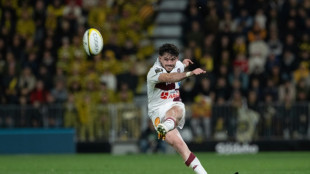 Reus sends Bordeaux second in Top 14 with victory at La Rochelle

 Serbia's student movement ousts longtime leader in parliament poll
 Kuwait minister urges focus on investment quality and development impact
 Descendants of British slave-owning families support reparations campaign
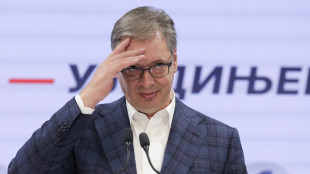 Aleksandar Vucic: Serbia's veteran ruler felled by student-led movement
 Obama attacks Trump record while campaigning in Ohio and Michigan

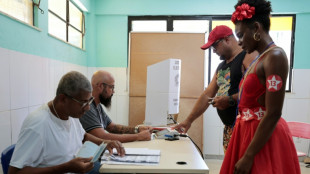 Brazil voting extended in tight race between Lula, Bolsonaro
 'Marine has to win': Le Pen supporters fear for France's future
 QNB expands cross-border funding for AI and digital infrastructure
The party that once dominated Tunisian politics has faded away since President Kais Saied staged a dramatic power grab, with its offices shuttered and leaders behind bars or in exile.
But observers say that Ennahdha, the Islamist-inspired movement still considered by some Tunisians as the country's main opposition party, could still bounce back after a devastating government crackdown.
On July 25, 2021, Saied stunned the country when he suspended parliament and dissolved the government, a move critics denounced as a "coup" a decade after the Arab Spring revolt ushered in a democratic transition in the North African country.
Many of Saied's critics have been prosecuted and jailed, including Ennahdha leader Rached Ghannouchi, 84, a former parliament speaker who was sentenced earlier this month to 14 years in prison for plotting against the state.
Ghannouchi, who was arrested in 2023, has racked up several prison terms, including a 22-year sentence handed in February on the same charge.
The crackdown over the past four years has seen around 150 Ennahdha figures imprisoned, prosecuted or living in exile, according to a party official.
"Some believe the movement is dead, but that is not the case," said political scientist Slaheddine Jourchi.
Ennahdha has been "weakened to the point of clinical death" but remained the most prominent party in Tunisia's "fragmented and fragile" opposition, Jourchi added.
- 'Once we're free again' -
Riadh Chaibi, a party official and adviser to Ghannouchi, said that even after "shrinking" its political platform, Ennahdah was still a relevant opposition outlet.
"Despite repression, prosecutions and imprisonment" since 2021, "Ennahdha remains the country's largest political movement," Chaibi said.
He said the current government has been "weaponising state institutions to eliminate political opponents", but "once we're free again, like we were in 2011, Ennahdha will regain its strength".
Since 2011, when Ghannouchi returned from exile to lead the party, Ennahdha for years had a key role in Tunisian politics, holding the premiership and other senior roles.
But by 2019, the year Saied was elected president, the party's popularity had already begun waning, winning only a third of the 1.5 million votes it had in 2011.
Experts ascribed this trend to the party's failure to improve living standards and address pressing socio-economic issues.
Ennahdha has also been accused of jihadist links, which it has repeatedly denied.
Saied, who religiously avoids mentioning either Ennahdha or Ghannouchi by name, has often referred to the party's years in power as "the black decade" and accused it of committing "crimes against the country".
Crowds of Tunisians, increasingly disillusioned as a political deadlock trumped Ennahdha's promise of change, poured into the streets in celebration when Saied forced the party out of the halls of power in 2021.
Analyst Jourchi said Ennahdha's rise to power was a "poorly prepared adventure", and the party had "made many mistakes along the way".
Left-wing politician Mongi Rahoui said it was "only natural that Ennahdha leaders and their governing partners be prosecuted for crimes they used their political position to commit".
Today, the party's activities have been reduced mostly to issuing statements online, often reacting to prison sentences handed down to critics of Saied.
- 'Silence everything' -
But Ennahdha has weathered repression before, harshly suppressed under Tunisia's autocratic presidents Habib Bourguiba and Zine El Abidine Ben Ali.
Party leaders were jailed or forced into exile, and Ghannouchi was sentenced to life in prison under Bourguiba but then freed -- and later exiled -- under Ben Ali.
Tunisian historian Abdellatif Hannachi said that the party "seems to be bending with the wind, waiting for changes that would allow it to return".
It has been in "clear decline", he added, but "that does not mean it's disappearing."
Ennahdha's downfall was not an isolated case. Other opposition forces have also been crushed, and dozens of political, media and business figures are currently behind bars.
"This regime no longer distinguishes between Islamist and secular, progressive and conservative," rights advocate Kamel Jendoubi, a former minister, recently said in a Facebook post.
Saied's government "wants to silence everything that thinks, that criticises, or resists", Jendoubi argued.
The opposition, however, remains fractured, failing for example to come together in rallies planned for the anniversary this month of Saied's power grab.
E.Flores--AT