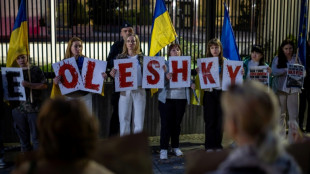
Trump learns lessons from first 'Muslim ban' but raises new questions / Photo: Giorgio VIera - AFP/File

 Delhi grants minimum monthly pay and DA to about 4,000 MCD health workers

 Ather Energy shares climb 14% after quarterly profit and expansion plan

 Gold ETF flows turn negative after 13 weeks as bullion loses 4%

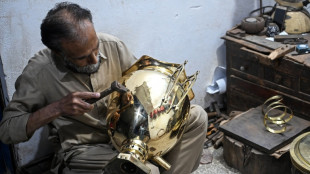 Pakistan's last antique restorers give old treasures new life
 India braces for Cyclone Arnab with evacuations

 Steel Strips Wheels gains 36% in two sessions on growth outlook

 Cavs edge T'Wolves in overtime despite superb Edwards

 Prescott fires Cowboys to 38-21 win over plummeting Eagles

 Kuwait padel chief hails national showing at Premier Padel Major

 Britain prepares constrained budget as debt and defence pressures mount

 Valkyries beat Dream to reach brink of WNBA title
 Benjamin Netanyahu: Israel's longest-serving PM fighting for survival
 Kuwait receives invitation to 2026 UN Water Conference in Abu Dhabi
 Arab World Institute president outlines plans for stronger Kuwait-France cultural links
 Bolsonaro's party says it recognizes Lula's election win in Brazil
 Meghan on TV menu for 'Junior MasterChef Australia'
 South Korea's chip boom fuels forecast-beating third-quarter growth

 US-brokered truce begins in Ukraine city occupied by Russia
 Qatar launches Fashion and Crafts Council to connect talent with global markets
 Jordan strikes militant groups in Syria after church attack

 FIA chief praises Middle East motorsport volunteers and officials
 Star Copper Expands Historical Copper System with Largest Drill Program in Project History with Pervasive Mineralization Across Multiple Intercepts

 InHand Networks Brings 5G and Wi-Fi 7 to Outdoor Commercial Venues with the ODU12 AI-Native Router

 GMO Cookies Strain Guide Clarifies Potency, Genetics and Competing Name Origins
 Fulcrum Metals PLC - Secures £1M Support for Pilot Facility Development

In banning most travel to the United States by citizens of 12 countries, President Donald Trump is fine-tuning a playbook popular with his base, even as his singling out of particular nations left many scratching their heads.
Trump rose to power vowing a harsh line on non-European immigration to the United States, thrilling crowds during his 2016 campaign by vowing a wall with Mexico and stunning the then political establishment by urging a "complete shutdown" of Muslims entering the country.
On entering the White House the first time in 2017, he swiftly banned travel from seven Muslim-majority countries, prompting mass protests at airports as critics derided his "Muslim ban."
With his new travel restrictions, Trump is again targeting US adversaries. But he has also made more exemptions and included travel from several small African countries that not major sources of visitors -- Chad, the Republic of the Congo and Equatorial Guinea.
Chad maintains more cooperation with the West than military-run Mali, Niger and Burkina Faso, which were not affected, and last year held elections, although their conduct was criticized.
Several other small nations faced a partial ban including Burundi, Sierra Leone, Togo and, in Central Asia, Turkmenistan.
The White House in said in a fact sheet that countries were put on the blacklist due to terrorism ties or because of high rates of their citizens overstaying visas.
Others were targeted as they lack central governing authority. They include violence-ravaged and predominantly Black Haiti, whose migrants have long been maligned by Trump, who last year spread unfounded conspiracy theories that they were eating native-born Americans' pets in Ohio.
Alex Nowrasteh, vice president for economic and social policy studies at the libertarian Cato Institute, said Trump's motivation was to decrease legal immigration and asked: "The only real mystery is what took him so long?"
"It's not totally crazy to think that they chose countries that don't matter much -- in terms of not sending many migrants here -- and that throwing them on the list probably helps their marketing," Nowrasteh said.
"It's not going to have an enormous effect on our economy or society," he said of the new ban. "What I think it really does is undermine the American reputation of standing with people around the world who are fighting for freedom."
- 'Extreme dangers'? -
Trump justified the new measures by pointing to an attack on a Jewish protest in Boulder, Colorado by an Egyptian man who had been seeking asylum.
Trump in a message said the attack showed the "extreme dangers posed to our country by the entry of foreign nationals who are not properly vetted."
But Egypt -- a longstanding US ally and aid recipient due largely to its relations with Israel -- was not targeted.
Other major nations left off the blacklist included Pakistan, which India has long accused of supporting extremists, triggering a four-day conflict last month after a massacre of tourists in Indian-administered Kashmir.
Pakistan maintains intelligence cooperation with the United States and Trump thanked Islamabad in March for arresting a suspect over an attack that killed US troops during the 2021 withdrawal from Afghanistan.
On the other hand, Afghanistan was on the blacklist due to the Taliban government. An exemption was made for Afghans who helped the fallen Western-backed government, although Trump has cut funding to implement that program.
"Let's be clear: this policy is not a response to any new threat," said Shawn VanDiver, head of the AfghanEvac group that supports Afghan allies.
"It's a long-planned political move, delayed until the aftermath of the Boulder attack to give it the appearance of urgency. This is about optics and fear, not safety," he said.
Among the chief targets both in the first term and now has been Iran, an arch-enemy of the United States since the 1979 Islamic revolution.
Iranian-Americans have among the highest incomes of any ethnic group in the United States and the community is overwhelmingly critical of the government in Tehran.
“National origin tells us nothing about whether an individual is a terrorist threat. Yet, that is precisely what Trump's bans have been based on," said Jamal Abdi, president of the National Iranian American Council.
A.Clark--AT