
High-cost loans, Trump turmoil hurting Africa, says G20 panel chief / Photo: Wikus de Wet - AFP

 Mercedes-Benz cuts 2026 profit outlook on tough China market
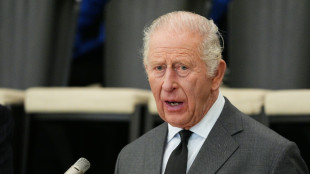 Reparations calls follow Charles on tough Caribbean trip

 Jammu and Kashmir ministers resign before planned council expansion

 Germany, EU, stable investment stops despite upheaval: Merz

 China brands drop Mbappe for 'offending national sentiments'

 India orders evacuations as Cyclone Arnab looms

 Dutch broadcaster pulls out of Eurovision over Israel 'sensitivities'
 Critical coal inventories affect nearly half of India’s domestic power plants
 FCNR(B) deposit drive puts sharper margin pressure on private banks

 Noel Tata requests records of September 17 Tata Sons board meeting
 Reparations calls to dog King Charles's tough Caribbean trip
 Global rates and foreign outflows remain key risks for Indian markets
 Neha Nagar says ₹3 crore can fund retirement with disciplined planning

 Vikas Satija says steady SIP flows shielded Indian equities from deeper losses

 Brewers rout Rays to reach brink of World Series sweep

 Mbappe dropped by Chinese brands for 'offending national sentiments'
 Kuwait exhibition presents Ukraine’s Islamic heritage and cultural ties

 Tech firms track Wall St rally on mixed day for Asian markets
 Jay-Z to perform at Super Bowl LXI halftime show: NFL

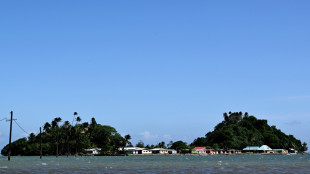 Climate-threatened Fijian utopia rejects calls to relocate

 Israel to give verdict on Netanyahu in pivotal election
 $1m bounties, dawn arrests: Trump presses voter fraud campaign
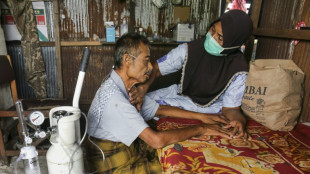 Gasping for air: Borneo residents struggle as island burns
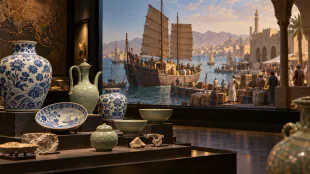 Doha exhibition charts a millennium of Chinese maritime ceramics trade

 New Zealand ex-PM Ardern to teach leadership in Sydney

Critically needed economic growth in Africa is being held back by high borrowing costs imposed by international lenders, with unpredictable US policy changes adding to the strain, the head of the G20 panel on the continent said.
Seasoned politician and anti-apartheid activist Trevor Manuel chairs the panel of experts working on proposals to address issues affecting Africa, including high debt, to be presented at a summit of the Group of 20 leading economies in November.
African nations are not necessarily more indebted than major economies but they face higher debt servicing costs, Manuel told AFP in an interview.
The "unbelievably expensive and prohibitive" cost of capital for African nations has hobbled their development, said Manuel, who served as finance minister in post-apartheid South Africa for more than a decade.
"We know that the risk premiums in general on Africa are much higher than they need to be, and that impacts them on the debt service costs," he added.
More than half of Africa's 1.3 billion people live in countries with debt interest payments higher than social spending on health, education and infrastructure, according to the South African government.
South Africa is the only African nation in the G20 and has made debt sustainability for developing countries one of the priorities of its presidency of the group of 19 countries, the African Union and European Union.
African countries will pay close to $89 billion in external debt service alone this year, with 20 low-income countries at risk of debt distress, it says.
Manuel said the panel will seek to persuade the entire G20 to engage with multilateral development banks, in particular the World Bank and International Monetary Fund, to address the issue of borrowing costs.
- 'Unbelievably difficult' -
Abrupt changes in global order since US President Donald Trump took office in January, such as sweeping aid cuts and trade tariffs, will have long-lasting ramifications for the continent, Manuel said.
Trump's "capricious" announcement in April of major trade tariffs effectively did away with the African Growth and Opportunity Act, a major US-African trade deal that had helped to build some African economies, he said.
He cited as examples the tiny kingdom of Lesotho, which faces 50 percent tariffs on exports to the United States, including jeans and golf shirts, and Madagascar, which sends vanilla pods and is threatened with 47 percent tariffs.
"It becomes unbelievably difficult for small countries that try and develop export markets, for their products to be struck by these sudden announcements," Manuel said. "There's no time for adjustment."
Adding to the pressure is the termination of USAID programmes and a push for NATO countries to increase defence spending, which restricts what they have available for overseas development assistance.
"The impact on the African continent is going to be very severe," said Manuel. "We can't abstract Africa from the rest of the globe."
"The realm of policymaking requires a greater degree of predictability and certainty than what we see at the moment," he said.
"The fact that there are these occasional outbursts that aren't informed by reality as I see it... makes it even more complex."
- Intra-Africa -
Manuel said his panel's work on better understanding the African economy and developing solutions was likely to continue beyond this year's G20, for example, via the UN Economic Commission for Africa and the African Union.
This included looking at "intra-African dynamics" such as the role of the African Continental Free Trade Area (AfCFTA) launched in 2019.
Conflicts also cost the continent, he said, citing the war in Sudan and unrest that has held back a major gas project in impoverished northern Mozambique.
"When countries spend more on war than what they do on the upliftment of people, then we face profound consequences," Manuel said.
He said a strong United Nations and African Union were important in "persuading countries to do the right things" in the long term, beyond the sometimes disruptive short electoral cycles that usher in new leadership and policy changes.
"If you don't have those kinds of objectives, which frequently will not be completed within a particular electoral cycle, I think we run ourselves into the ground."
O.Gutierrez--AT