Trump reshapes US Mideast policy. Can deals work instead? / Photo: Brendan SMIALOWSKI - AFP

 'A very sad day': Arteta despair as Arsenal stunned by Fleetwood
 Charles tackles thorny legacy of slavery on Caribbean trip
 Former Grand Slam winner Wawrinka ends tennis career

 Brazil's Flavio Bolsonaro flees to US after election loss
 'Faerie' nights: 'ACOTAR' fans finally get their book
 American woman convicted of getting military training from Islamic State
 Israel opposition holds narrow edge over Netanyahu in first projections
 Floriani hits maiden goal as Lazio go top
 Trump set to drastically loosen oil and gas sector's methane rules
 Storied Paris department store seeks bankruptcy protection
 Xhaka, Embolo can return to Swiss squad after fake Covid docs affair
 Allegri suspended for two Serie A games after red card
 Flight data, satellite images reveal growing US role at Ecuador base
 McInnes feels 'guilt' ahead of Hearts return with Rangers

 Brazil's Lula turns 81, vows to work '24 hours a day'
 Boeing releases cautious growth plan as shares fall sharply

 Exiled Russian dissident Navalnaya warns dictators becoming 'more cunning'
 Bayern 'risk' reaps huge reward for Ballon d'Or winner Kane
 Record turnout as Israeli voters deliver verdict on Netanyahu
 Iraola says Isak 'feels the trust' after Liverpool scoring streak

 French media protest manhandling of journalists at far-right party rally
 EU seeks deportation powers for beefed up border agency
 Two charged with UK security offences over airbase plot: police
 Maresca defends Donnarumma, Guehi after Man City defeat
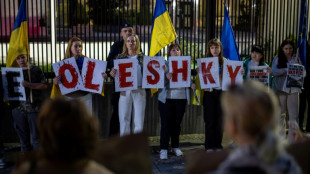 Nordic leaders call Putin as local truce begins in Ukraine

President Donald Trump proclaimed a decisive break with decades of US interventionism during his Middle East tour, promising a new American foreign policy based instead on his beloved art of the deal.
Trump vowed during his swing through Saudi Arabia, Qatar and the United Arab Emirates that there would be no more "lectures on how to live", saying the region had achieved a "modern miracle the Arabian way."
In an extraordinary rupture with his predecessors, Trump then lambasted what he called the "neo-cons" that oversaw bloody US military interventions in the region and beyond.
"In the end, the so-called nation builders wrecked far more nations than they built," Trump told an investment forum in Riyadh, the first stop on his tour of the Gulf.
"Far too many American presidents have been afflicted with the notion that it's our job to look into the souls of foreign leaders and use US policy to dispense justice for their sins."
Trump did not name them but the targets were clear.
His Democratic predecessor Joe Biden tried to tie US support to the promotion of human rights and the maintenance of the international order. And Republican George W. Bush in the early 2000s launched wars in Afghanistan and Iraq.
- 'Consequential shift' -
"Trump's Riyadh speech marked a clear and consequential shift in US policy toward the Middle East," said Sina Toossi, from the Center for International Policy.
"By rejecting the legacy of military intervention and nation-building, he signaled a move toward realism and restraint. This shift resonates deeply in a region exhausted by war and foreign meddling."
But for Trump, that also means ignoring democracy and human rights issues and embracing the leaders of oil-rich monarchies with often autocratic tendencies.
His Saudi host, Crown Prince Mohammed bin Salman, was for example found by US intelligence to have ordered the gruesome murder in 2018 of dissident writer Jamal Khashoggi. But there was no mention of that in Riyadh.
Instead, Trump preached the same brand of gold-plated, transactional politics that he does at home.
Saudi Arabia, Qatar and the United Arab Emirates showed him the money, signing a host of huge business and investment deals with the United States during his trip.
In return they got the glitz of Trump's first major foreign trip and praise as being examples of what the region could become.
Conversely, Trump's visit also shook one of the longest-standing pillars of US policy in the Middle East -- its support for Israel.
The US president not only bypassed Israel on the trip but appeared to sideline Prime Minister Benjamin Netanyahu on key issues including Iran's nuclear program, Israel's war in Gaza, and Yemen's Huthi rebels.
This showed mounting tensions behind the scenes, particularly on Iran, with Israel far keener than Trump on a military option.
- 'American power' -
But Trump's deal-making approach to foreign policy could soon have its limits tested.
He has shown willingness to seek a deal with Iran over its nuclear program -- saying that Tehran's case "I have never believed in having permanent enemies."
But at the same time Trump has threatened military action against Iran if it does not reach an accord.
Trump also left the Middle East with no progress towards a deal to end the war in Gaza despite his pledges to end the conflict -- although he made a rare reference to the fact that people were now "starving" in the besieged enclave.
Further afield, Trump tried to coax Russia's Vladimir Putin to talks in Istanbul during his trip to discuss an end to Moscow's invasion of Ukraine, but his efforts came to nothing.
Trump's "peace through strength" doctrine also has its contradictions.
On a visit to a huge US air base in Qatar he said that "my priority is to end conflicts, not start them."
But then he immediately added: "I will never hesitate to wield American power if it's necessary to defend the United States of America or our partners."
L.Adams--AT