NATO on track to strike spending deal to please Trump / Photo: Ozan KOSE - AFP

 Tuvalu has 'limited' power to halt its fossil fuel investments: NZ govt papers seen by AFP
 Palestinian activist Khalil returns to Columbia after US detention
 Trump drastically loosens oil and gas methane rules

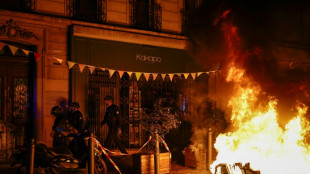 French Senate weighs bill to make protesters pay for unrest damage
 'A very sad day': Arteta despair as Arsenal stunned by Fleetwood
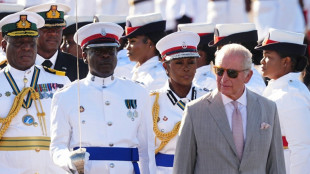 Charles tackles thorny legacy of slavery on Caribbean trip

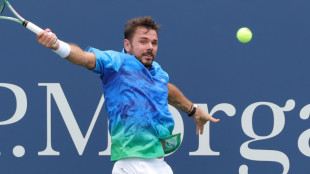 Former Grand Slam winner Wawrinka ends tennis career

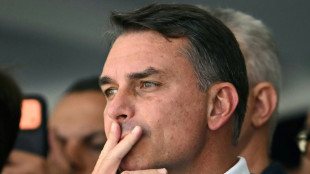 Brazil's Flavio Bolsonaro flees to US after election loss
 'Faerie' nights: 'ACOTAR' fans finally get their book
 American woman convicted of getting military training from Islamic State
 Israel opposition holds narrow edge over Netanyahu in first projections

 Floriani hits maiden goal as Lazio go top
 Trump set to drastically loosen oil and gas sector's methane rules
 Storied Paris department store seeks bankruptcy protection
 Xhaka, Embolo can return to Swiss squad after fake Covid docs affair
 Allegri suspended for two Serie A games after red card
 Flight data, satellite images reveal growing US role at Ecuador base
 McInnes feels 'guilt' ahead of Hearts return with Rangers

 Brazil's Lula turns 81, vows to work '24 hours a day'
 Boeing releases cautious growth plan as shares fall sharply

 Exiled Russian dissident Navalnaya warns dictators becoming 'more cunning'
 Bayern 'risk' reaps huge reward for Ballon d'Or winner Kane
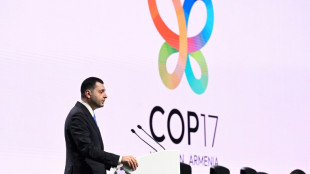
 Record turnout as Israeli voters deliver verdict on Netanyahu
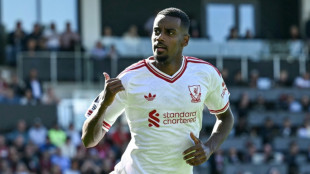 Iraola says Isak 'feels the trust' after Liverpool scoring streak

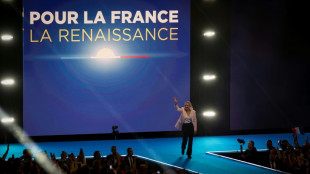 French media protest manhandling of journalists at far-right party rally
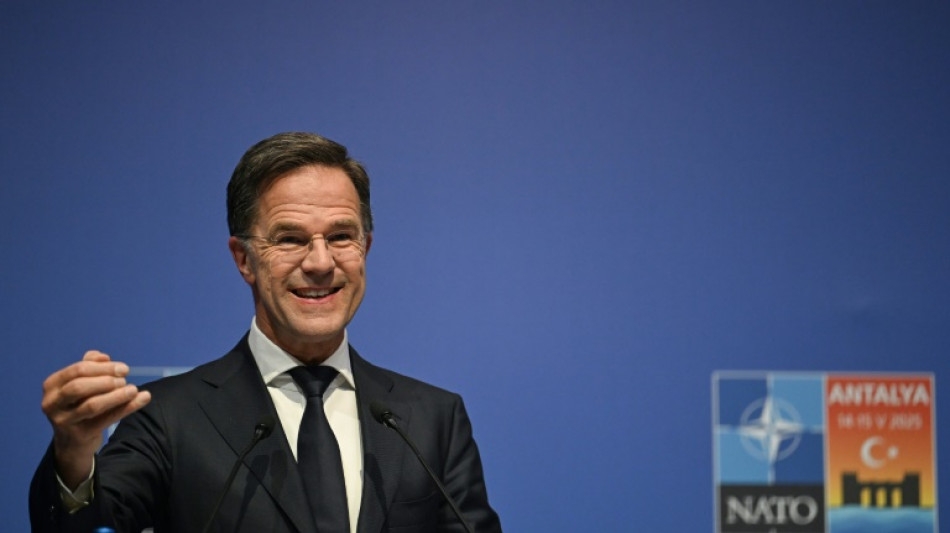
NATO appears headed for a compromise deal at a summit next month to satisfy US President Donald Trump's demand to spend five percent of GDP on defence, as heavyweights Germany and France got on board Thursday.
To make the volatile US leader happy, NATO chief Mark Rutte has floated a proposal for members of the 32-country alliance to commit to 3.5 percent of GDP on direct military spending by 2032, and an additional 1.5 percent on broader security-related expenditure.
That would hand Trump the headline figure he is demanding, while giving enough wiggle room to European allies that are struggling just to reach NATO's current spending target of two percent of GDP.
German Foreign Minister Johann Wadephul gave a major push to the plan at a meeting with his NATO counterparts in Turkey by saying Berlin was willing to "follow" Trump's call.
Wadephul said Rutte's suggestion would mean reaching "the five percent that President Trump demanded, which he considers necessary".
"And we follow him there," he said.
Fellow European big-hitter France's Foreign Minister Jean-Noel Barrot also gave a thumbs-up to outlines of the deal.
"The 3.5 target is the right amount for core defence spending," Barrot told journalists in Turkey.
The support from Germany and France will make it more difficult for other European allies and Canada to say no to the spending deal at the June NATO summit in The Hague.
The overall plan already has the backing of the United States.
- 'Quite confident' -
Rutte said he was "quite confident" for an agreement given that there was a widespread understanding of the need to do more in the face of Western estimates that Russia needs only three to five years to rebuild its forces.
The NATO chief declined to give details of the discussions, with six weeks of fine-tuning still to go before the summit.
But he said broader spending, such as on infrastructure like bridges needed to move military hardware around, had to "be taken into account", and that there needed to be a "credible path" set out for each NATO country to hit the figures.
Diplomats say Rutte's plan, which has not been made public, envisions ratcheting up direct defence spending by 0.2 percentage points each year over the next seven years until countries hit the 3.5 target.
The other 1.5 percent of more loosely defined spending could include a wide range of areas encompassing infrastructure, cyber defence, border controls and even support for Ukraine.
Trump has rattled European allies worried about the menace from Russia by threatening not to protect countries that, in his eyes, do not spend enough.
In a bid to avoid upsetting Washington, there was no sign of public dissent at the meeting in Turkey.
Italian Foreign Minister Antonio Tajani announced Italy had this week hit NATO's two-percent spending target.
"This is the first step. Then it's possible to do more, it's possible to increase the money for defence," he said.
He insisted Rome is keen to talk more broadly "about security, because security is not only weapons".
European allies have ramped up their defence spending since Russia's 2022 invasion of Ukraine, but only in the face of Trump are stragglers such as Italy, Spain, Belgium and Canada reaching two percent this year.
None of NATO's 32 countries, including the United States, currently spend five percent of GDP on defence.
Eastern members most worried about Moscow, such as the Baltic states and Poland, have already said they are willing to go beyond that level on direct military expenditures.
K.Hill--AT