
Merz vows to rev up German economic 'growth engine' / Photo: John MACDOUGALL - AFP

 Trump tamed after US midterms? Europe doubts it

 Tech stocks soar as SK hynix adds to rising AI confidence

 Sri Lanka's Tamil farmers fight to reclaim land after civil war
 Afghans compete for jobs, homes as millions return

 'They don't care about us': Trump food aid cuts leave Americans struggling and angry
 Meta, Snap head to trial in another case about social media's harms
 French Senate passes bill to make protesters pay for unrest damage

 India evacuates tens of thousands as Cyclone Arnab makes landfall

 In tight Israel vote, both camps hold out cautious hope
 AI chip giant SK hynix says quarterly operating profit soars 630%

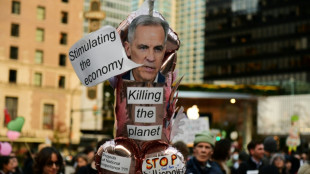 Youths testify about 'despair' in unprecedented Canadian climate trial

 Syria, Jordan agree to mend ties after deadly strike
 Arsenal stunned by fourth-tier Fleetwood in League Cup
 Last-gasp Sabitzer strike sends Dortmund past Bremen in German Cup
 Rights groups reject Emirati diplomat for UN top job

 Flavio Bolsonaro headed to US after Brazil election defeat: US media

 Alcaraz and Zverev win Vienna openers

 Tech firms gain ahead of Fed decision, results from AI giants

 Syria condemns deadly Jordan strikes as 'unacceptable violation'
 England's Fin Smith in race against time to face Australia

 UN nuclear watchdog chief urges Iran to grant access

 Boeing shares tumble after it releases cautious growth forecast
 Lula's re-election revives Brazil-US tensions

 Carney moves to remake Canada alliances as US ties strained

 Serbia's students demand state media chiefs resign after poll win
German Chancellor Friedrich Merz on Wednesday pledged reforms and investment for Europe's biggest economy to transform it once again into a "growth engine" after two years of recession.
In his first major speech to parliament, the conservative leader reeled off a string of ambitious plans to revive the struggling economy even as it faces a fresh threat from US tariffs.
These ranged from boosting competitiveness to slashing corporate tax rates, fixing clapped-out infrastructure and reducing red tape.
"We will do everything we can to put Germany's economy back on the path to growth," he said. "We can, through our own efforts, became a growth engine once again that the world looks up to with admiration."
He faces immense challenges: The economy has been hit by a manufacturing slump, high energy costs triggered by Russia's invasion of Ukraine and weak demand in key export markets, particularly China.
Deep-rooted problems, from an ageing population to shortages of skilled labour, are adding to the headwinds.
A key plan of the new ruling coalition of Merz's conservative CDU/CSU bloc and the centre-left SPD is to set up a fund to boost investment in infrastructure.
The new government has agreed on investments of 150 billion euros for this purpose in the current legislative period, Merz said.
The fund is to be established after Merz succeeded in pushing changes to the country's strict debt rules through parliament, to allow greater borrowing.
In addition, German firms will be offered tax breaks to invest in new equipment and corporate tax rates will be gradually reduced from 2028, he said.
Merz said he hoped to "prevent a prolonged conflict in the trade dispute with the United States", adding that cutting levies on both sides is "better than imposing tariffs against one another".
President Donald Trump has imposed sweeping tariffs on nearly all US trading partners, with Germany set to be hit hard as it ships huge quantities of its exports to the world's number one economy.
Merz, who has vowed to be a "very European chancellor", said Germany was proposing a new European Union "free trade initiative," noting that one in four German jobs depends directly or indirectly on foreign trade.
When it came to China, Merz stressed it would remain an "important partner" but that he would keep on pursuing a policy of "strategic de-risking", aiming to reduce heavy economic dependencies on the world's number two-economy.
While some economists have welcomed Merz's plans to spend more to get the economy moving again, there have also been doubts about whether his coalition will go far enough in pushing deep, structural reforms.
L.Adams--AT