Scientists sound alarm as Trump reshapes US research landscape / Photo: Robyn Beck - AFP/File

 No penalty practice? No problem for Man City in shoot-out win

 Microsoft beats expectations fueled by Azure cloud business

 Chelsea win as Bayern draw with Madrid in Women's Champions League

 Kane watches as Bayern cruise into German Cup last 16
 Bayern boss Kompany out of hospital after meningeal irritation

 Shares in Google owner Alphabet sink on profit miss, ad slowdown
 Chelsea win as Bayern and Madrid draw in Women's Champions League
 Made with munitions from the Falklands War, a 'Chalice of Peace' for the pope
 Pioneering US labor leader Dolores Huerta dies at 96

 Italian PM slams 'shameful' release of alleged protest organiser

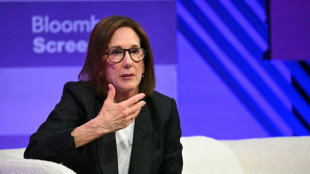 Hollywood producer Kennedy to head LA28 Olympic ceremony plans
 Djokovic wins Basel opener to boost ATP Finals bid

 US Fed holds interest rates steady despite surging inflation
 Chiefs sign ex-Ravens kicker suspended over sex allegations

 Inglis and Carey put Australia in command of South Africa decider

 92-year-old US judge handling Maduro case dies

 Perez extends Cadillac deal to 2029
 Arab Israelis proud of high election turnout, uncertain for future

 Inglis, Carey put Australia in command of South Africa decider
 French firm Safran helps build aircraft wings of the future in UK factory

 Ceasefire in Russia-occupied Ukrainian city holds for second day
 Canada hikes rates to contain oil price surge caused by Iran war

 World Bank warns of worsening food insecurity as commodity prices soar

 Mona Lisa scrubbed from Syrian textbooks as critics slam conservative drift
 Bolsonaro flees Brazil for US after election defeat: AFP
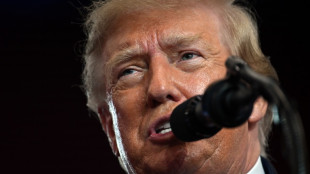
From cancer cures to climate change, President Donald Trump's administration has upended the American research landscape, threatening the United States' standing as a global science leader and sowing fear over jobs and funding.
Mass layoffs at renowned federal agencies. Billions in research grants slashed. Open threats against universities. Bans on words linked to gender and human-caused global warming — all within the first 100 days.
"It's just colossal," Paul Edwards, who leads a department at Stanford University focused on the interaction between society and science, told AFP. "I have not seen anything like this ever in the United States in my 40 year career."
The sentiment is widely shared across the scientific and academic community. At the end of March, more than 1,900 leading elected members of the National Academies of Sciences, Engineering and Medicine, sounded an SOS in an open statement, warning that using financial threats to control which studies are funded or published amounted to censorship and undermines science's core mission: the quest for truth.
"The nation's scientific enterprise is being decimated," they wrote, calling on the administration "to cease its wholesale assault" on US science and urging members of the public to join them.
- 'Rage against science' -
Even during Trump's first term, the scientific community had warned of an impending assault on science, but by all accounts, today's actions are far more sweeping.
"This is definitely bigger, more coordinated," said Jennifer Jones, director of the Center for Science and Democracy at the Union of Concerned Scientists, who described the administration as operating straight from the Project 2025 playbook.
That ultra-conservative blueprint — closely followed by the Republican billionaire since returning to power — calls for restructuring or dismantling key scientific and academic institutions, including the National Oceanic and Atmospheric Administration (NOAA), which it accuses of promoting "climate alarmism."
Trump's officials have echoed these views, including Health Secretary Robert Kennedy Jr., a vaccine skeptic who has tapped into public distrust of science, amplified during the Covid-19 pandemic.
The result, says Sheila Jasanoff, a professor at Harvard, is a breakdown of the tacit contract that once bound the state to the production of knowledge.
Harvard, now a primary target in Trump's campaign against academia, has faced frozen grants, threats to its tax-exempt status, and potential limits on enrolling international students —- moves framed as combating antisemitism and "woke" ideology, but widely viewed as political overreach.
"The rage against science, to me, is most reminiscent of a fundamentalist religious rage," Jasanoff told AFP.
- Generational damage -
Faced with this shift, a growing number of researchers are considering leaving the United States -- a potential brain drain from which other countries hope to benefit by opening the doors of their universities.
In France, lawmakers have introduced a bill to create a special status for "scientific refugees." Some will leave, but many may simply give up, warns Daniel Sandweiss, a climate science professor at the University of Maine, who fears the loss of an entire generation of rising talent.
"It's the rising students, the superstars who are just beginning to come up," he said, "and we're going to be missing a whole bunch of them."
Many US industries — including pharmaceuticals — depend on this talent to drive innovation. But now, said Jones, "there's a real danger they’ll fill those gaps with junk science and discredited researchers."
One such figure is David Geier, an anti-vaccine activist previously found to have practiced medicine without a license, who has been appointed by Kennedy to study the debunked link between vaccines and autism -- a move critics say guarantees a biased result.
"The level of disinformation and confusion this administration is creating will take years — potentially generations — to undo," said Jones.
A.O.Scott--AT