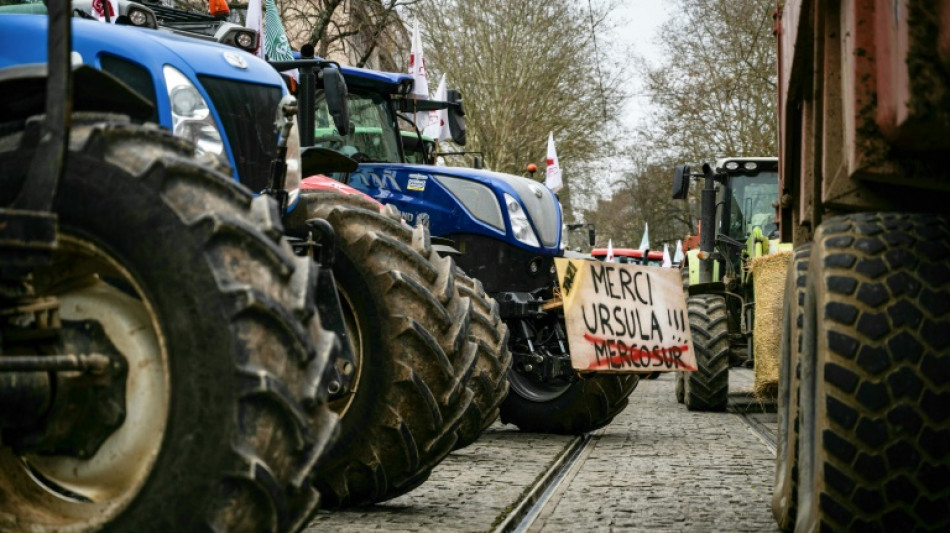
EU hopes Trump tariffs can nudge Mercosur deal past finish line / Photo: ARNAUD FINISTRE - AFP/File

 Russia fired record number of missiles at Ukraine in July: AFP analysis

 Search ended at mall wrecked by Japan quake blast
 Deadly strikes rock Kyiv as Zelensky appeals for air defences
 Egypt captains recount scramble to stop disaster after drone strike
 South Korea baseball league cancels two games over heatwave

 US drops Reflecting Pool case, admits damage due to botched renovation
 Russian attacks on Kyiv kill 9, wound more than two dozen
 Injured Australian swim star O'Callaghan pulls out of PanPacs
 California lifeguards wiped out from extreme weather
 FIFA scraps private investment plan after backlash: Infantino
 South Africa's WAFCON hopes hang in the balance after dramatic draw
 Hunter Bell cruises to Commonwealth gold, Pathirage stuns javelin stars
 Amazon surges as US stocks shrug off bond yield worries
 Google rolls back new satellite image AI tool after backlash
 Ryu leads in bid for third straight major at women's British Open
 Fire-hit France region 'coming up for air' as main blaze calms
 Wembanyama to get signature shoe in Nike contract extension: reports
 Oil giants report blowout profits on war, warn high gas prices could persist
 Google launches new satellite image AI tool, alarming researchers

 Eddie Howe resigns as Newcastle boss to 'recharge'
 High winds hamper firefighting efforts in western Turkey

 Howe resigns as Newcastle boss

 Full-scale tour will benefit All Blacks, says coach Rennie
 US Fed dissenters call for rate hikes over sustained inflation

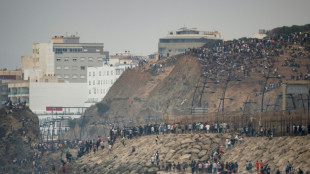 Trump and far-right seize on Spanish migration crisis
The spectre of a transatlantic trade war is also fuelling hopes of a silver lining in Europe: that a commerce deal with four South American countries could get a final green light despite longstanding French opposition.
Forced to come to terms with the growing cracks in its biggest trading relationship, worth 1.6 trillion euros ($1.8 trillion), the EU believes it's time to chase opportunities elsewhere.
"The global balance is shifting, and we Europeans need (new trading partners) very quickly," incoming German chancellor Friedrich Merz said last weekend.
Such is Merz's determination, he suggested French President Emmanuel Macron could be swayed into a U-turn to back the EU accord with Mercosur bloc members Argentina, Brazil, Paraguay and Uruguay -- despite strident opposition from France's farmers.
Twenty-five years in the making, the deal to create a 700-million-customer free-trade area was clinched last December by the European Commission -- but still needs to be signed by member states and the EU parliament.
Macron would "now tend" to look more favourably on the Mercosur accord, Merz asserted.
Paris has so far slapped down such suggestions. "The draft deal hasn't changed and therefore is unacceptable as it stands," a French diplomatic source said.
But EU officials believe they can convince countries opposed to the Mercosur deal through offers of financial support, for example, for farmers affected by rising imports.
- With or without France? -
Faced with an unpredictable US partner, the EU has ramped up efforts to cut more trade deals -- deciding last week to launch talks on an agreement with the United Arab Emirates, for example.
"In an unstable world, partnerships with trusted allies around the world with clearly defined rules for mutual gain are more valuable than ever," an EU spokesman has said.
There is a growing sense in Brussels that in the current climate French opposition -- even if it holds -- may not be insurmountable.
To be approved, the Mercosur deal must receive the backing of at least 15 of 27 EU states, representing a minimum of 65 percent of the population.
France had hoped to form a blocking minority but "given the context, it probably won't", a European Commission official said.
- 'Cushion' tariff shocks -
While Poland still opposes the Mercosur deal, there appears to be a change of heart among some in Vienna, another high-profile opponent, after Trump imposed sweeping tariffs.
Austrian Economy Minister Wolfgang Hattmannsdorfer now supports the agreement. "We need it now," he said, even though the country's three-way coalition government remains officially against.
Pushed on the matter, French Agriculture Minister Annie Genevard admitted this week it was a source of unease between France and Germany.
But she vowed it was out of the question to "sacrifice French agriculture on the altar of an agreement at any cost".
French resistance is also being tested at home: the country's central bank governor Francois Villeroy de Galhau briefed Macron last week that such agreements "could further cushion tariff shocks linked to US trade policy".
In the case of the Mercosur deal, it would make it easier for the EU to export cars, machinery, pharmaceutical products and alcoholic beverages.
In exchange, the South American nations would be able to export meat, sugar, rice and soybeans, which worries European farmers concerned about cheaper goods pricing them out.
Farmers are crying foul over supposedly less stringent regulations on the sector and have staged protests across Europe.
- Macron under pressure -
Brussels has promised to reassure all member states and wants to present a text before the end of summer for final approval to parliament -- where its fate is also uncertain.
"We don't know which way it will go" in the event of a vote, French centrist lawmaker Marie-Pierre Vedrenne told AFP.
Vedrenne said continued opposition "wouldn't be very serious or responsible".
But she believes Macron's position hasn't changed, explaining that opposition to Mercosur has "become a matter of national unity".
One EU official went further.
"The French government would fall" if it supported the deal, the official said -- after snap elections last year produced a hung parliament with Macron's centrists in the minority.
Poland currently holds the rotating EU presidency and as one of the countries most opposed, it is not expected to push for a Mercosur vote.
But when Denmark takes the reins in July, expect the inflammatory issue to return to the agenda.
burs-raz/ec/lth
H.Thompson--AT