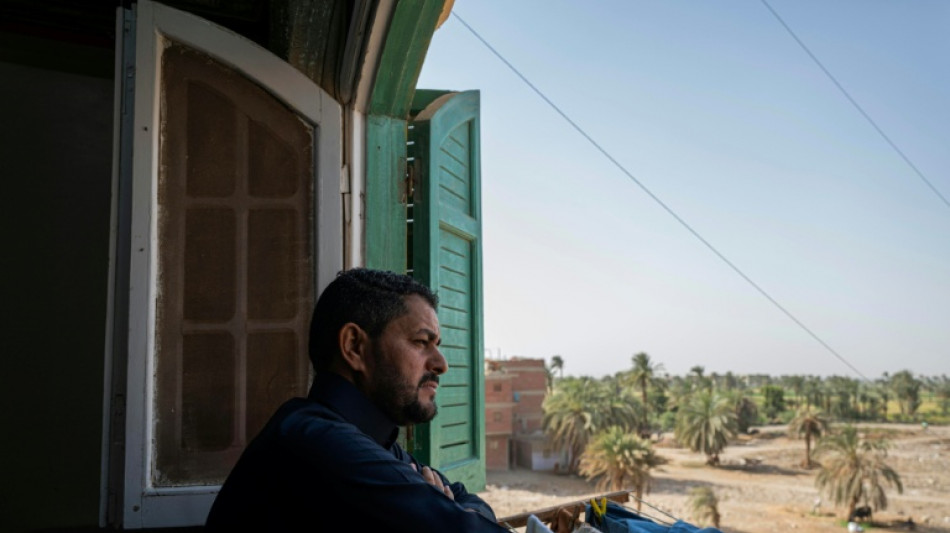
'Waited for death': Ex-detainees recount horrors of Sudan's RSF prisons / Photo: Khaled DESOUKI - AFP

 Amazon surges as US stocks shrug off bond yield worries

 Google rolls back new satellite image AI tool after backlash

 Ryu leads in bid for third straight major at women's British Open

 Fire-hit France region 'coming up for air' as main blaze calms
 Wembanyama to get signature shoe in Nike contract extension: reports
 Oil giants report blowout profits on war, warn high gas prices could persist
 Google launches new satellite image AI tool, alarming researchers

 Eddie Howe resigns as Newcastle boss to 'recharge'

 High winds hamper firefighting efforts in western Turkey

 Howe resigns as Newcastle boss
 Full-scale tour will benefit All Blacks, says coach Rennie

 US Fed dissenters call for rate hikes over sustained inflation
 Trump and far-right seize on Spanish migration crisis

 Hamas agrees to disarm under Trump plan
 French, Italian winegrowers face earliest ever harvest

 Alarm over climate-linked low level of German waterways
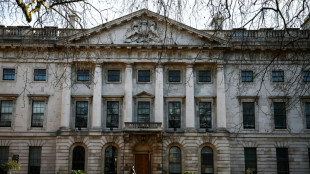 UK court rejects challenge against new Chinese embassy in London

 New York sues online prediction markets giant Kalshi

 Commerzbank agrees to talks with UniCredit after two-year standoff
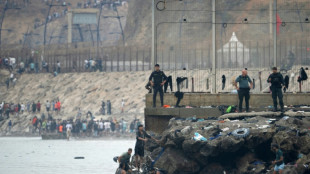
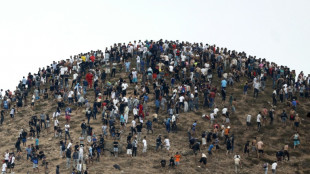 A rumour, a rush: chaos at Morocco border with Spain's Ceuta

 Fornaro Legal Releases Guidance to Help Businesses Maintain Clear Ownership Records During Growth
 Hamas agrees to disarm: what are the challenges ahead?
 Turkey fights to last major blaze inland from Bodrum

 Japan probe made closest-ever asteroid flyby: space agency

 Wildberries: 'Russia's Amazon' targeted by Ukraine

For almost two years, Emad Mouawad had been repeatedly shuttled from one Sudanese paramilitary-run detention centre to another, terrified each day would be his last.
The 44-year-old Egyptian merchant spent years selling home appliances in neighbouring Sudan before fighters from the paramilitary Rapid Support Forces (RSF) stormed his Khartoum home in June 2023, taking him and six others into custody.
"They accused us of being Egyptian spies," he told AFP, back home in Kafr Abu Shanab, a quiet village in Egypt's Fayoum governorate southwest of Cairo.
The RSF has accused Egypt of involvement in the war, which Cairo has denied.
"We were just traders, but to them, every Egyptian was a suspect," said Mouawad, recalling how his captors searched their phones and home.
They found nothing, but that did not spare the group, who were blindfolded, crammed into a truck and driven to one of the RSF's many detention sites in Khartoum.
It was two months into the RSF's war with the army, and hundreds of thousands of people had already fled to the Egyptian border, seeking safety.
"We couldn't just go and leave our things to be looted," said Mouawad.
"We had debts to pay, we had to guard our cargo at any cost."
- 'Nothing but skeletons' -
In a university building-turned-prison in the Sudanese capital's Riyadh district, Mouawad was confined with eight other Egyptians in a three-by-three-metre (10-by-10-feet) cell without any windows.
Other cells held anywhere between 20 and 50 detainees, he said, including children as young as six and elderly men, some of them in their 90s.
Food, when it came, "wasn't food," said Ahmed Aziz, another Egyptian trader detained with Mouawad.
"They would bring us hot water mixed with wheat flour. Just sticky, tasteless paste," Aziz told AFP.
Water was either brackish and polluted from a well, or silt-filled from the Nile.
Disease spread unchecked, and many did not survive.
"If you were sick, you just waited for death," Aziz said.
According to Mouawad, "people started losing their immunity, they became nothing but skeletons."
"Five -- sometimes more, sometimes fewer -- died every day."
Their bodies were often left to rot in the cells for days, their fellow detainees laying beside them.
And "they didn't wash the bodies", Mouawad said, an important Muslim custom before a dignified burial.
Instead, he heard that the paramilitaries just "dumped them in the desert".
- Stripped of humanity -
Mouawad and Aziz were among tens of thousands vanished into prisons run by both the RSF and the rival Sudanese army, according to a UN report issued earlier this month.
Since the war began in April 2023, activists have documented the detention and torture of frontline aid workers, human rights defenders and random civilians.
The UN report said the RSF has turned residential buildings, police stations and schools into secret prisons.
Often snatched off the streets, detainees were beaten, flogged, electrocuted or forced into backbreaking labour.
The army has also been accused of torture, including severe beatings and electric shocks.
Neither the army nor the RSF responded to AFP requests for comment.
Soba, an infamous RSF prison in southern Khartoum, may have held more than 6,000 detainees by mid-2024, the UN said.
Aziz, who was held there for a month, described a living nightmare.
"There were no toilets, just buckets inside the cell that would sit there all day," he said.
"You couldn't go two weeks without falling sick," Aziz added, with rampant fevers spreading fear of cholera and malaria.
At night, swarms of insects crawled over the prisoners.
"There was nothing that made you feel human," said Aziz.
Mohamed Shaaban, another Egyptian trader, said RSF guards at Soba routinely insulted and beat them with hoses, sticks and whips.
"They stripped us naked as the day we were born," Shabaan, 43, told AFP.
"Then they beat us, insulted and degraded us."
- 'Complete impunity' -
Both the RSF and the army have been accused of war crimes, including torturing civilians.
Mohamed Osman, a Sudanese researcher at Human Rights Watch, said that while "the army at least has a legal framework in place", the RSF "operates with complete impunity".
The paramilitary force "runs secret facilities where people are taken and often never seen again", Osman told AFP.
Despite their ordeals, Mouawad, Aziz and Shaaban were among the luckier ones, being released after 20 months in what they believe was a joint intelligence operation between Egypt and Sudan's army-aligned authorities.
Finally back home in Egypt, they are struggling to recover, both physically and mentally, "but we have to try to turn the page and move on", said Shaaban.
"We have to try and forget."
Ch.Campbell--AT