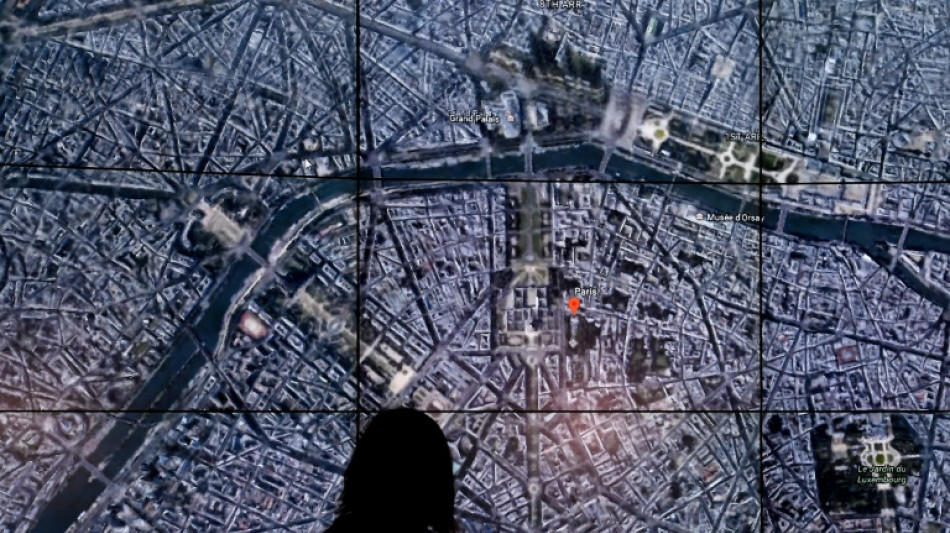
Google launches new satellite image AI tool, alarming researchers / Photo: TIMOTHY A. CLARY - AFP

 Azerbaijan pardons Frenchman after EU lifts sanctions on oligarchs

 Hadjar extends Red Bull contract for 2027 F1 season

 Black Sea drone attacks spell terror for Turkish sailors

 Canada judge to decide prison term for suicide poison seller

 Weinstein faces resentencing in New York for 2006 sex assault

 Outgoing UN chief makes climate push at New York summit
 AI risks, Iran war to take center stage at UN
 Badminton no.1 An tells dad to keep it down at Asian Games
 Runaway leader Antonelli eyeing third straight win

 Schoolgirl Yu, 13, fastest again in bid for third Asian Games gold
 Oil prices fall after Trump hails 'good' talks with Iran

 AI political ads warp reality ahead of US midterms

 Kenneth Branagh embraces action hero role -- to get in shape

 'New one' Klopp promises fresh approach as Germany reign begins
 Milne returns to New Zealand squad for India T20 series

 Is Pet Insurance Worth the Monthly Cost?
 Caledonia Mining Corporation Plc: Notification of Relevant Change to Significant Shareholder
 Great Western Mining Corporation plc Announces Completion of Drilling: Defender Tungsten Project

 Voting opens in Alaska's annual Fat Bear Week
 MLS coach axed for telling female ref 'It's a man's game'

 US refuses to give Sudan's de facto leader visa for UN
 Man City hold Bayern to start Women's Champions League, Arsenal win late
 Trump threatens Iran with 'hell' but reveals fresh talks

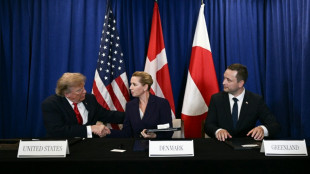 Trump signs security deal with Greenland, Denmark at UN
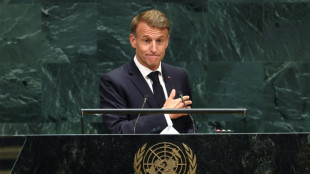
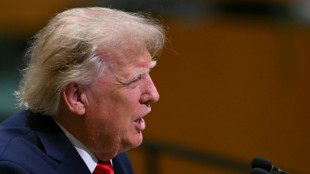 Trump threatens Iran with 'hell' but unveils fresh talks

Google announced a new feature allowing Google Earth users to generate AI visualizations on top of the service's satellite imagery, sparking concerns from researchers and open-source intelligence experts about the potential for disinformation.
The "create image" tool, rolled out Thursday, integrates Google's Nano Banana 2 image-generation technology to let users zoom into locations and build images in seconds based on Google Earth satellite, aerial and 3D-mapping data.
The company unveiled the feature as a way to "visualize history, create real estate plans and more." But disinformation researchers are warning it could enable bad actors to misuse Google Earth -- a key resource for fact-checking and verification -- to create realistic geospatial fakes.
"Google spent 20 years building the reference the world checks against," digital investigations expert Henk Van Ess wrote on Substack. "Today it added a button that makes things up."
"The forgery does not have to look convincing on its own," Van Ess added. "It inherits the credibility of the map it was born on."
Brady Africk, a research analyst at the American Enterprise Institute specializing in satellite imagery analysis, told AFP the Google Earth update "makes it easier to generate convincing fake satellite imagery that can spread quickly online and mislead the public."
"These AI-generated fakes, growing more common, may also erode public trust in satellite imagery, and make the jobs of journalists and researchers more difficult."
In a response to AFP on X, Google said images created with the feature include SynthID digital watermarks, invisible markers embedded in media generated using the company's artificial intelligence tools. Users can ask Google's Gemini chatbot if a SynthID is present.
"We take misinformation seriously," the company wrote.
Google's statement said the company prevents "image creation on harmful topics" and its AI policy instructs users against "misinformation, misrepresentation or misleading activities."
Yet AFP's tests of the feature Friday were able to fabricate satellite images that could have serious global consequences: an explosion in Paris, a nuclear site in Iran, a bomb crater in Russia and an Islamic State group training ground in Syria.
The tool also fulfilled prompts to visualize other fake scenes, including floods across Bangladesh, a migrant caravan camped at the US-Mexico border and a suspicious warehouse housing vans in Georgia -- one of several states US President Donald Trump has falsely accused of widespread election fraud.
Similar fakes have had real-world impacts. In 2023, an AI image depicting an explosion at the Pentagon briefly rattled the markets.
Early in the US war with Iran, an AI-altered satellite image depicting a destroyed US military base garnered millions of views across platforms.
"I cannot stress how irresponsible this is," Ross Burley, executive director of the London-based Centre for Information Resilience, told AFP. "Trust in satellite imagery has taken decades to build and could be irrevocably damaged overnight."
The group is calling on Google to reverse the decision, Burley said.
GeoConfirmed, a volunteer-driven open-source intelligence project that verifies visuals from conflicts around the globe, also urged Google to reconsider.
"We are already observing individuals exploiting the new Google Earth web tool to make military positions, relabel buildings as schools, and experiment with manipulating the information environment," the group wrote on X.
"The primary, and perhaps only, practical use of this tool appears to be the creation and dissemination of mis- and disinformation."
F.Ramirez--AT