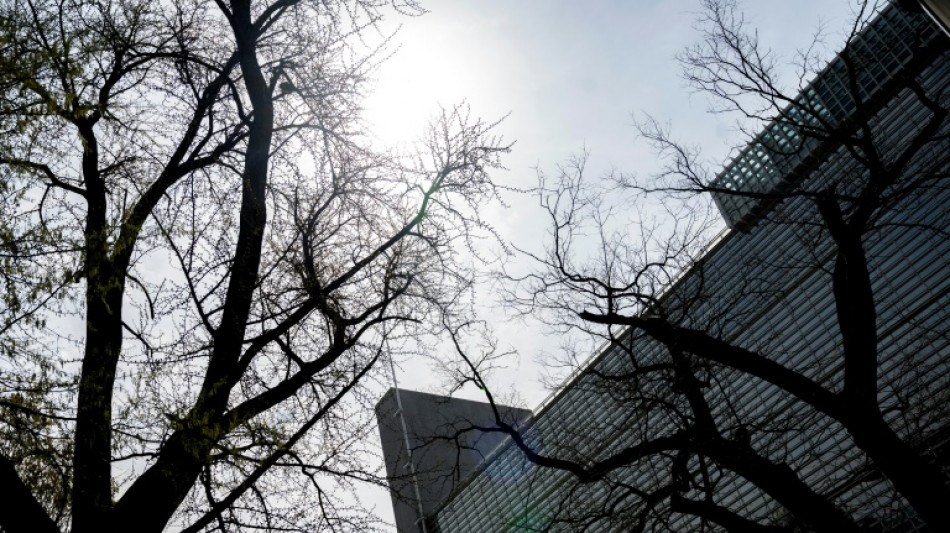
'Stagflation' risk as Ukraine war chokes global growth: World Bank / Photo: Stefani Reynolds - AFP/File

 In Iceland, the mystery of the poet, the tomb and the Danish grocer

 Ratko Mladic: Bosnian Serb commander to convicted war criminal

 Bolivian army base blasts kill two, wound dozens
 Alcaraz, Sabalenka into US Open last 16 as Williams sisters lose on return
 Williams sisters fall in thrilling return to US Open doubles
 Bangladesh measles toll nears grim 1,000-child mark

 Bolivia farmers return to streets over diesel price hikes
 Tetris distances itself from controversial White House 'arcade' games
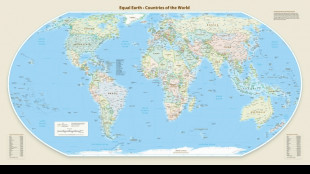 Africa bigger, US smaller - UN adopts new map

 Bad weather will not affect All Blacks, says captain Savea

 Mbappe misses penalty as Parrott lifts Betis past Real Madrid

 PSG still winless in Ligue 1 as Monaco go top

 Defending champion Alcaraz reaches last 16 at US Open

 Lyles ends season before Budapest due to injury flare ups
 US Republicans announce probe into environment groups

 Sabalenka survives despite 'tricky' weed smell at US Open

 S&P Revises Outlook on Freedom Holding Corp. and Core Subsidiaries to Positive

 Job growth but record-high diesel prices -- Trump's midterms mixed bag
 Women's NBA comissioner Engelbert to retire at season's end

 Luis Enrique extends contract as PSG coach until 2030

 Duplantis pulls out of Diamond League finals

 Defending champ Sabalenka, Pegula lead way into US Open fourth round

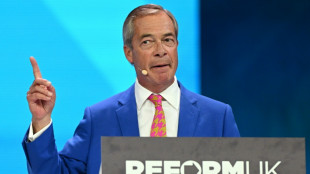 UK hard-right party rallies behind leader after new donation scandal

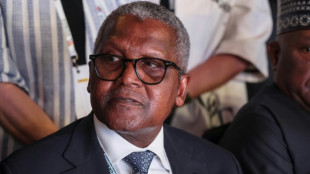 Nigeria's Dangote refinery looks to raise $1.6 bn in IPO

 Portugal extends talks to privatise national carrier TAP
The global economy risks falling into a harmful period of 1970s-style "stagflation," sparked chiefly by Russia's invasion of Ukraine, the World Bank warned Tuesday as it slashed its annual growth forecast.
The toxic combination of weak growth and rising prices could trigger widespread suffering in dozens of poorer countries still struggling to recover from the upheaval of the Covid-19 pandemic.
The stark forecast came as the international development lender cut its global growth estimate to 2.9 percent, 1.2 percentage points below the January forecast, due to the severe downturn caused by the war.
"The risk from stagflation is considerable with potentially destabilizing consequences for low and middle income economies," World Bank President David Malpass told reporters.
"For many countries recession will be hard to avoid."
And if risks to the outlook materialize, global growth could slow even more sharply -- triggering a worldwide recession, Malpass warned.
The bank's Global Economic Prospects report said the Ukraine war is compounding the damage from the pandemic and magnifying the slowdown in the global economy, "which is entering what could become a protracted period of feeble growth and elevated inflation."
The slump comes after growth recovered to 5.7 percent in 2021 following the pandemic downturn -- marking the "sharpest deceleration following an initial recovery from global recession in more than 80 years."
The report notes similarities to the 1970s when growth stalled and inflation skyrocketed with supply factors fueling price hikes and following a long period of low interest rates.
But in contrast to that period, the US dollar is strong, and major financial institutions are in solid position.
- Global recession risk -
The Russian invasion and Western sanctions on Moscow have sent grain and oil prices soaring, threatening to worsen hunger in poor countries and causing drivers around the world to face eye-popping prices at the pump.
The World Bank chief stressed the need to increase production to combat rising prices, especially for energy, as short supplies of natural gas and fertilizer are harming food production.
Malpass also said it was "crucial" to avoid export restrictions and subsidies that "magnify the rise in prices and distort markets."
Likewise, the bank warned against trying to resolve the inflation spike with price controls or export restrictions which would only worsen the damage.
Given the widespread uncertainty, the situation could deteriorate further due to a series of "interlinked" risks, including the possibility of further geopolitical tensions, steep interest rates hikes to contain inflation and rising wages, and the potential for Covid-19 to reassert itself, according to the forecast.
The US Federal Reserve has embarked on an aggressive drive to raise borrowing rates to cool demand and combat rising prices, and the World Bank notes that higher rates have played a prominent role in previous financial crises in emerging market and developing economies (EMDEs), straining resources and causing outflows of cash from those countries.
The simultaneous materialization of these risks could result in a much sharper and more prolonged global slowdown.
If faster US rate hikes were to cause "acute financial stress" in EMDEs, the European Union were to face a sudden ban on energy imports, and China were to experience renewed pandemic-related lockdowns, "global growth could fall more sharply in 2022 and nearly halve in 2023 -- declining to 2.1 percent and 1.5 percent, respectively," the report said.
Malpass said that would cause per capita income growth to fall to zero, and "that certainly would qualify as a global recession."
Even without that dire outcome, per capita income in developing economies this year will be nearly five percent below its pre-pandemic trend.
The report cut the US growth estimate by 1.2 points to 2.5 percent, and the forecast for China was lowered 0.8 point to an unusually low 4.3 percent.
Meanwhile the euro area forecast was cut to 2.5 percent, and Japan to 1.7 percent.
Russia's economy is expected to contract this year by 11.3 percent.
D.Lopez--AT