In Iraq, centuries-old black community still on the margins
/ Photo: Hussein Faleh - AFP

 Inter roar back in five-goal thriller with Napoli

 Haaland keeps Man City perfect in Premier League, blunt Spurs held

 Hamilton worried by Ferrari pace while Antonelli prepares for a fight

 Vuelta stage 15 shortened due to extreme heat, Mas consolidates lead

 Putin meets US envoys for Ukraine war talks

 Modric available for Croatia in Nations League
 Potapova upsets 2025 US Open runner-up Anisimova
 Gasly a 'class act' says Alpine boss after Monza pole

 Athletic Bilbao crush Simeone's flat Atletico

 Stay far from battlefield, warns Japanese director in Vietnam War film

 Tens of thousands of Croatians protest over hazardous waste

 Haaland heads unconvincing Man City top of Premier League

 US envoys in Moscow as Russia and Ukraine vow not to hit capitals during talks

 Motorsport governing body rejects Alpine boss's claims of bias

 US envoy on West Bank visit says Israel has responsibility for Palestinians

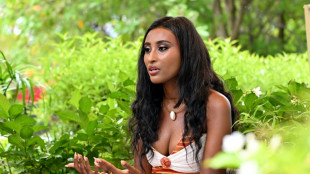 Ethiopian Miss World contestant spotlights pain of sister's murder

 'Leader' Raphinha rising to Barca striker challenge

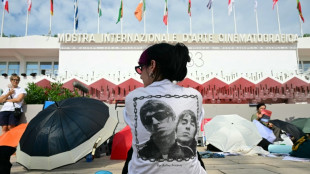 Oasis fans gather in Venice for band reunion film

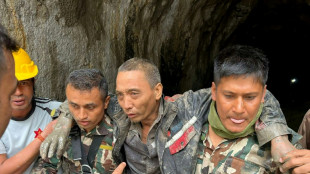 Two Nepal rescues revive hopes 10 days after flood

 Pogacar to miss worlds after season-ending Vuelta crash

 Greenwood, Guendouzi handed bans after Fenerbahce-Lyon brawl
 In Iceland, the mystery of the poet, the tomb and the Danish grocer

 Ratko Mladic: Bosnian Serb commander to convicted war criminal

 Bolivian army base blasts kill two, wound dozens
 Alcaraz, Sabalenka into US Open last 16 as Williams sisters lose on return

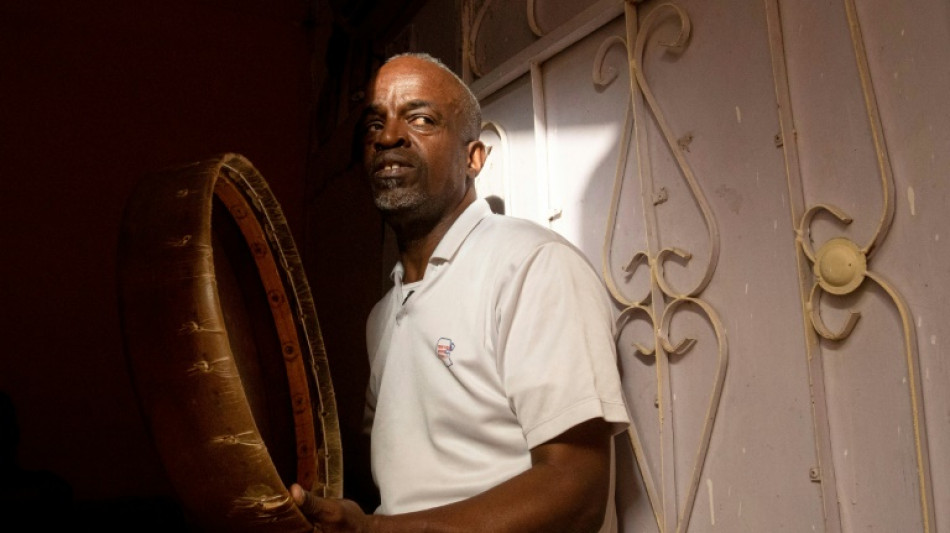
Adnan Abdelrahman shows off the drums he learned to play at age 12. He belongs to Iraq's centuries-old black minority, guardians of musical traditions but relegated to the margins of society.
Centred in the city of Zubair, near Basra in the far south of Iraq, the community has its origins in East Africa.
Like other remote parts of Iraq, Zubair is a place of poverty and decaying public services, where dusty roads are lined with simple cement houses.
While activists denounce the community's marginalisation, talk of racism or discrimination offends Zubair's inhabitants, who prefer the euphemism "dark skin" in Arabic to the word "black".
Abdelrahman, 56, is a member of one of the popular music troupes that have made Zubair famous throughout the country and in Kuwait, only 30 kilometres (20 miles) away.
"It's a profession you inherit," he said, explaining that his uncle sang and his father played the drum. "If someone dies, his son takes his place so that the art doesn't disappear."
Equipped with darboukas, tambourines and large goat skin drums, musicians liven up weddings by leading the "zaffa", a procession of song and dance to celebrate the bride and groom.
Abdelrahman, who has played for four years in a heritage group sponsored by the culture ministry, said the majority of players are black and added that he does not feel discrimination.
"Racism is something we have never seen," he said.
- History of slavery -
But many activists within the black community disagree, among them 32-year-old Majed al-Khalidy.
"Those with dark skin are fifth-class citizens, not even second-class," said Khalidy, who works for an oil company in Basra.
"Since the establishment of the Iraqi state, we have not seen anyone from the community occupy a senior position in the state. We have not seen a governor, a minister or a lawmaker."
He said the community faces a high drop-out rate from school, poor job opportunities and offensive language, even from religious clerics, with many people still using the Arabic term "slave" to designate a black person.
The minority numbers 250,000 to two million people, according to a wide range of informal estimates. Their ancestors came from Kenya, Ethiopia and Sudan, said historian Ibrahim al-Marashi of California State University.
They are centred in Iraq's southern Basra region, where black slaves were brought from East Africa "for the backbreaking work of draining the salt marshes" east of the city, said Marashi.
"In the historical record, the first mention of the community is in 869 CE when they revolted" against the Abbasid Caliphate, he said.
Today "black Iraqis continue to face systematic discrimination and marginalisation", according to the Minority Rights Group International.
The London-based MRG says in an online report that Iraq's black community suffers disproportionately high illiteracy and unemployment rates and that "many cannot find employment other than as labourers or domestic workers".
- 'Below poverty line' -
In a recent sign of progress, a state-run TV news channel hired a young black woman, Randa Abdel Aziz, as a presenter -- but such steps remain rare.
More change is needed, said Khalidy, the activist.
In a multi-faith, multi-ethnic country, he demanded the inclusion of his community in the quota system which reserves parliament seats for certain minorities, including Christians and Yazidis.
"To claim your rights, you have to be close to the decision-makers," he said about a political system where lawmakers can open the doors to all kinds of state largesse, especially public sector jobs.
Saad Salloum, an expert on religious and ethnic diversity, agreed that "discrimination is seen at all levels" against black Iraqis.
"Politically, they have no representation. Socially, certain stereotypes remain rooted in the dominant culture. Economically, the majority live below the poverty line."
The group MRG recalled that after the fall of former dictator Saddam Hussein, "black Iraqis began to organise and develop a political consciousness for the first time".
The Free Iraqi Movement, the first group to defend the rights of black Iraqis, was founded in 2007 and encouraged by the election in the United States of Barack Obama as president.
Several members of the movement ran for the 2010 provincial elections in Basra, though none were elected, MRG recounted. In 2013, its founder, Jalal Thiyab, was murdered in the city.
"There is still a long way to go to achieve equality for this and all other minorities," said Salloum.
A.Taylor--AT